
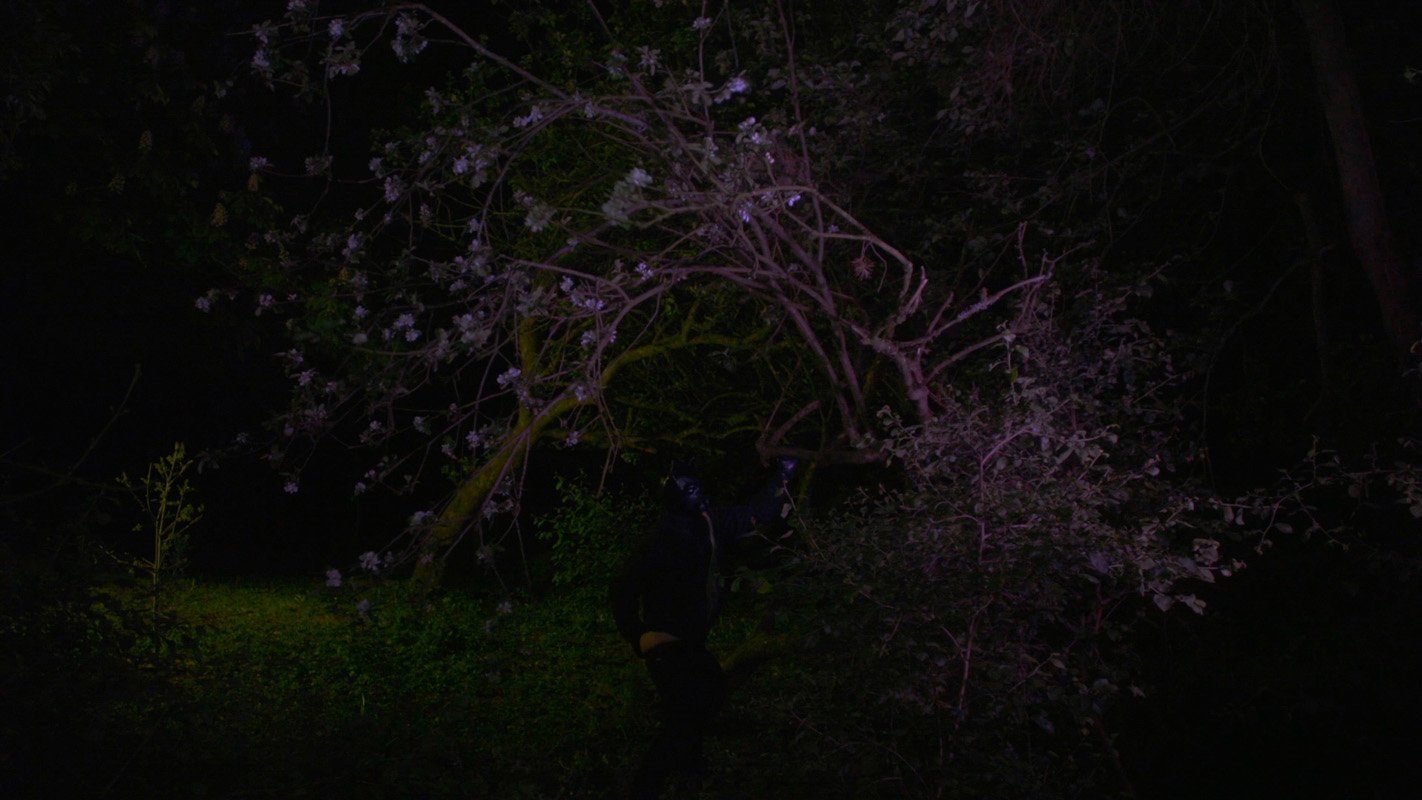
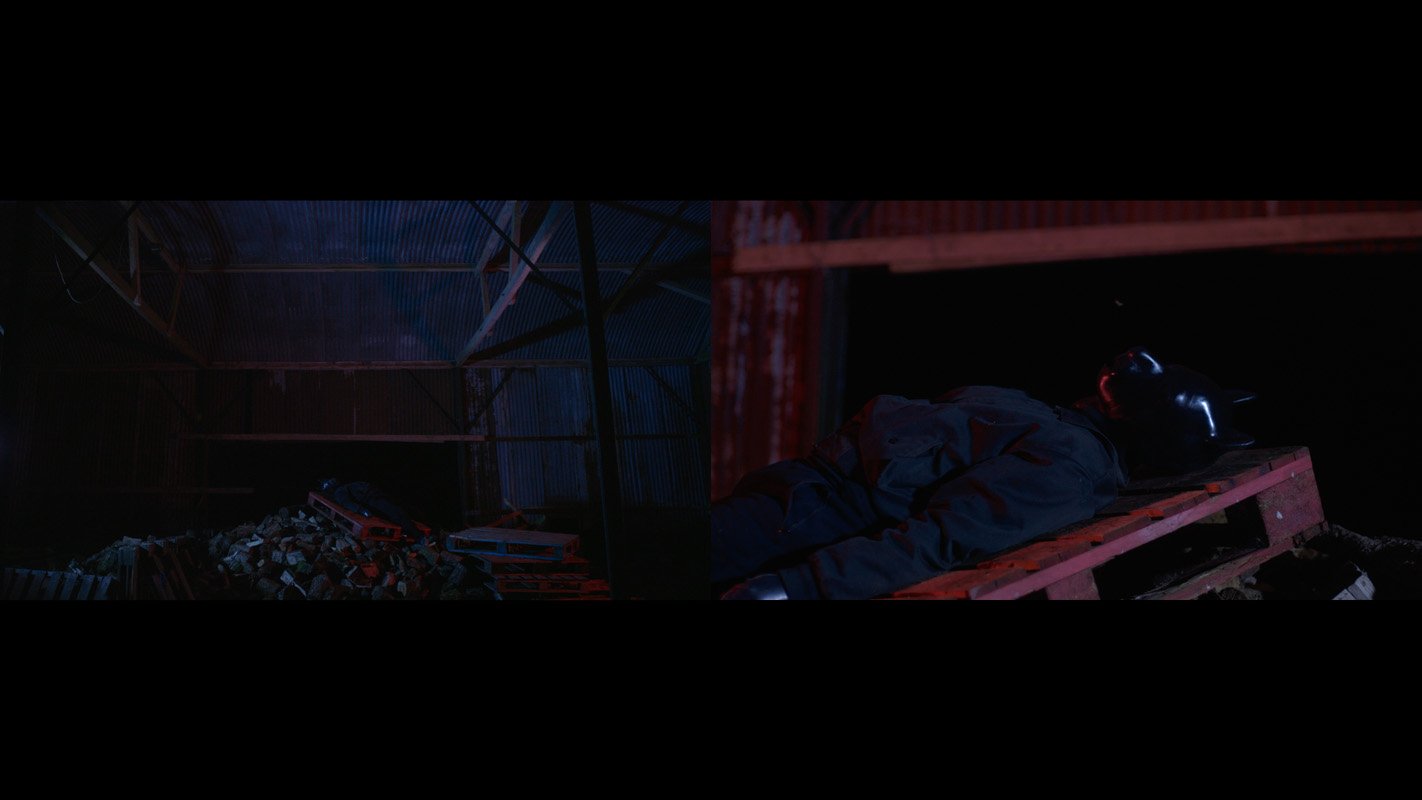
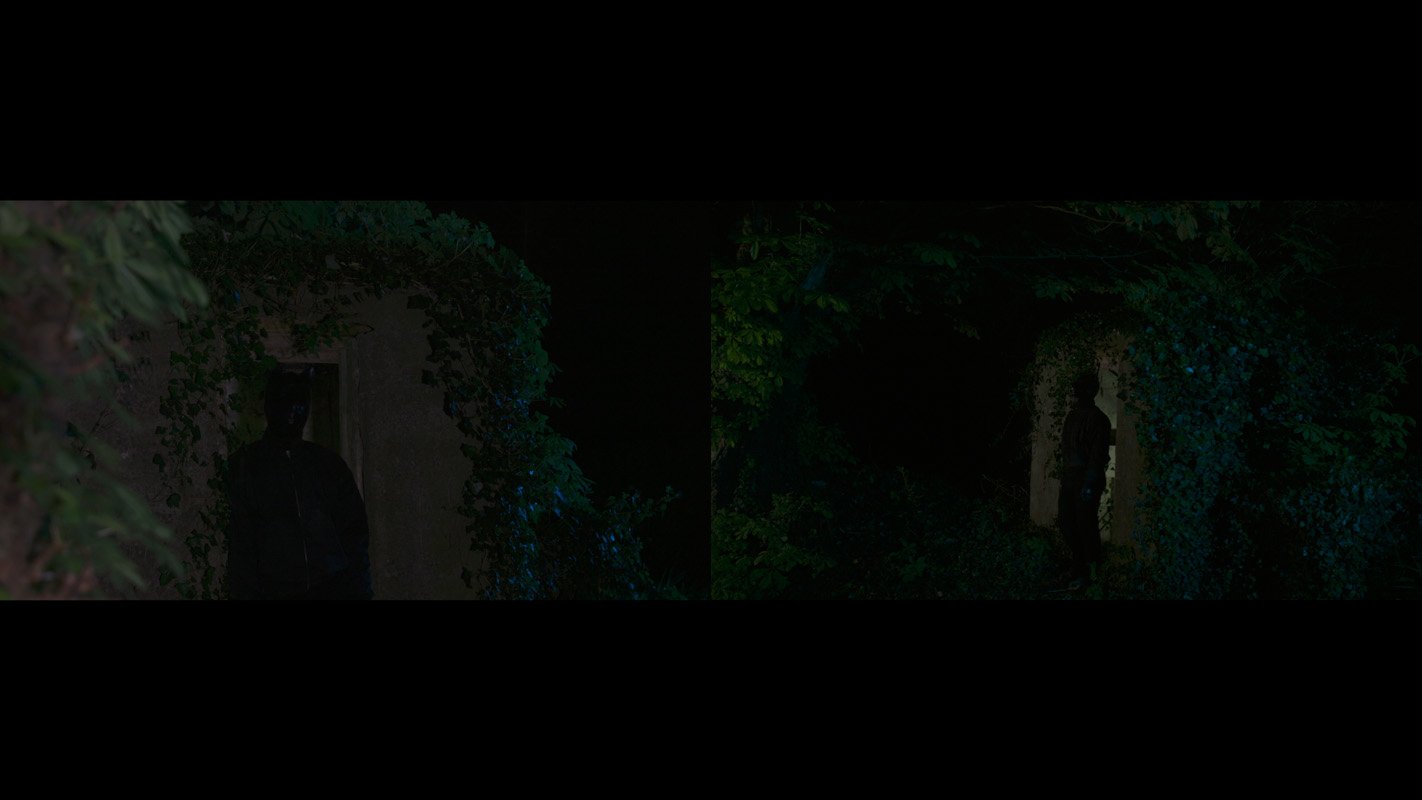
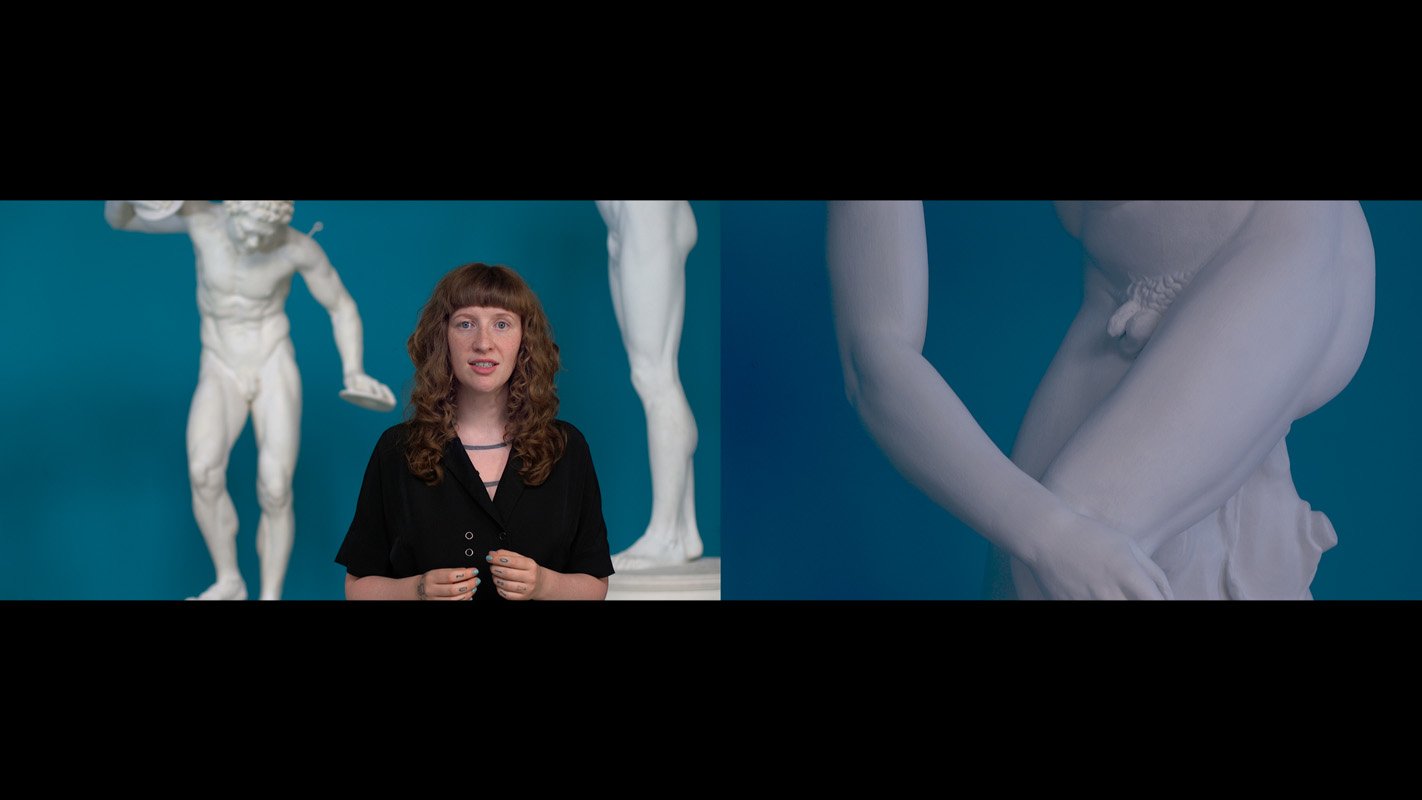
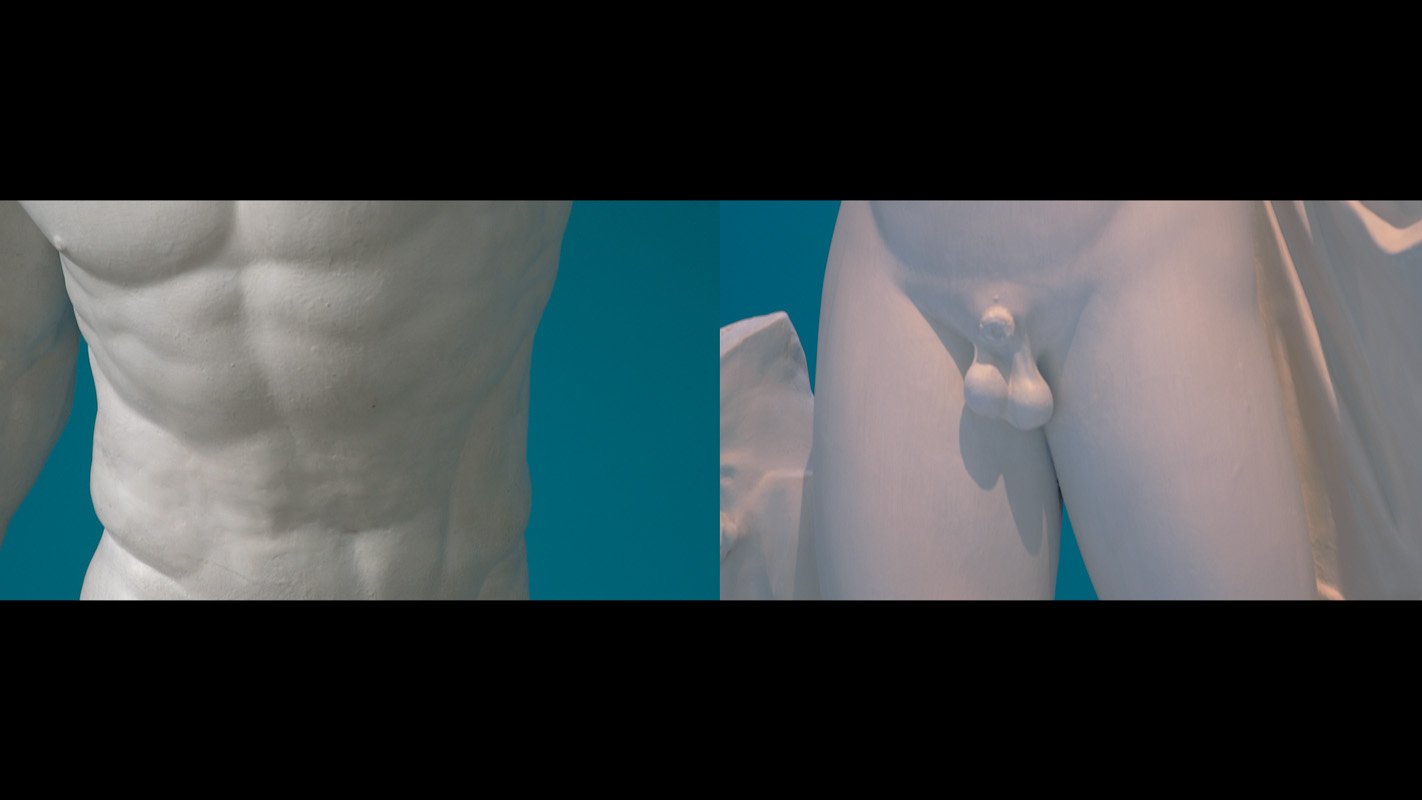
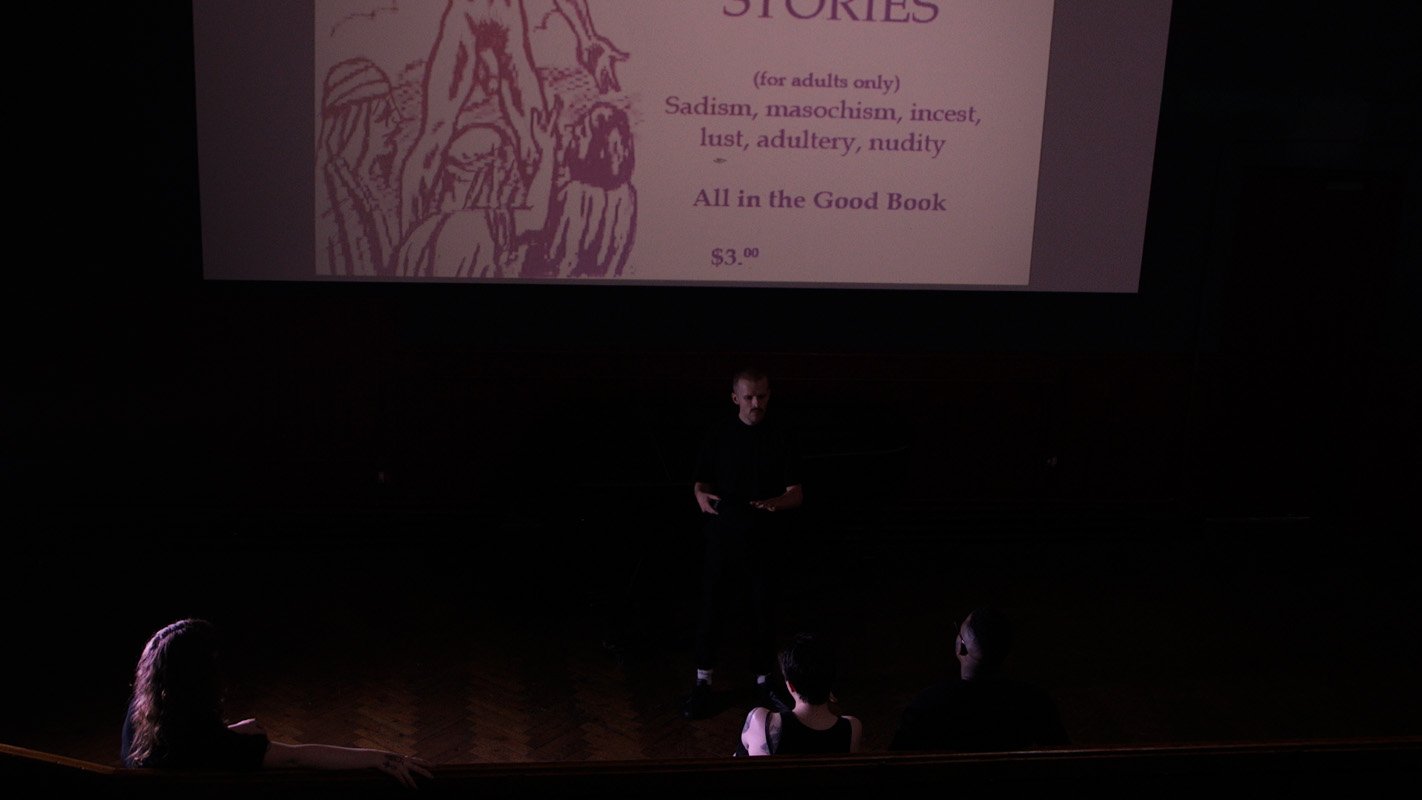

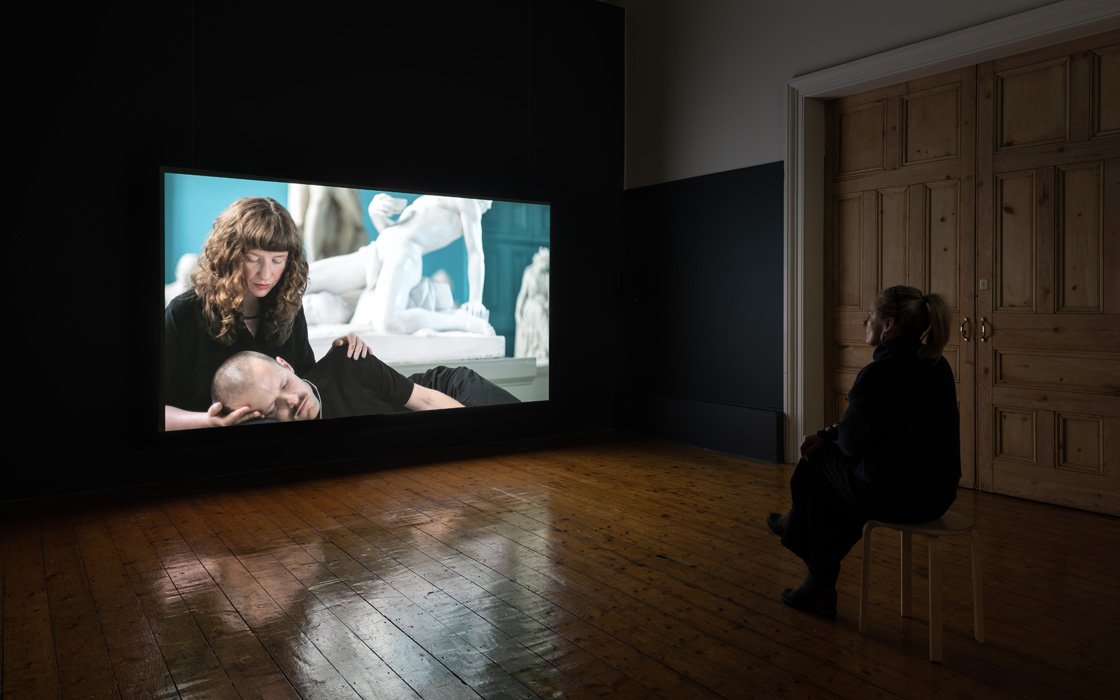
Expulsion was commissioned by and filmed on location at the Crawford Art Gallery, and formed part of the practical component of Gaffney’s PhD research project, Resisting Homonormativity in Queer Filmmaking Practice at Ulster University.
Crawford Art Gallery
09.2020-01.2021
Film, 30mins
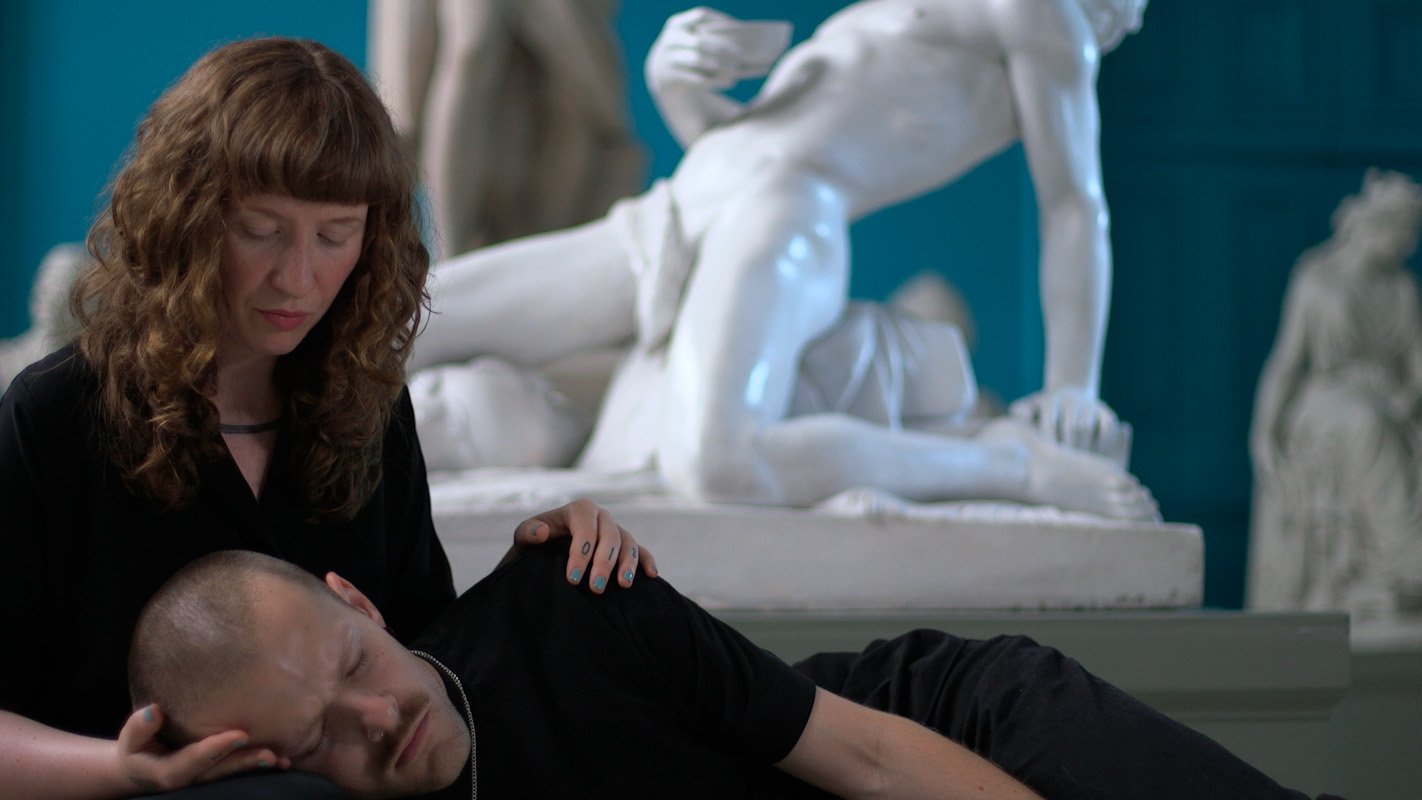
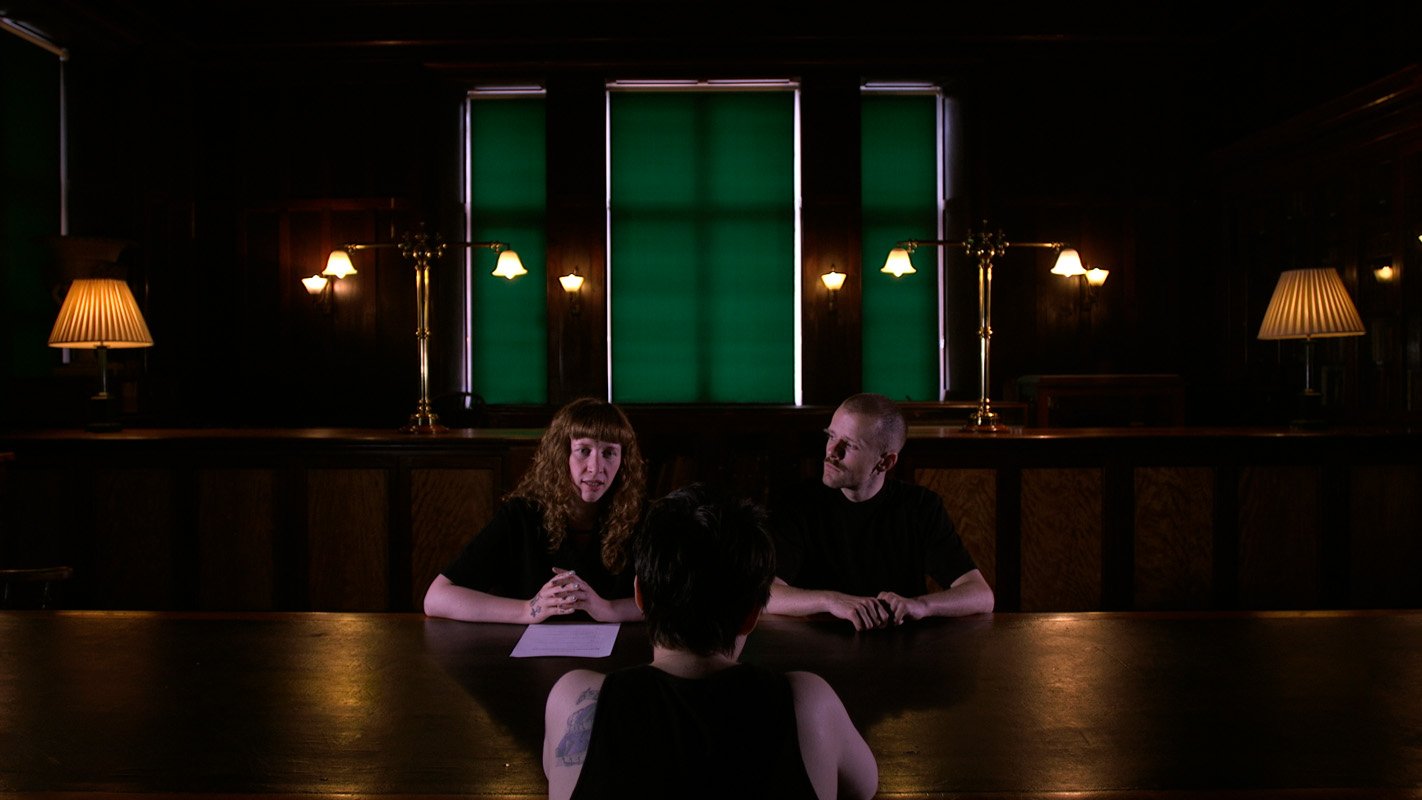
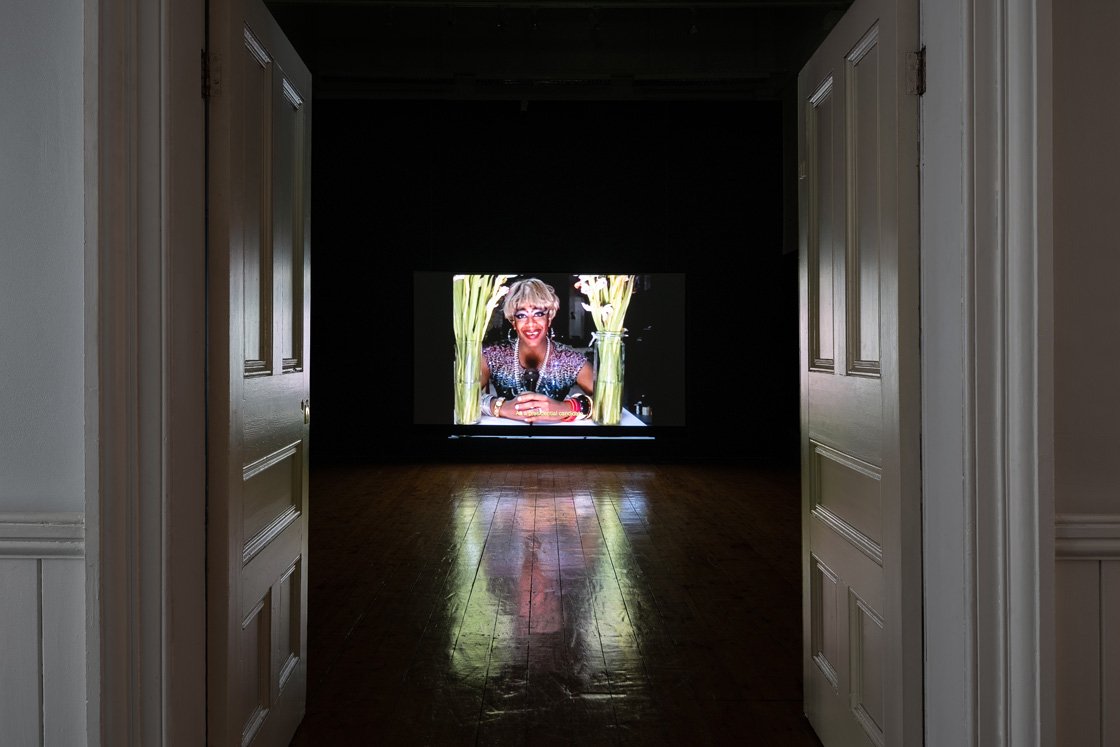
Expulsion moves between a fictional Queer State, archival footage of queer activists, a guided meditation to expunge internalised homophobia/transphobia, and nocturnal rituals. However, the utopic idea of a Queer State devolves from a promised oppositional force into a dystopian bureaucracy, the State questions who gets to belong. Rejected applicants to the Queer State are offered brutal guidance how to express their sexuality and identity in a manner that will allow them to reintegrate to their home state.
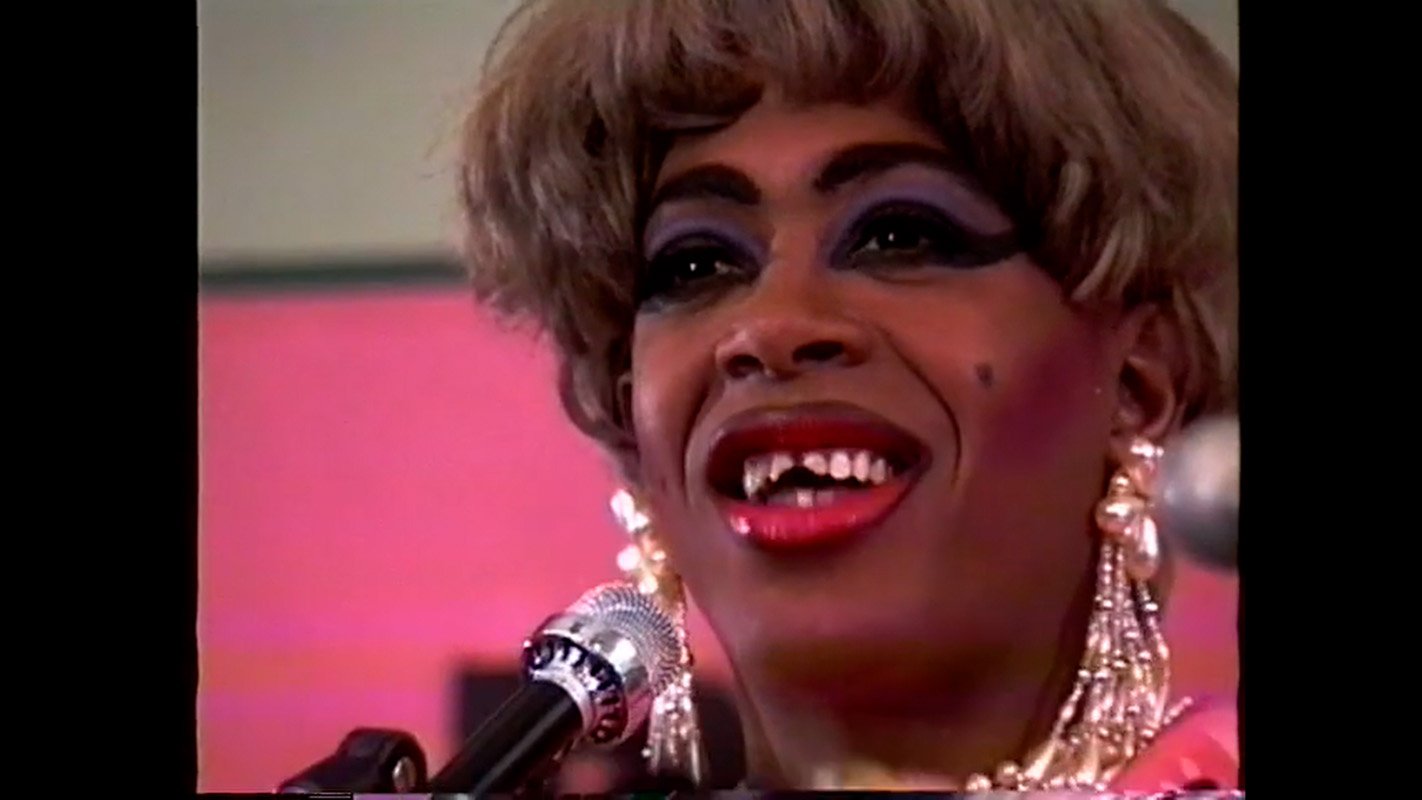
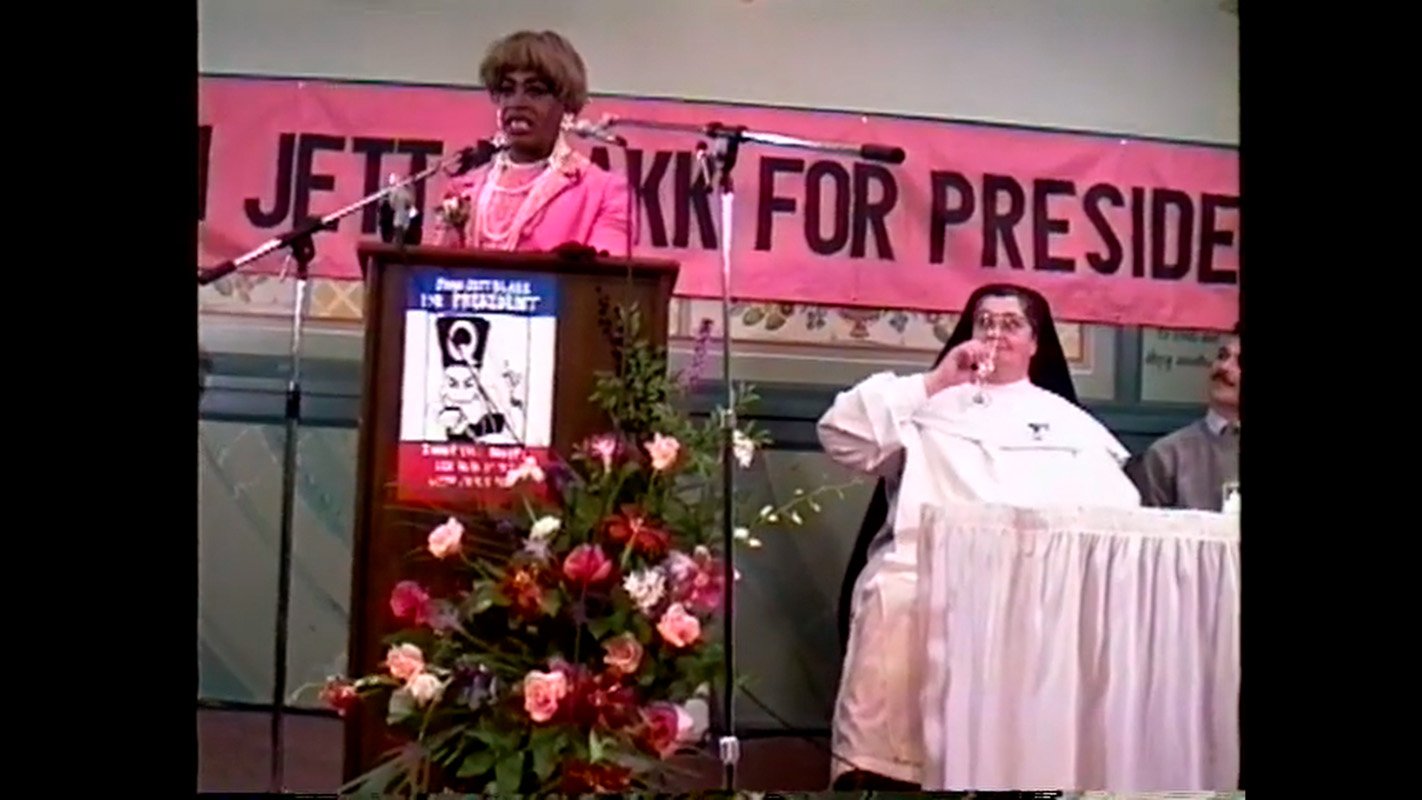
Expulsion incorporates archival footage of Joan Jett Blakk, the drag persona of Terence Smith, who ran for mayor of Chicago in 1991 and for president in the USA in 1992 on the ticket of the Queer Nation party. Expulsion navigates through queer history, from the witchcraft trials and the inquisition, to current debates around homonormativity and the co-opting of queerness by capitalism. The footage of Joan Jett Blakk’s rallies and speeches are full of hope and determination to imagine a better world for queer people, one which fails to fully materialise as the fictional Queer State descends into bureaucracy.
Installation
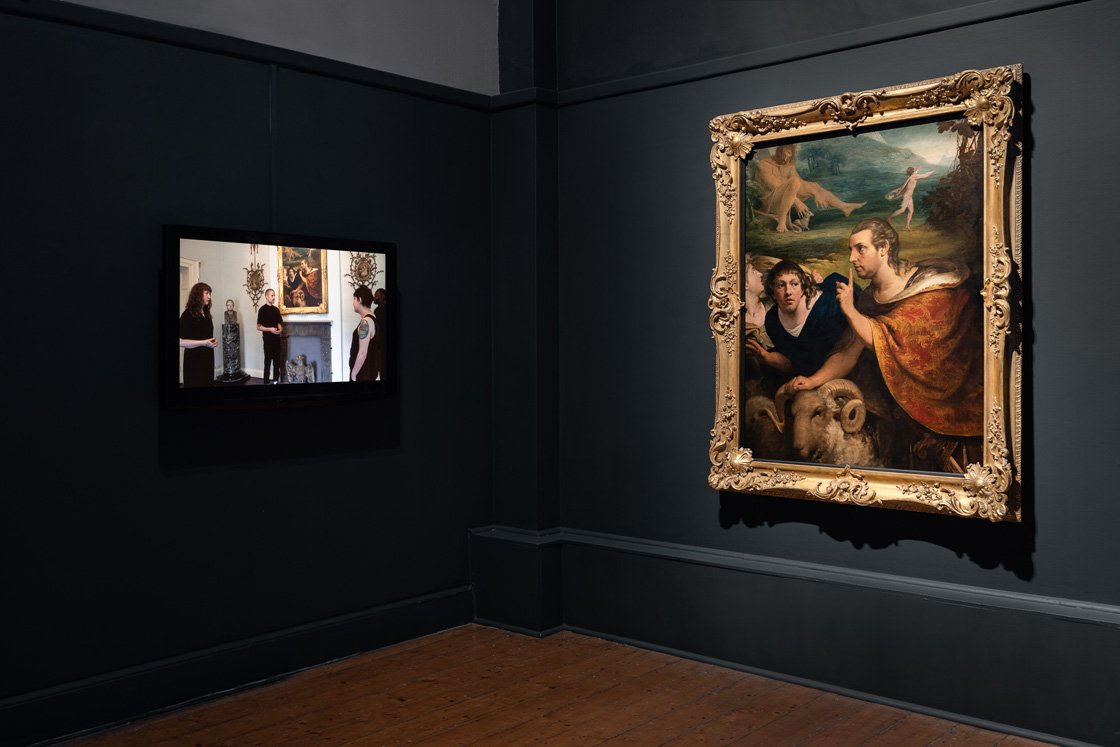
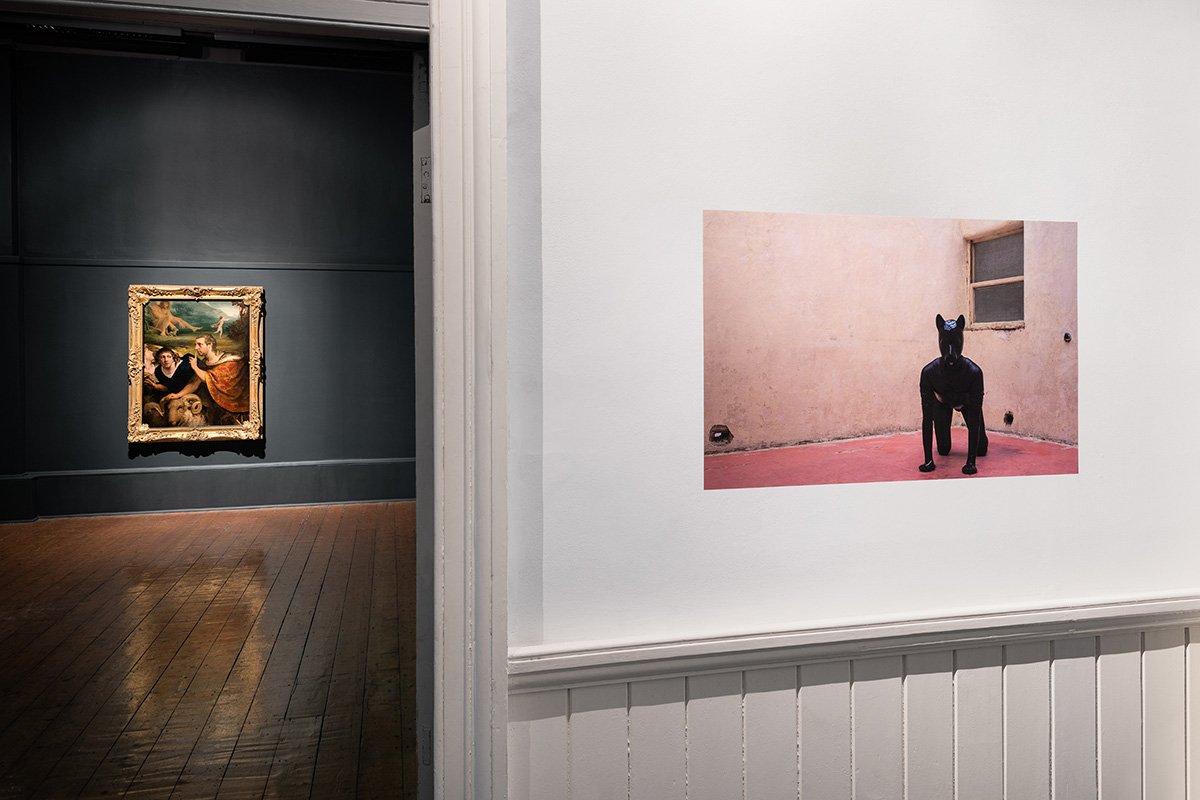
Retelling: Dr James Miranda Barry and John Joseph Danson (3min 38sec) was installed beside artist James Barry’s Portraits of Barry and Burke in the Characters of Ulysses and his Companion fleeing from the Cave of Polyphemus (1776), who was Dr James Barry’s uncle. Proceeds from the sale of the artist’s estate after death went towards supporting Dr James Barry’s education.
Acting as an injection of queer and trans history into the story of the Crawford Art Gallery’s permanent collection, and using research to foreground Dr James Barry’s trans identity, the film is presented from the perspective of the Queer State:
“Dr James Miranda Barry was assigned
female at birth, but he lived his entire
adult life as a man. He was referred to
with male pronouns; he requested his body
not be stripped when he died in 1865;
even his doctor noted him as male on his
death certificate. Some accounts state he
dressed as a boy from the age of 11 or
12. While the terminology didn’t exist at
the time, today we would recognise him as
being trans.
He is written about by straight
historians as if he was a woman who
masqueraded as a man in order to
achieve an education and career that
was not accessible for women at the
time. However, being inaccurately
hailed as “Britain’s first female
physician” ignores his transgender
identity. Instead, he was the first
trans physician.”
“Gaffney is drawn to how queers experiment with ways to liberate their selfhood from the identity categories imposed upon them. Along the way, [their] work has resignified the messy bodies of post-conceptual art, offering a queer aesthetic formed around the visceral capacity to unhitch bodies from the reifying powers of identity that affix us to communities, genders, and the bodies we’re born in. […]
As a fantasy, Gaffney’s queer state intrigues the viewer with its volatile uncertainty. A satisfying queer heresy hovers in the Queer State’s declarations, including an overdue reckoning of history, a condemnation of the pink-washing of modern slavery practices, and a wonderfully concise critique of the patriarchy’s colonising of the concept of nature. However, Expulsion carefully avoids any full endorsement of the Queer State’s governmental operations, and it is not only through the juxtapositions of Queer Nation and this imagined state that the film foregrounds the Queer State’s ambivalent status. Beginning from its initial images, Expulsion performs its unsureness through an iconography of equivocal symbols.
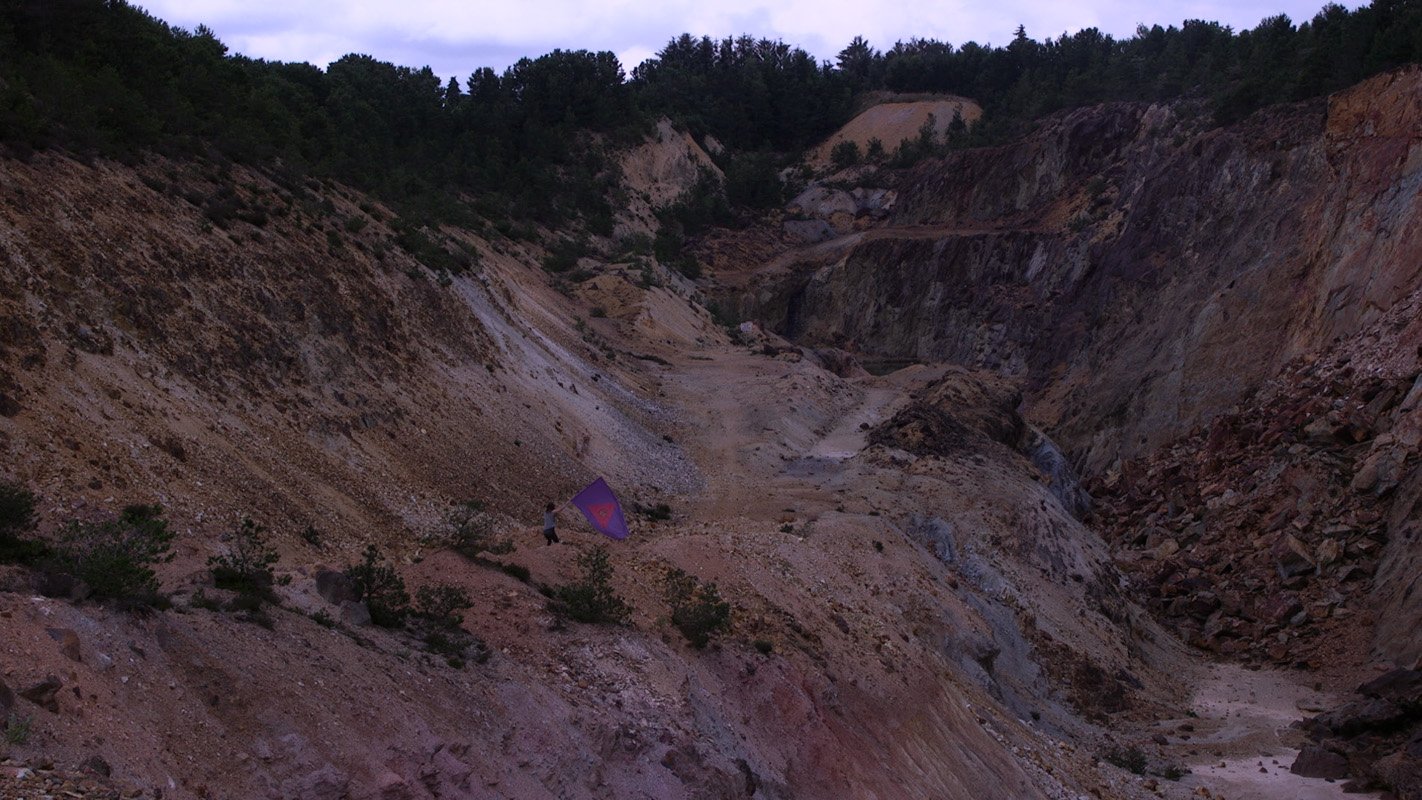
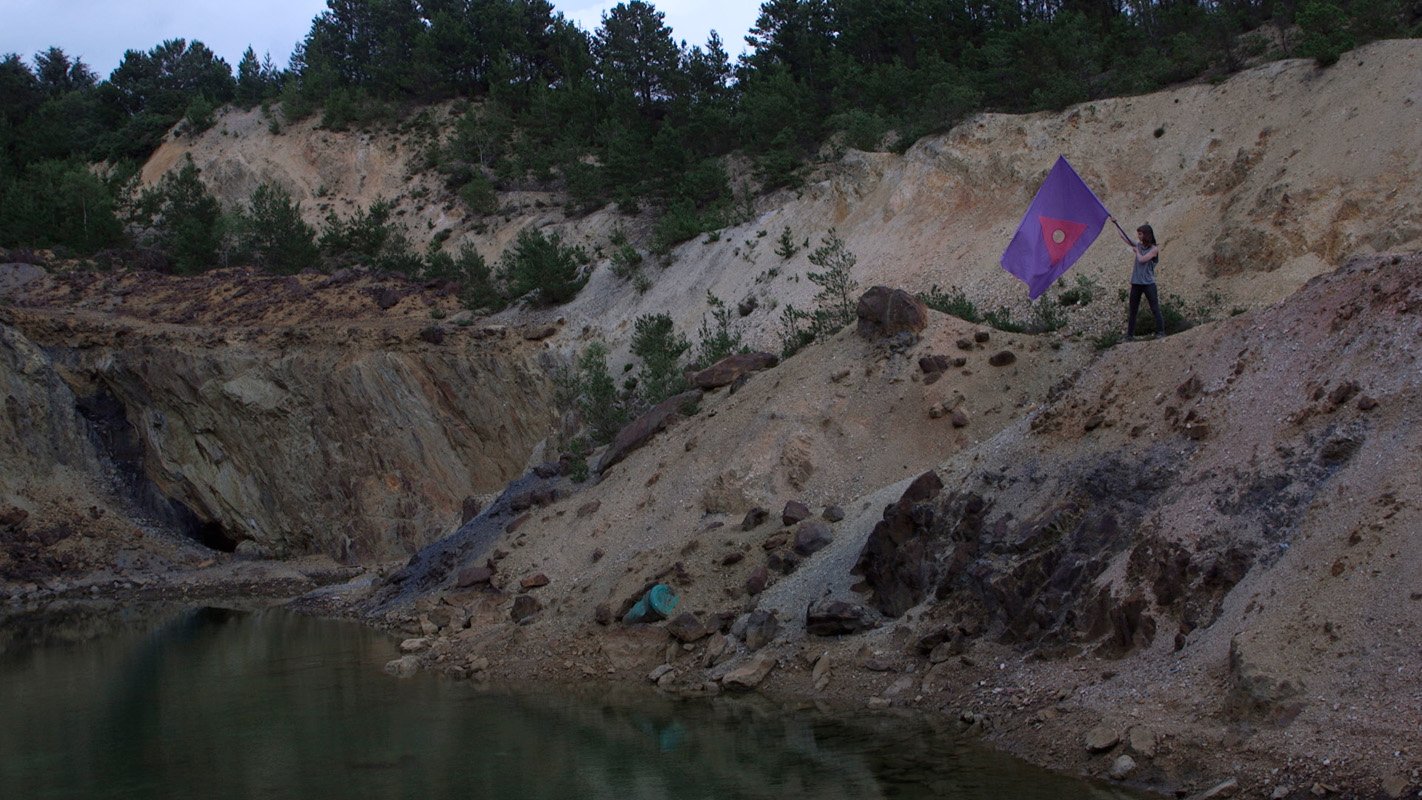
Take, for example, the flag paraded by a Queer State citizen through a depleted landscape. At the centre of the bright colours and triangle of the flag is a circular hole. Does this hole represent an empty duplicitous truth at the core of the Queer State’s project? Or is it that project’s acknowledgment of indeterminacy? A liberatory refusal to settle on queer identity? There are other startling images that lack full explanation, such as a uniformed body with a leather mask lying on a pile of rubble. This might be either a prisoner of the Queer State whose punishment reveals the hypocrisy of the Queer State’s project or simply a lovely pervert finally freely able to explore their sources of pleasure.”
Read the full essay by Professor Karl Schoonover, published by the Crawford Art Gallery.
Working between academia and institutions, Gaffney’s practice speaks to, with and about dissident figures, oppositional definitions of queerness and wide political horizons with research-driven filmmaking that maintains a tongue-in-cheek, wry urgency and bold moral vision. […]
Chris Hayes, Art Monthly, 2020.
Retelling: Dr James Miranda Barry and John Joseph Danson, 2020, is a decidedly direct political intervention. The film is a deadpan counterpoint to sensationalist transphobia found in the media, showing a straightforward lecturer about the links between the Crawford collection and the erasure of the UK’s so-called ‘first female doctor’ by mainstream media and historians.”
In conversation with Kathleen Soriano for the Crawford Art Gallery, 2020:
Reclaiming Cork doctor James Barry as a trans icon, An interview with the Irish Examiner, 2020.