
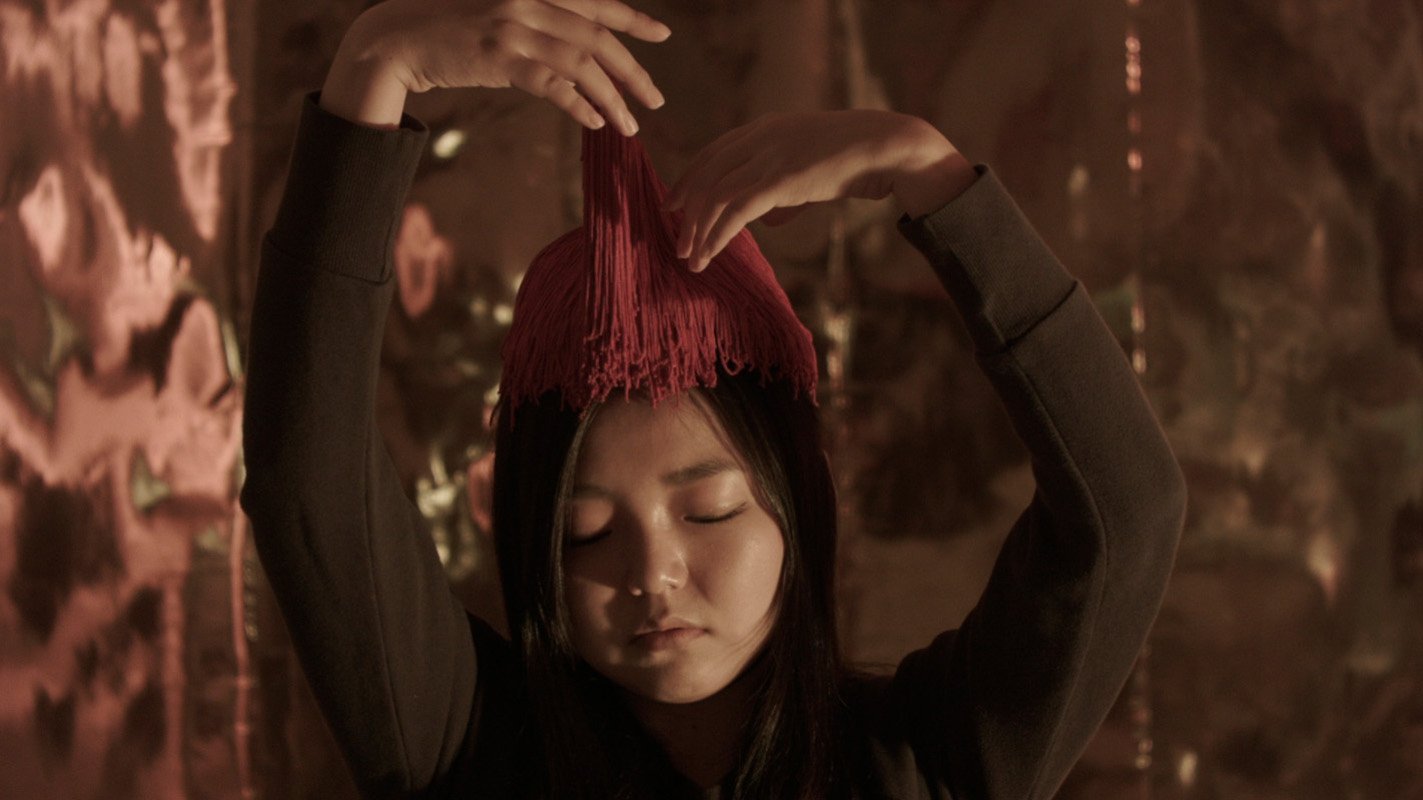
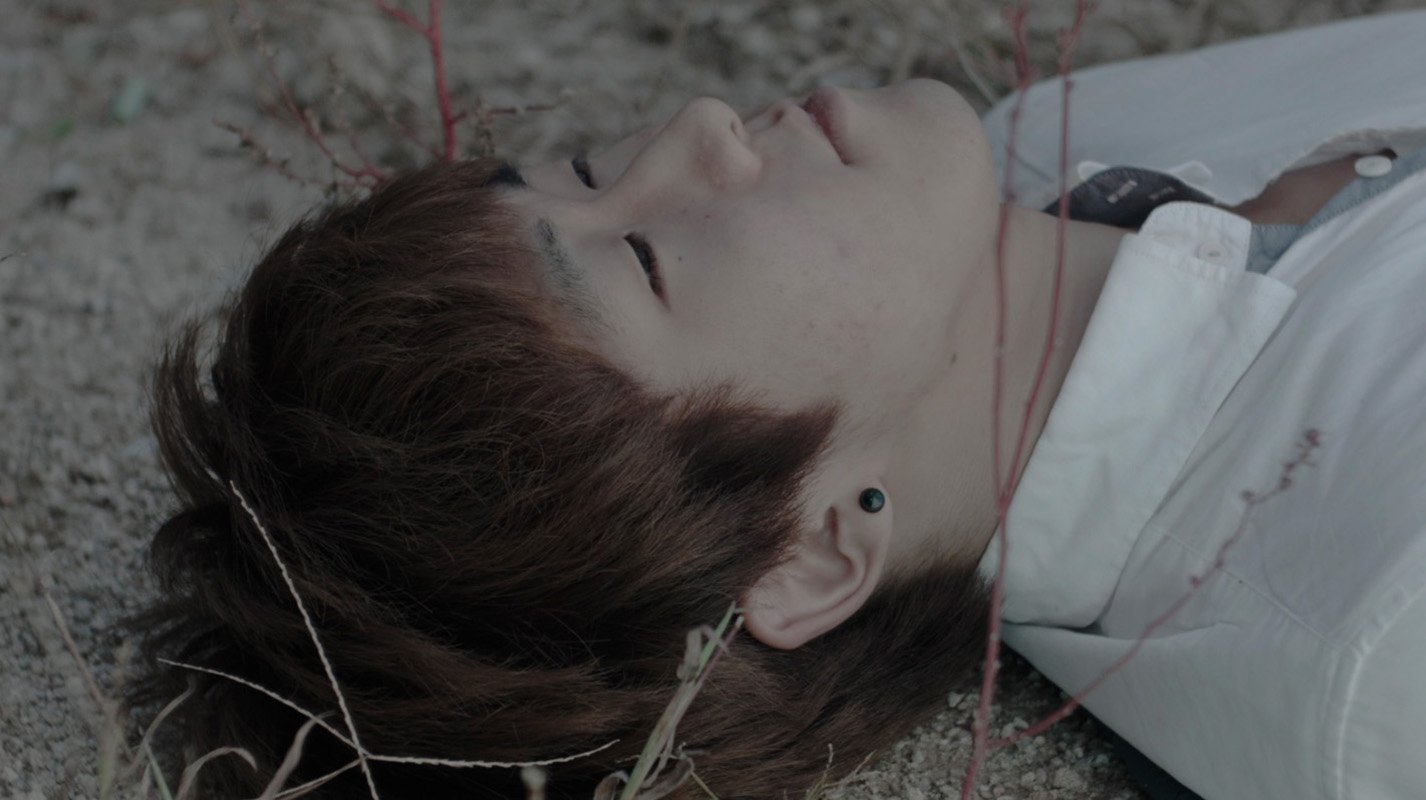
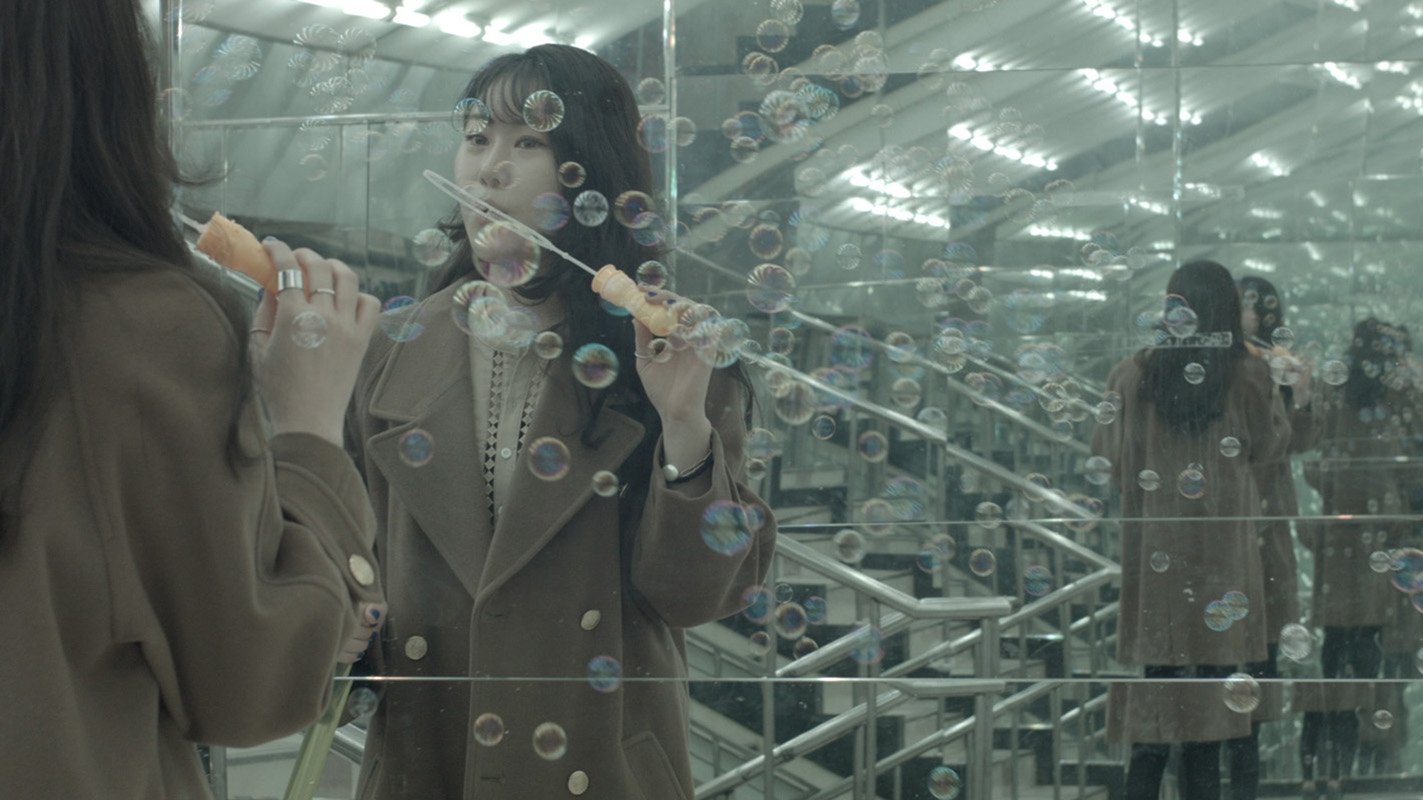
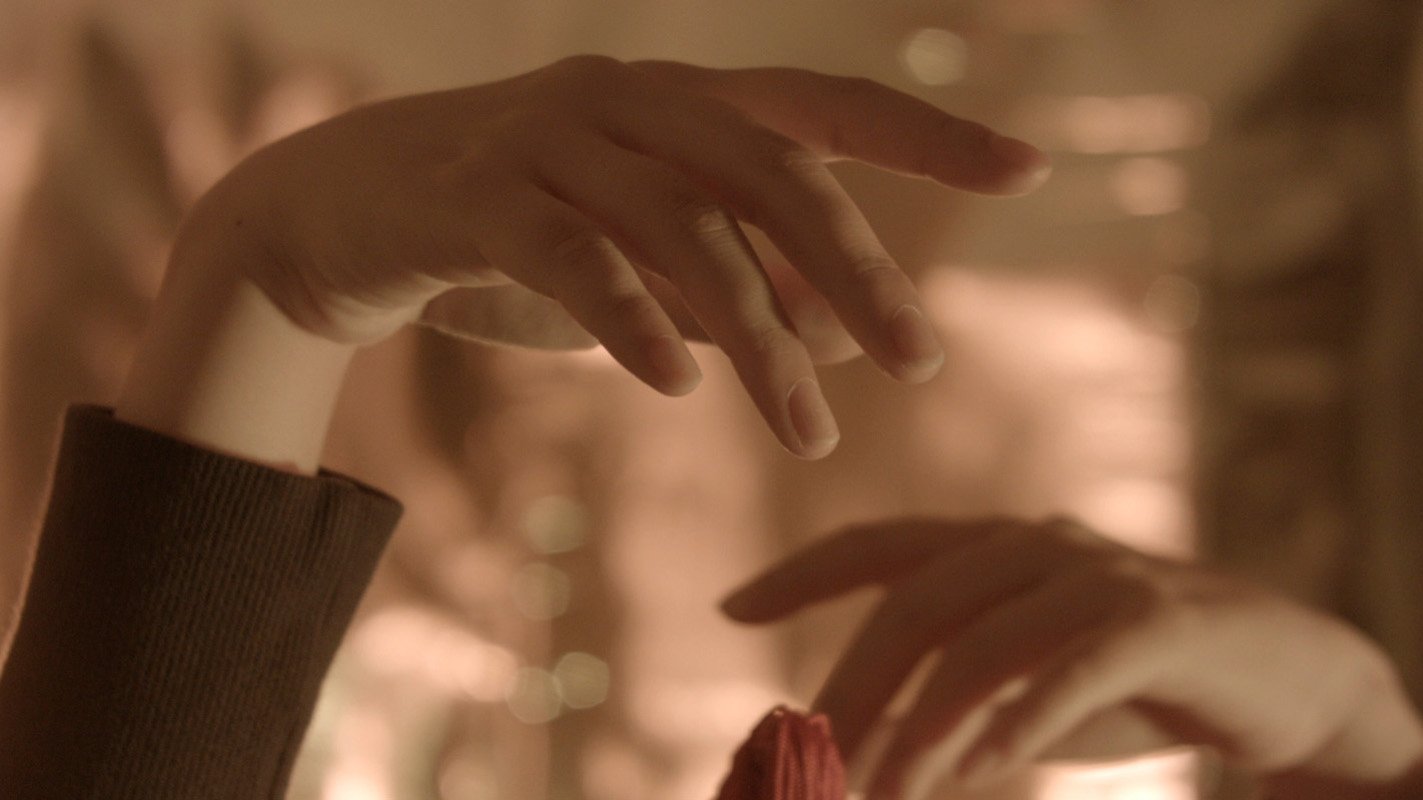
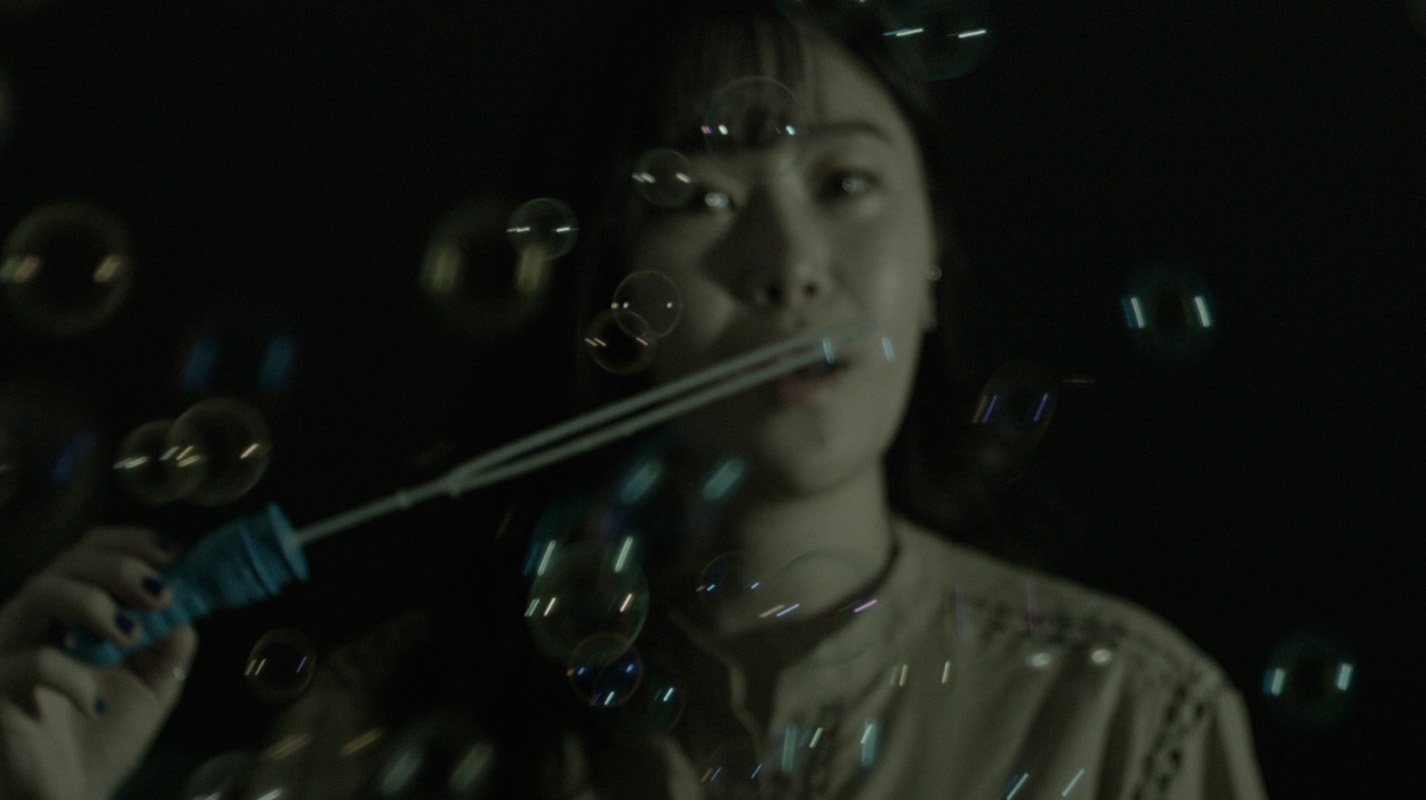
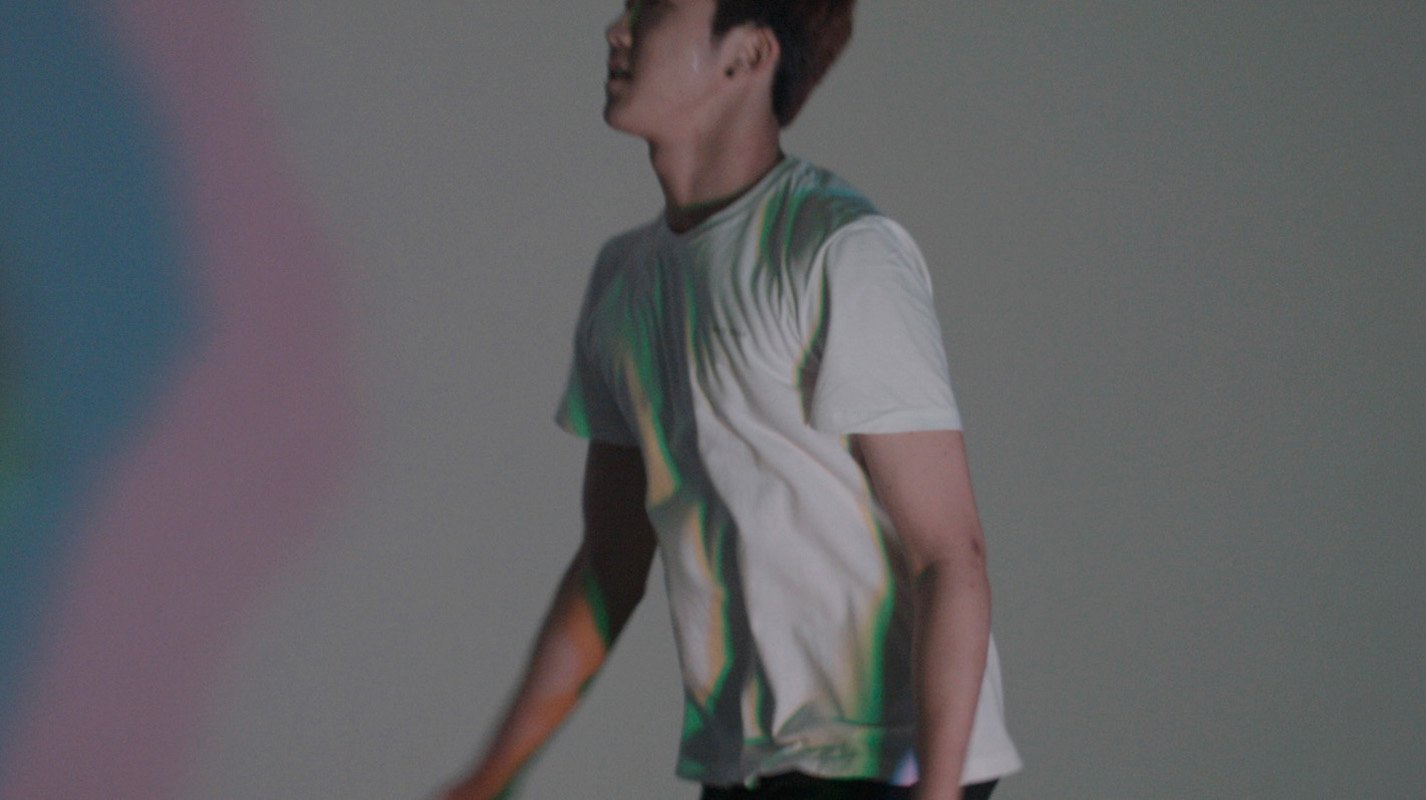
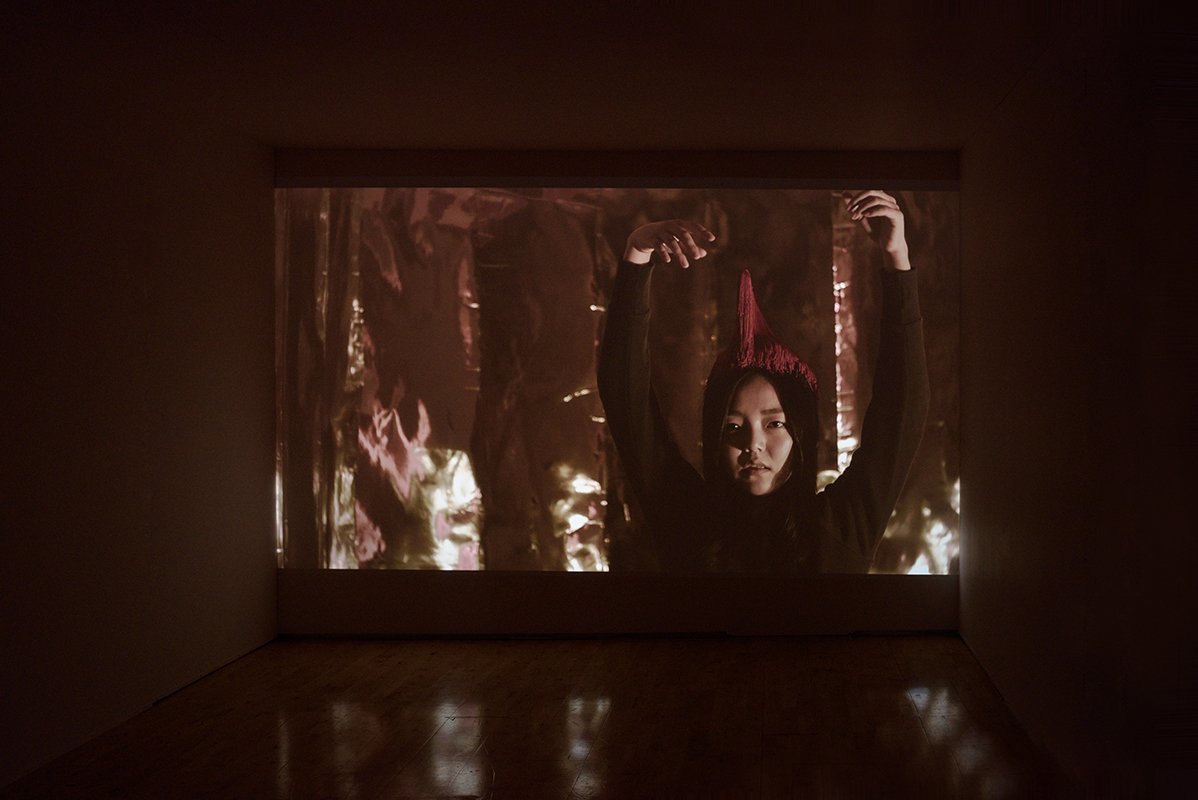
Our Stranded Friends in Distant Lands was made during an UNESCO-Aschberg laureate artist-in-residence at South Korea’s National Museum of Modern and Contemporary Art in Seoul. Filmed on location in Seoul and in purpose-built sets, three participants from South Korea narrate the film and perform the roles.
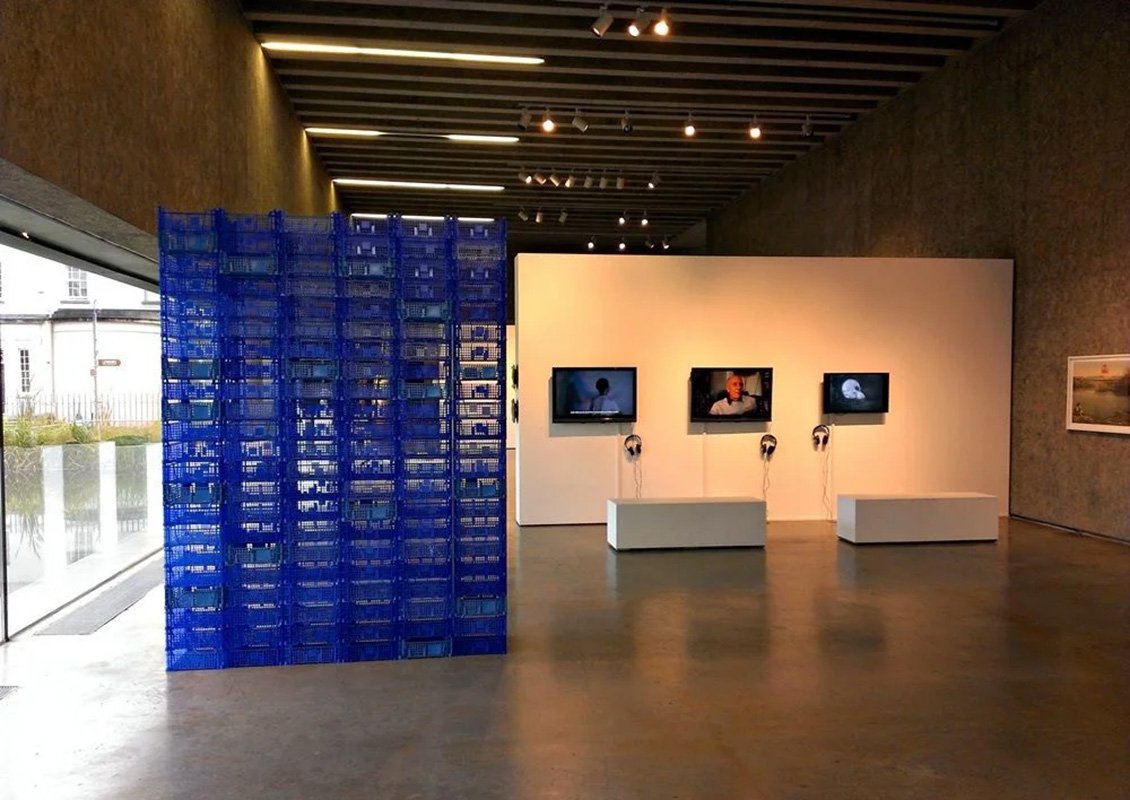
Block 336, London
Curated by Kathleen Soriano. 11-12.2017.
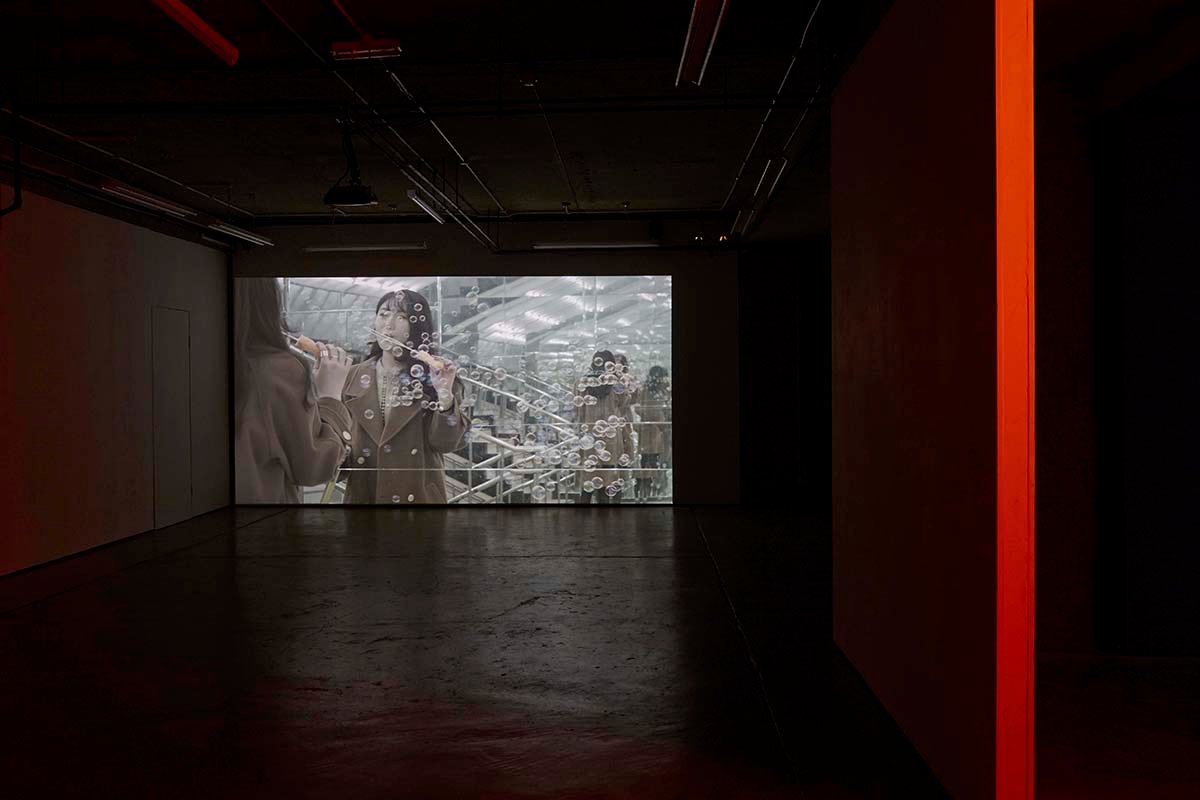
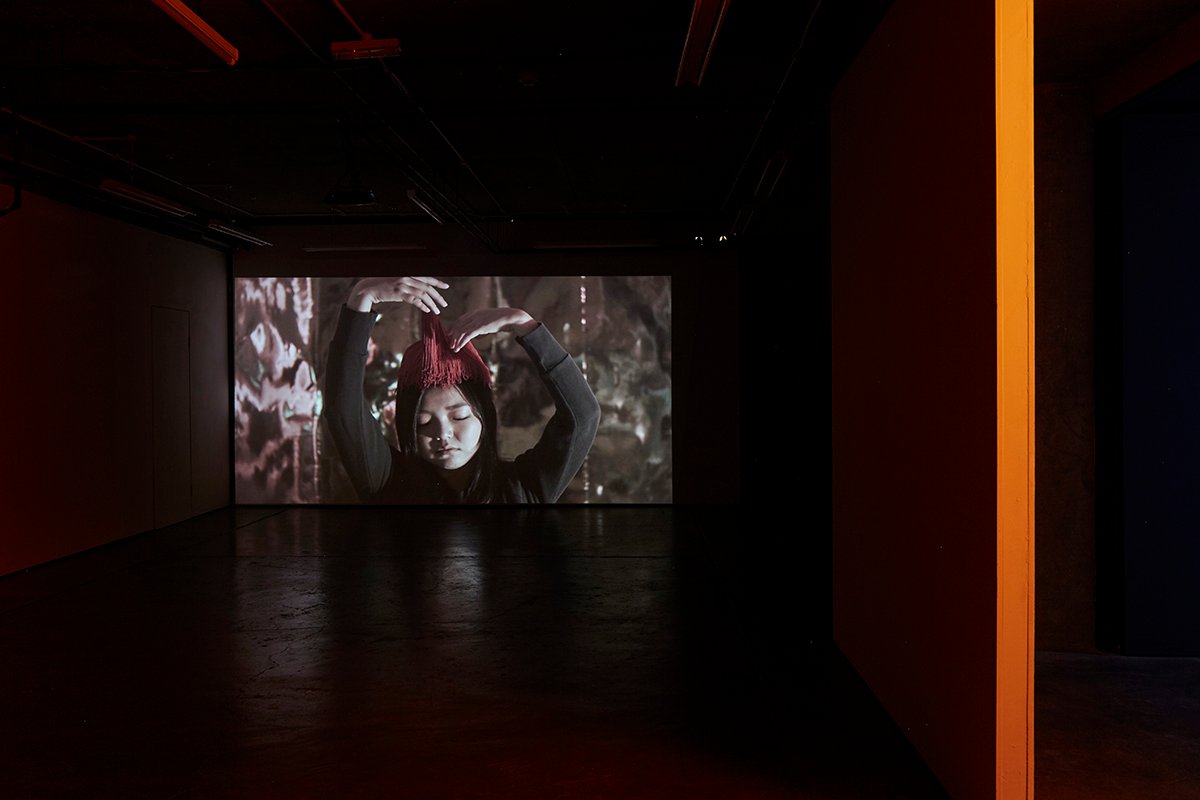
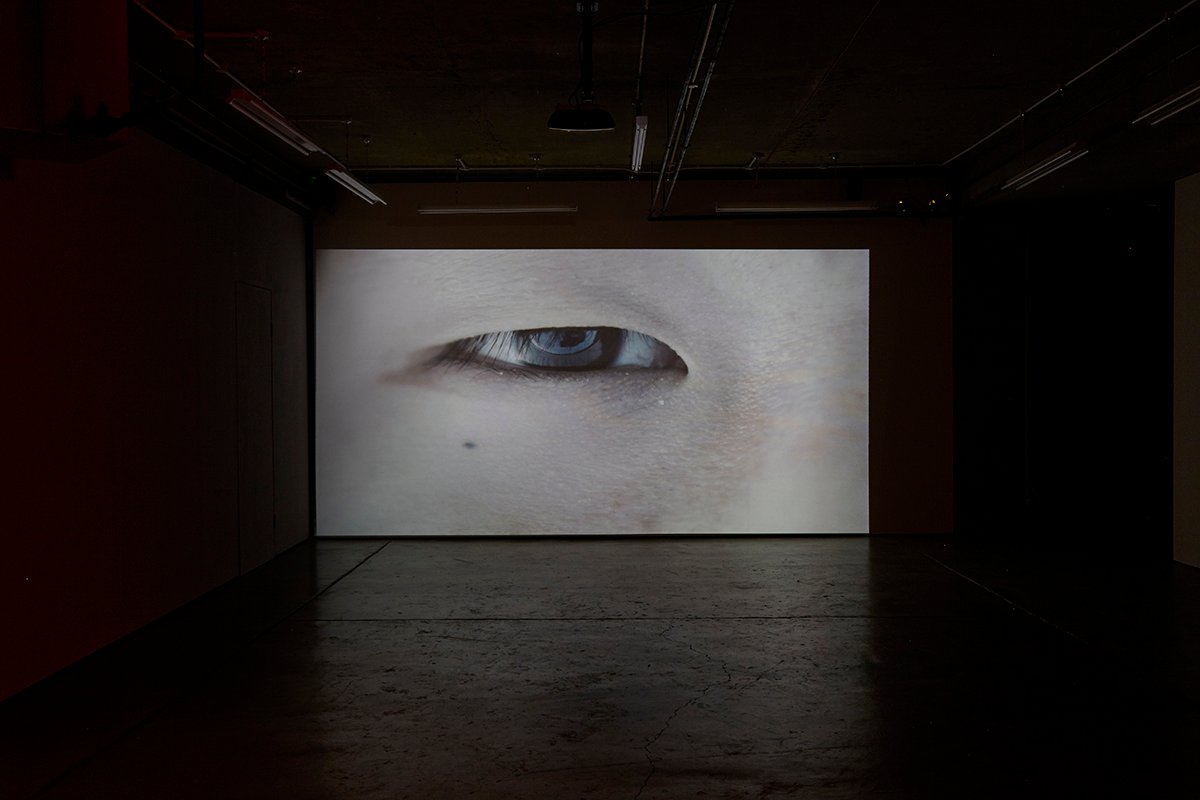
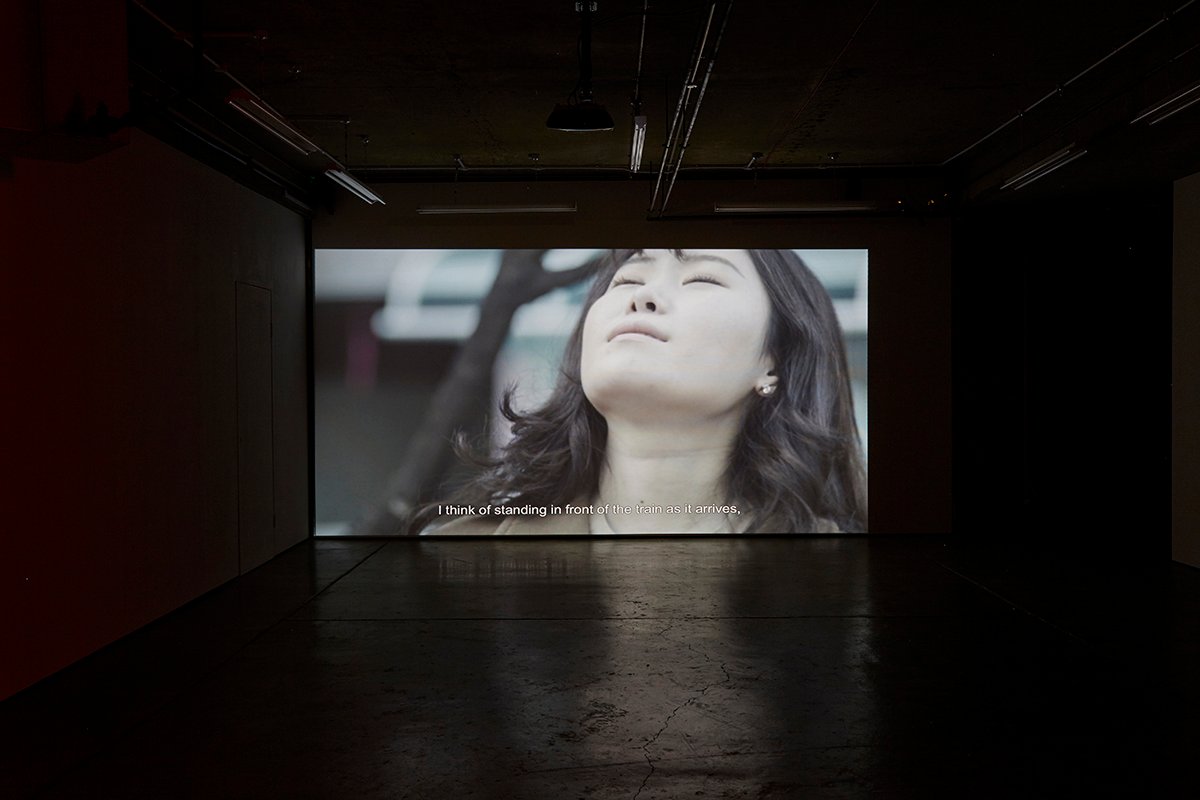
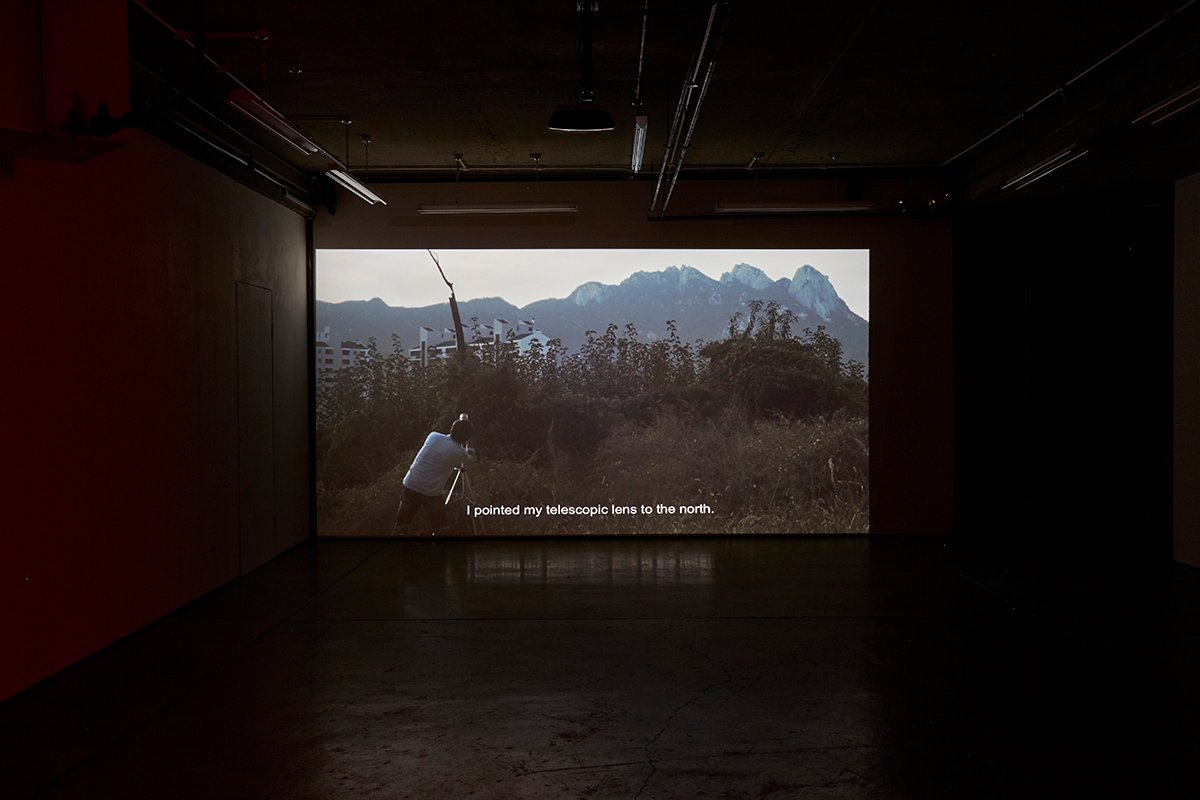
Film, 5mins 40sec
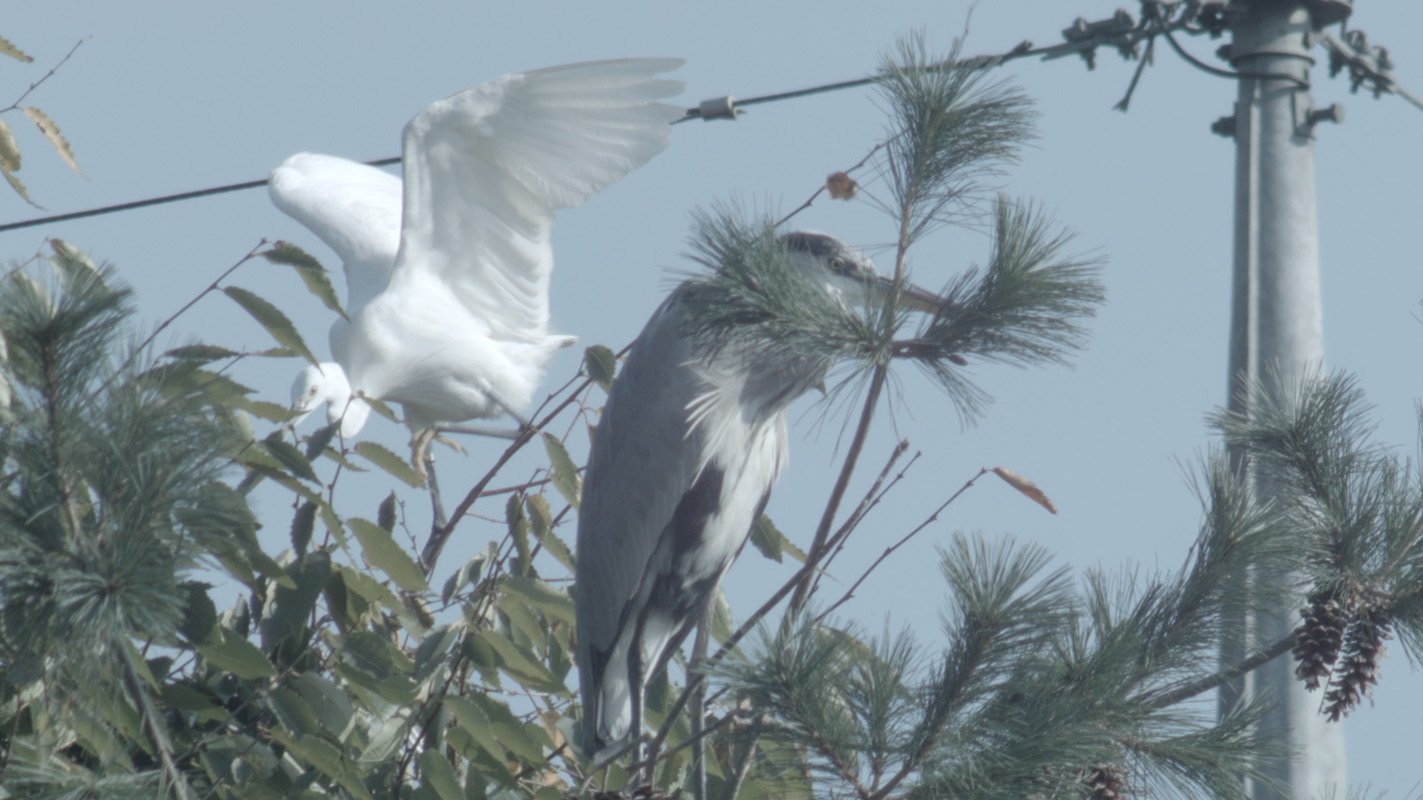
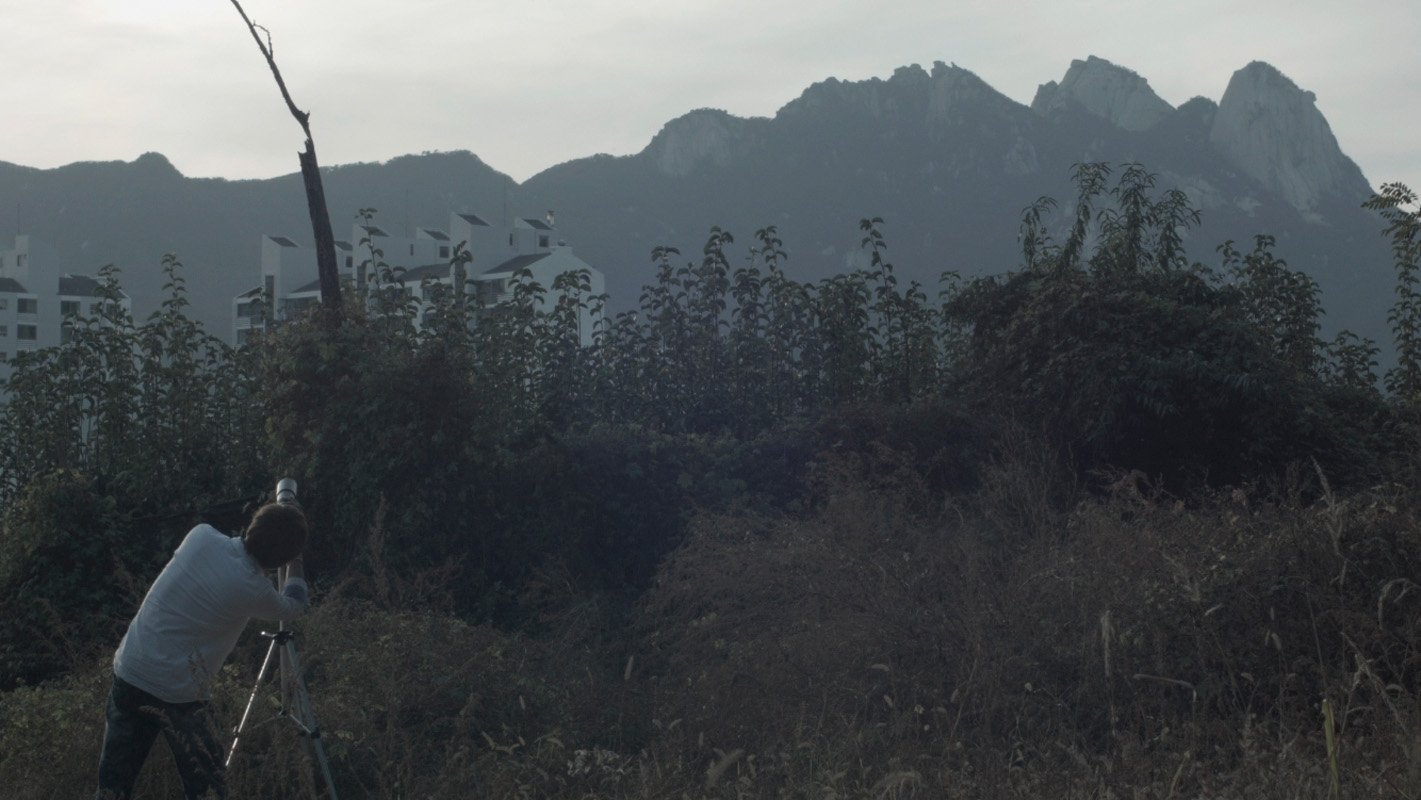
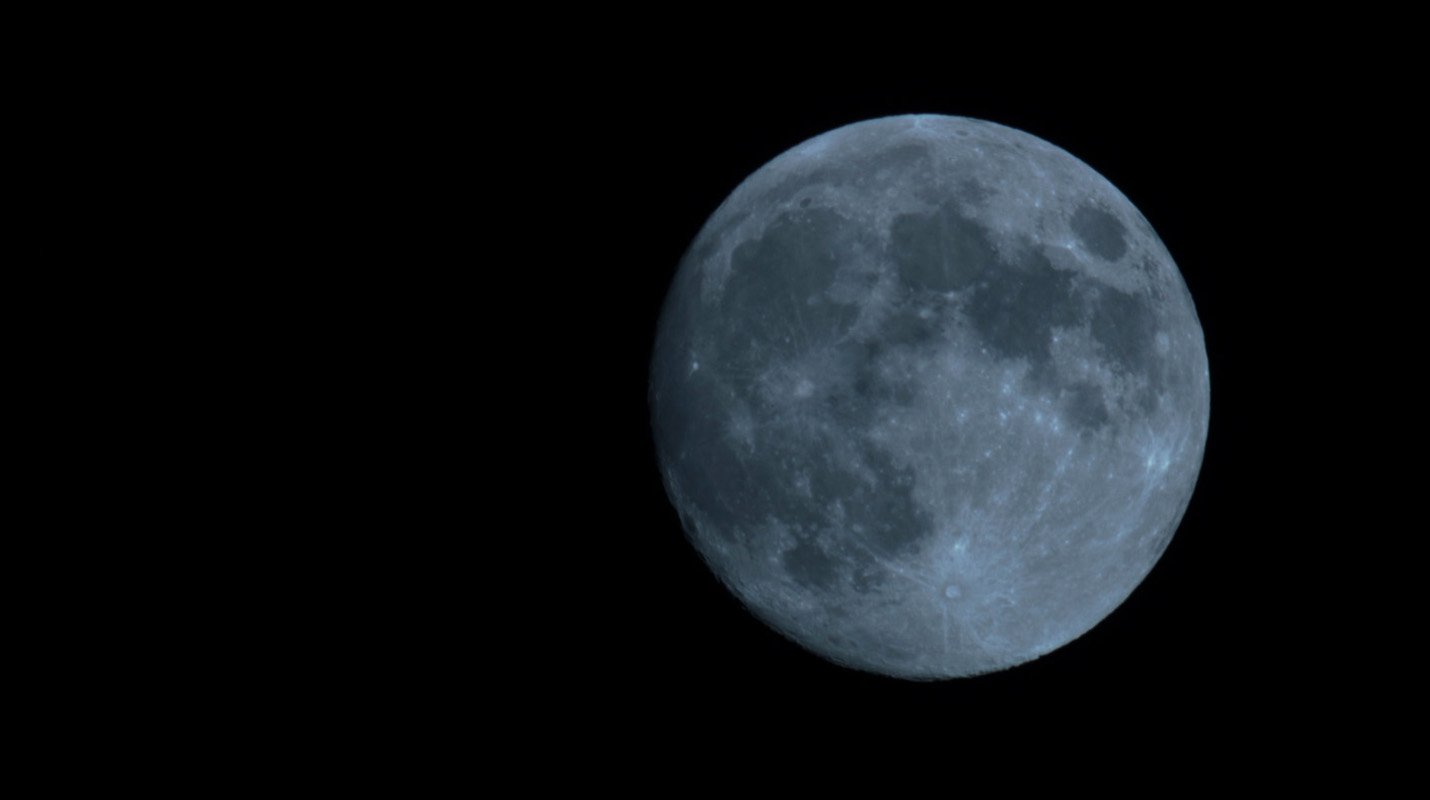
Our Stranded Friends in Distant Lands (Korean with English subtitles) begins with a news report, part pastiche and part allegory, about the activities of birds navigating the border between North & South Korea. We are then introduced to one of the characters, who uses a telescopic lens to imagine what the moon looks like when viewed from the North. Interspersed throughout the film, an almost full moon moves across the screen.
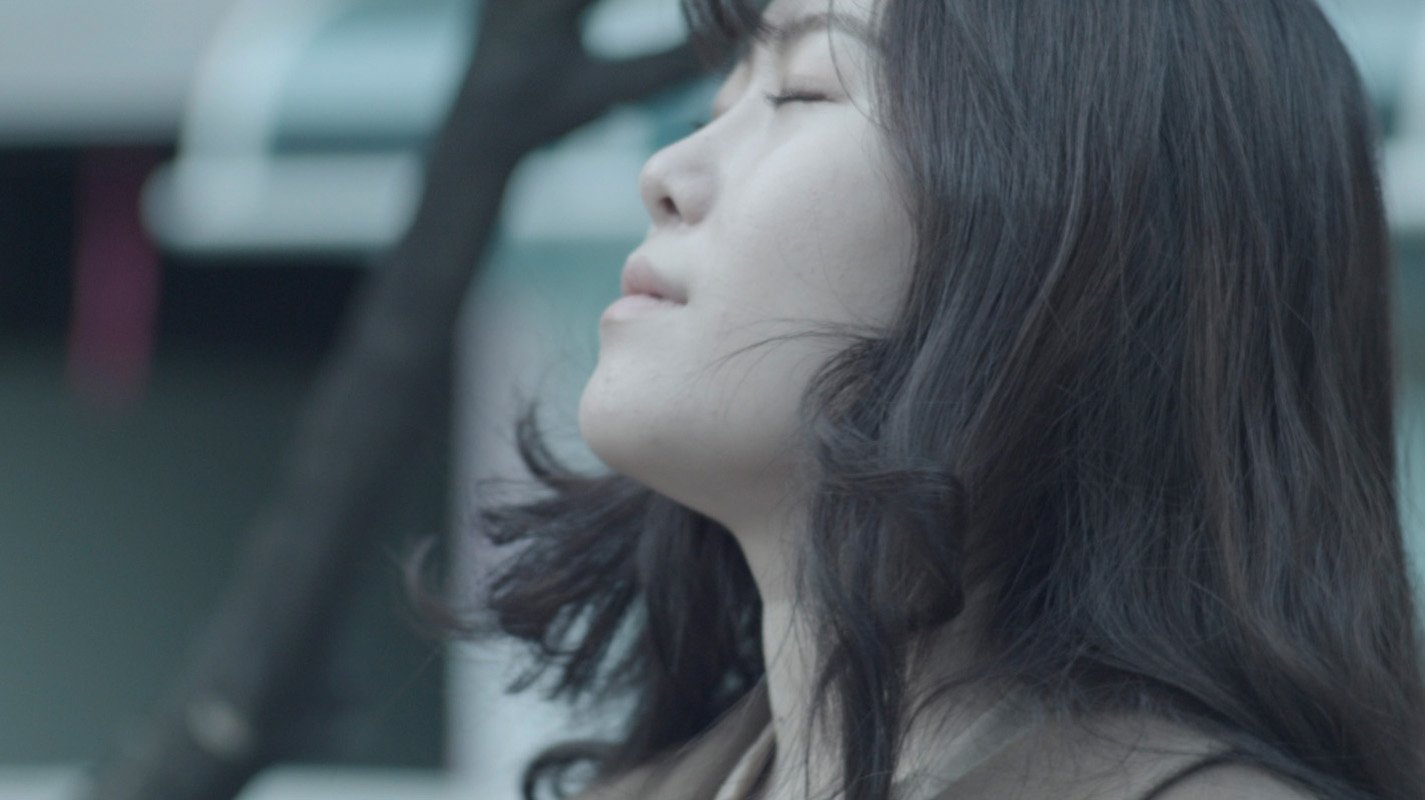
Next, from these outward observations, we move into a character’s dissatisfaction with a controlling relationship. Finally, an internal monologue, ruminating and fixating on death, leads us back to how both the absence and presence of war manifest in the everyday cityscape: “An alarm sounds for the train’s arrival. It recalls a bomb shelter siren, and is quite at odds with the shiny cars lining up at the railroad crossing.”
Millennium Court Arts Centre
12.2016-02.2017
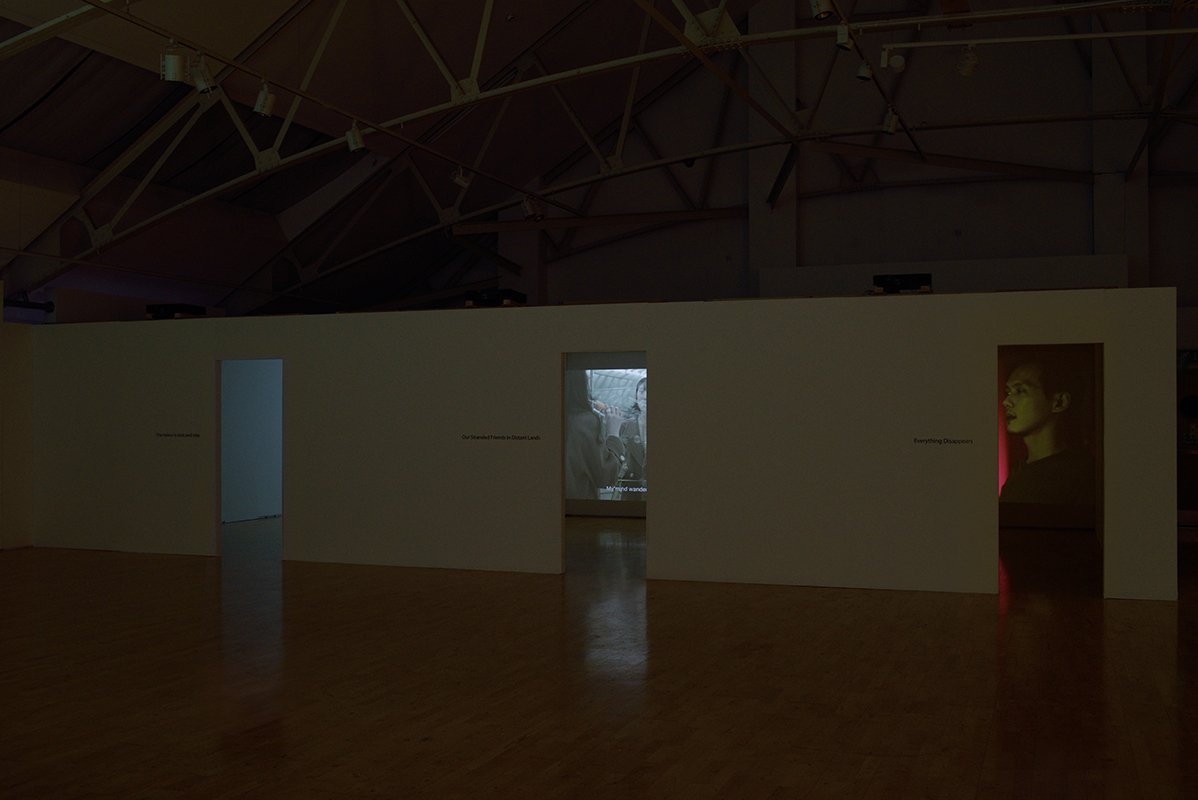
MMCA Changdong
Open Studio, 2014
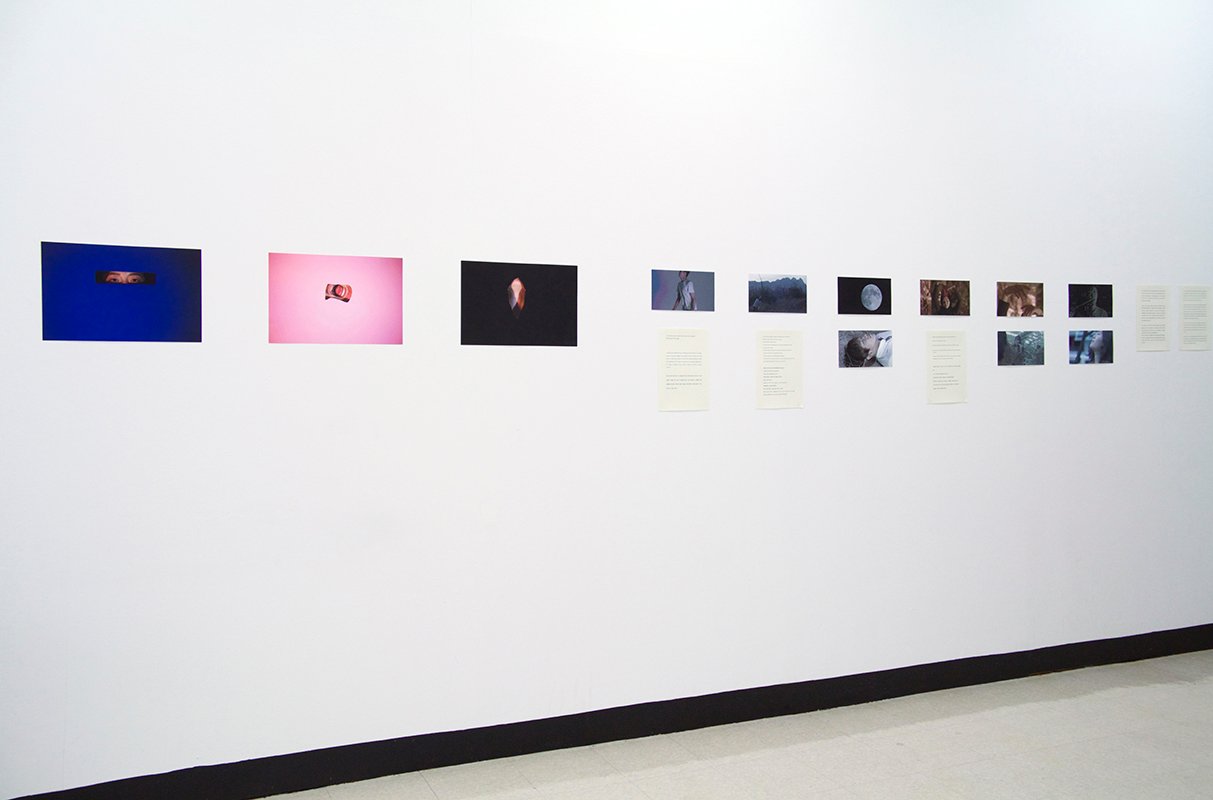
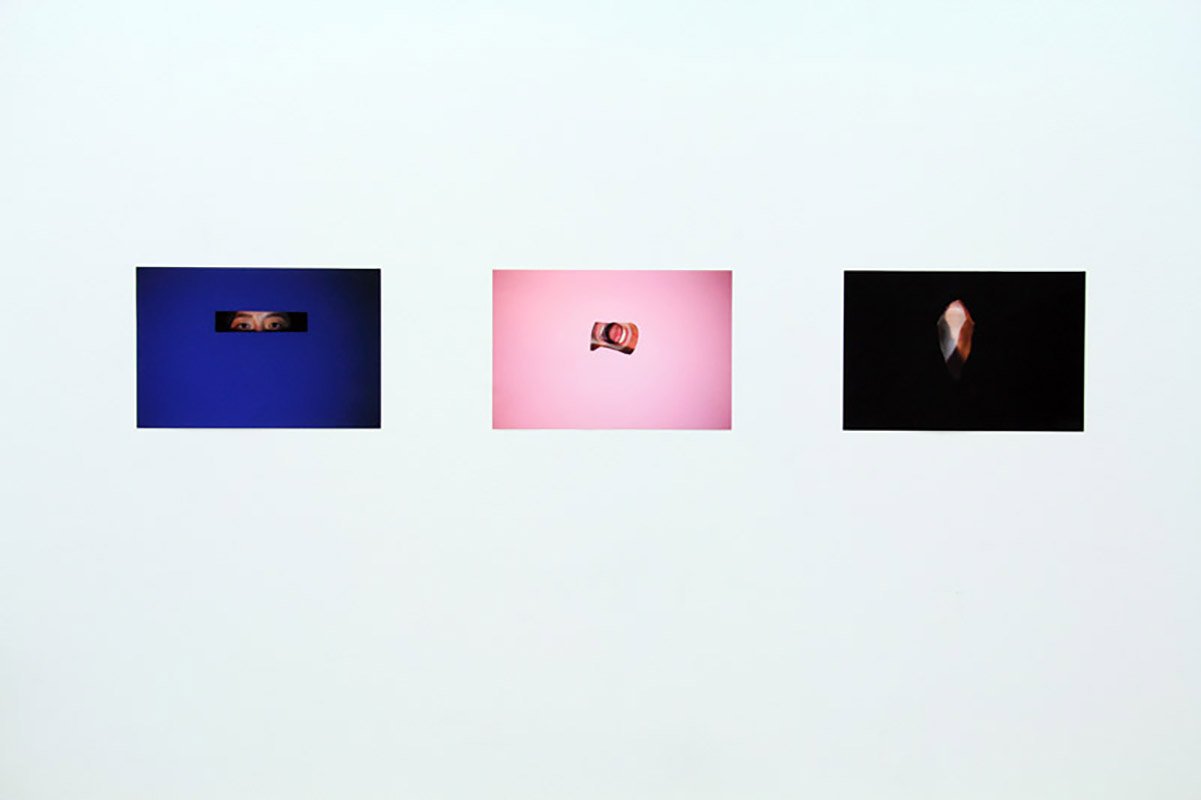
Group exhibitions
CCA Derry-Londonderry, Ulster University Gallery & ‘Art Works’ at VISUAL Carlow selected by Lewis Biggs, 2015
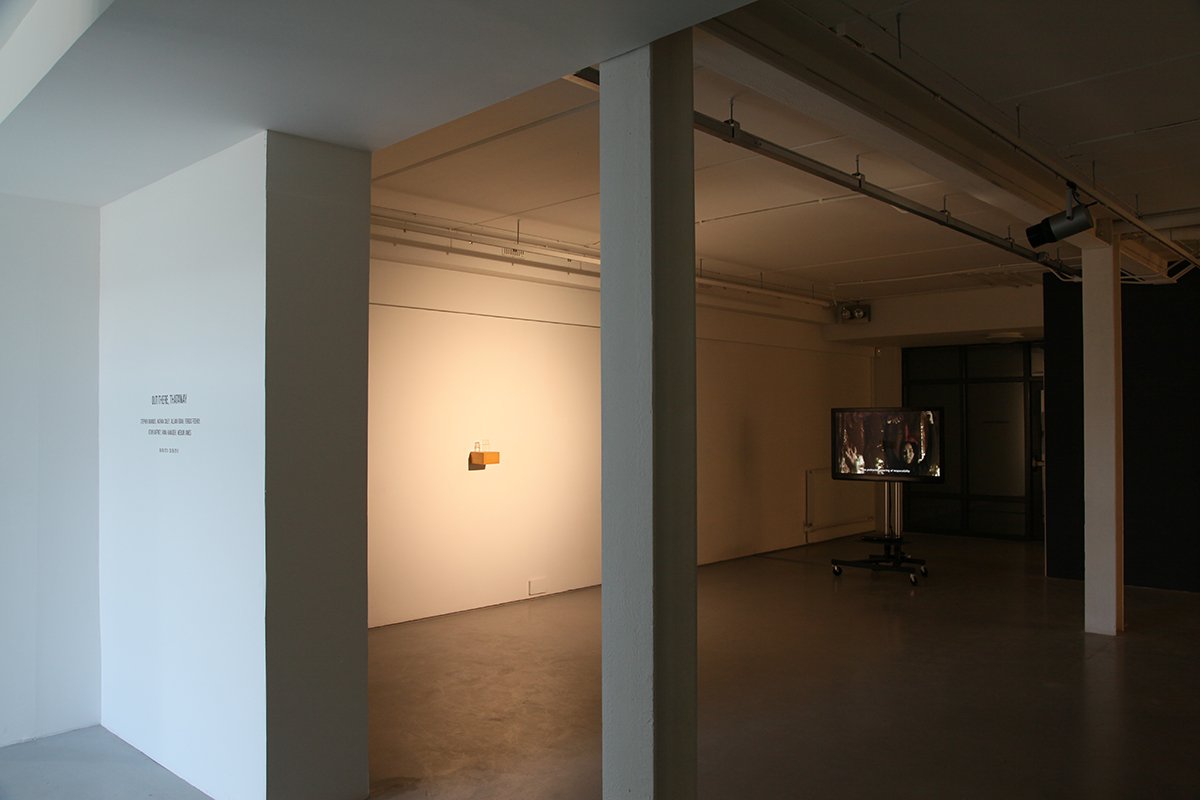
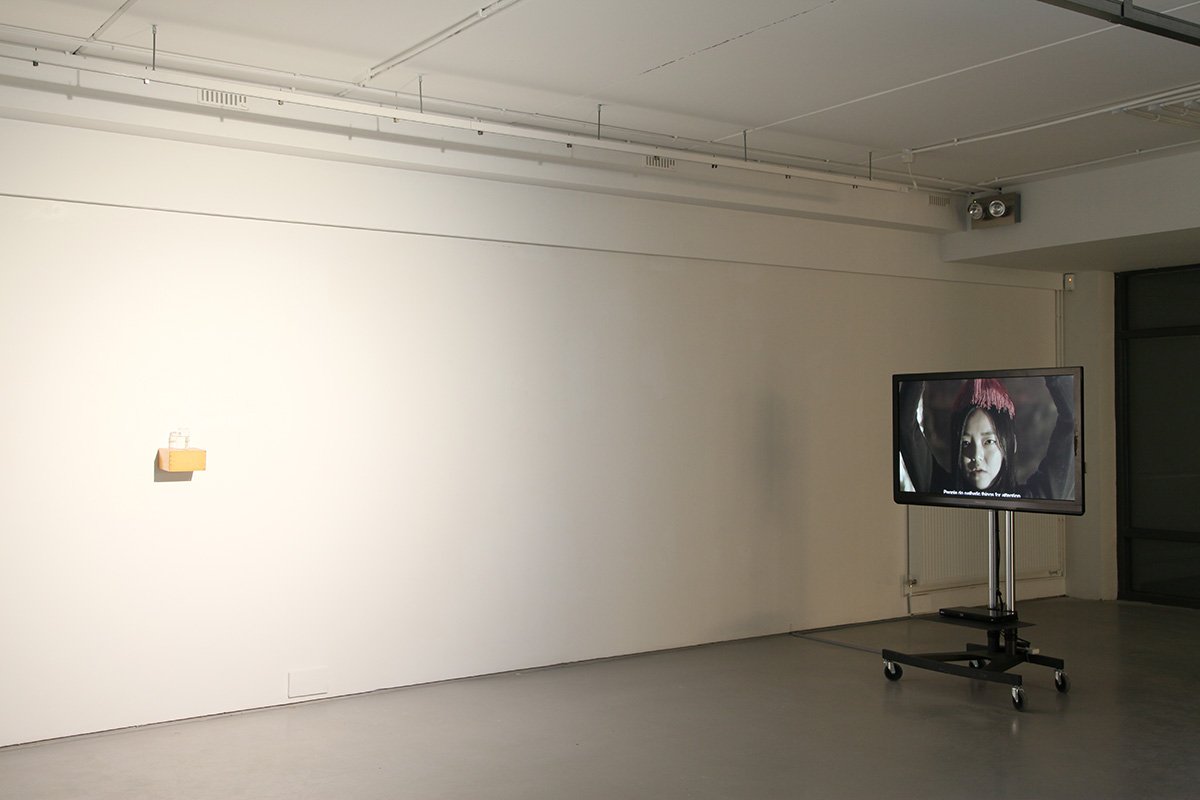
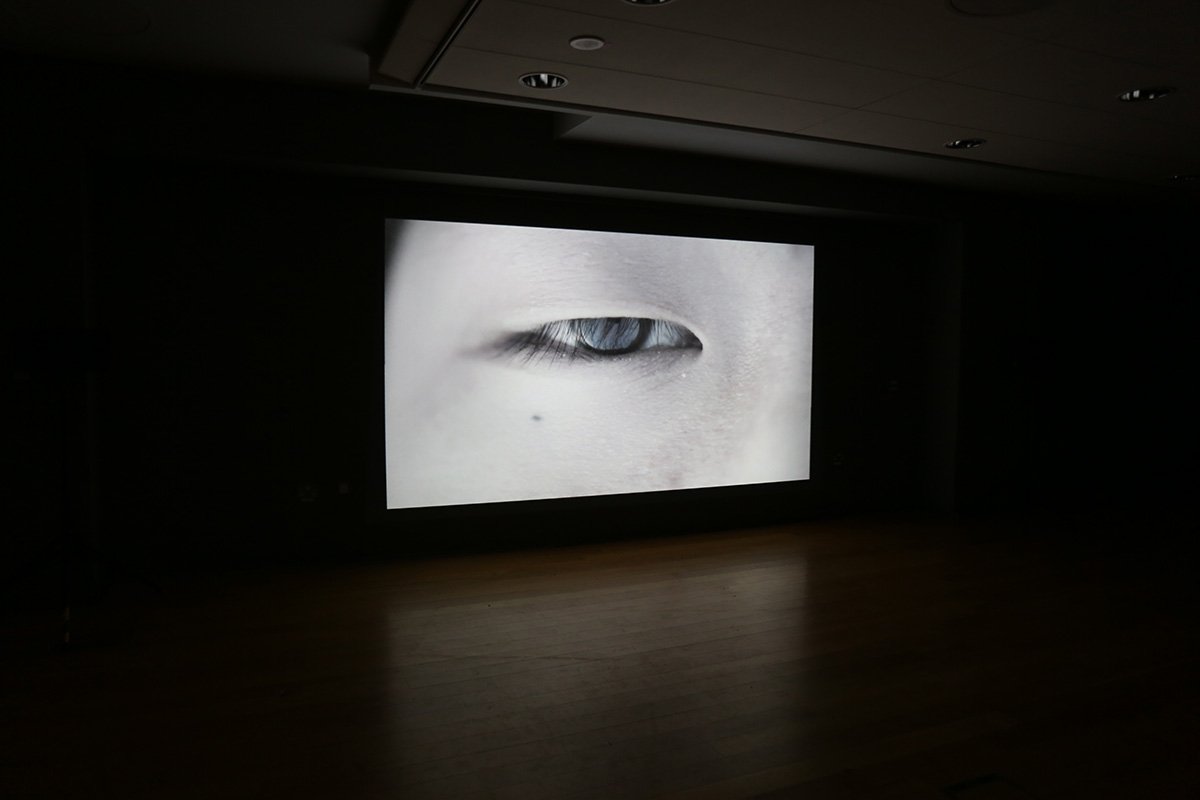
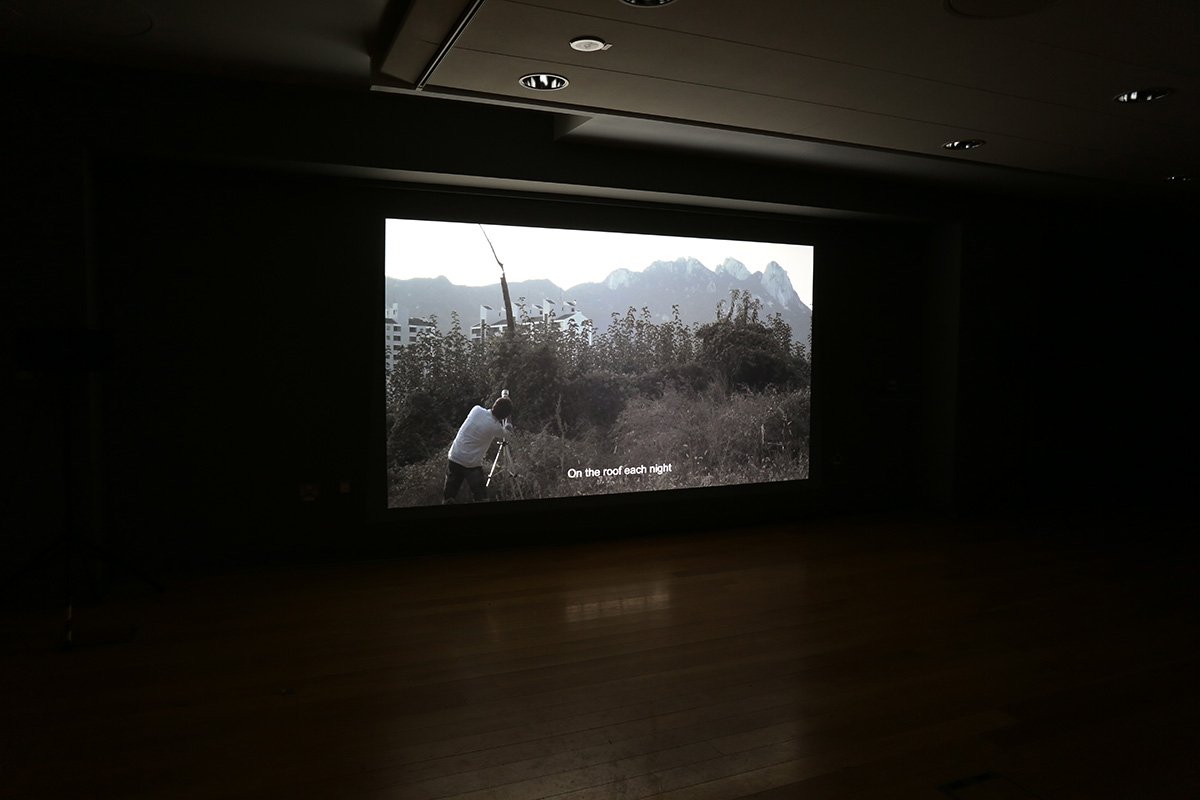
“A similar concern with transcending boundaries in Our Stranded Friends in Distant Lands, 2015, is more obviously inflected by local geopolitics, given its genesis in South Korea. Here, however, in lieu of the bewildering flux of “becoming-animal”, as famously outlined by the French philosophers Deleuze and Guattari in response to the stories of Kafka, we have a more traditional tapping of the allegorical potential of the animal kingdom; a gambit familiar to readers of Western literature from Ovid to Orwell. The film’s opening sequence notes that, in a divided land where the disparity between opposing perspectives and vantage points is crucial, the birds of the air pay a fatal price for making a mockery of national borders. This injustice, it is reported, has been denounced by “a spokesman” from “the Village of Migratory Birds” who adamantly professes his faith in the ultimate endurance of nature beyond nation.
The disjointed meditations that follow are parcelled out among male and female human narrators in a patchwork of dramatic visual contrasts between spirited animation and discomfiting immobility, interior monologue and diegetic speech, open and closed eyes. Word and image, voice and vision are cautiously conjoined under the sign of reflection (in the senses of both thoughtful contemplation and automatic mirroring), a tentative reconciliation effected through a shifting series of visual rhymes and verbal references involving the full moon, the human eye, the telescopic (and, by implication, the camera’s) lens.”
Supported by the UNESCO-Aschberg Bursary for Artists, on residency at MMCA Changdong.