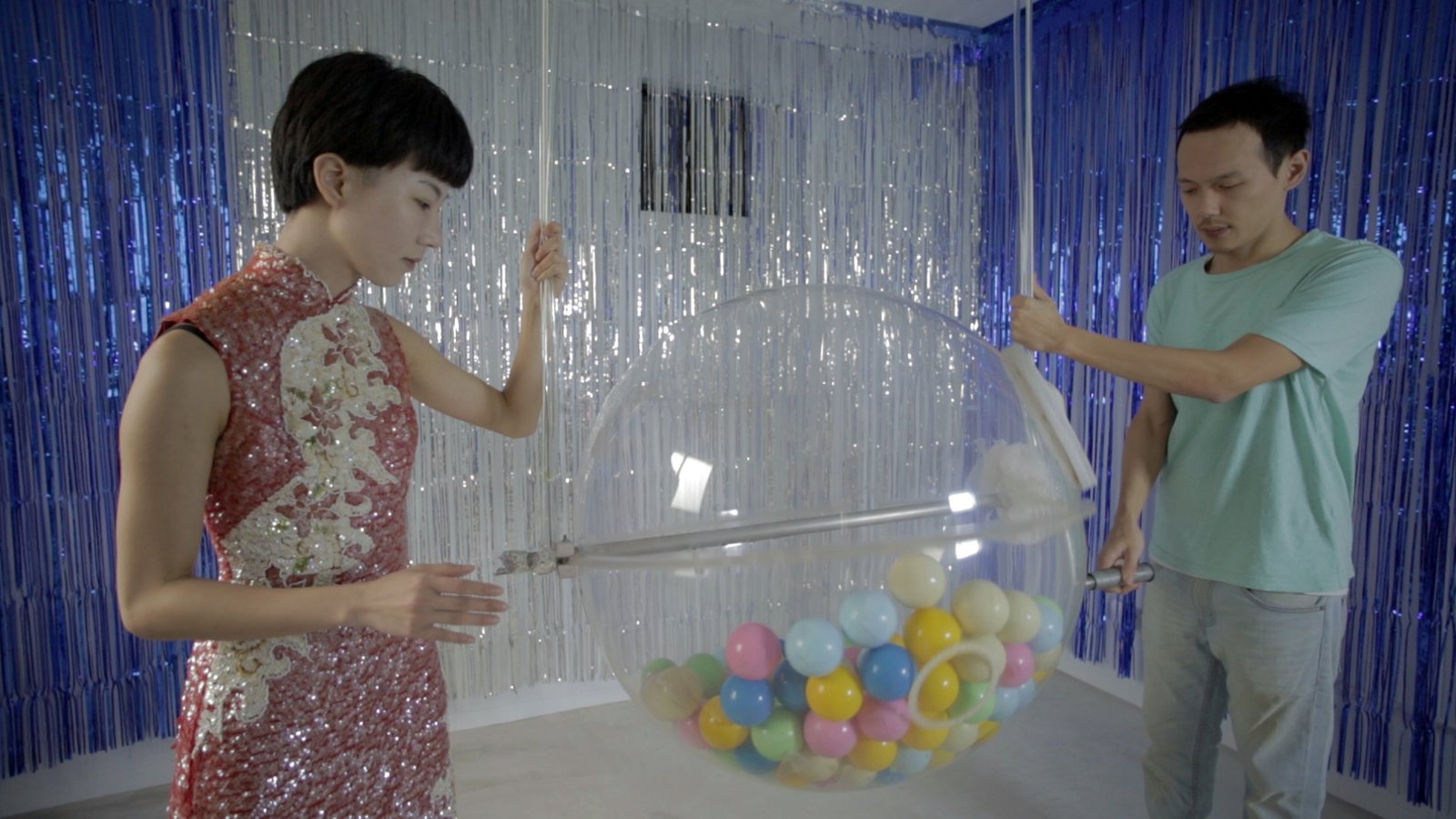
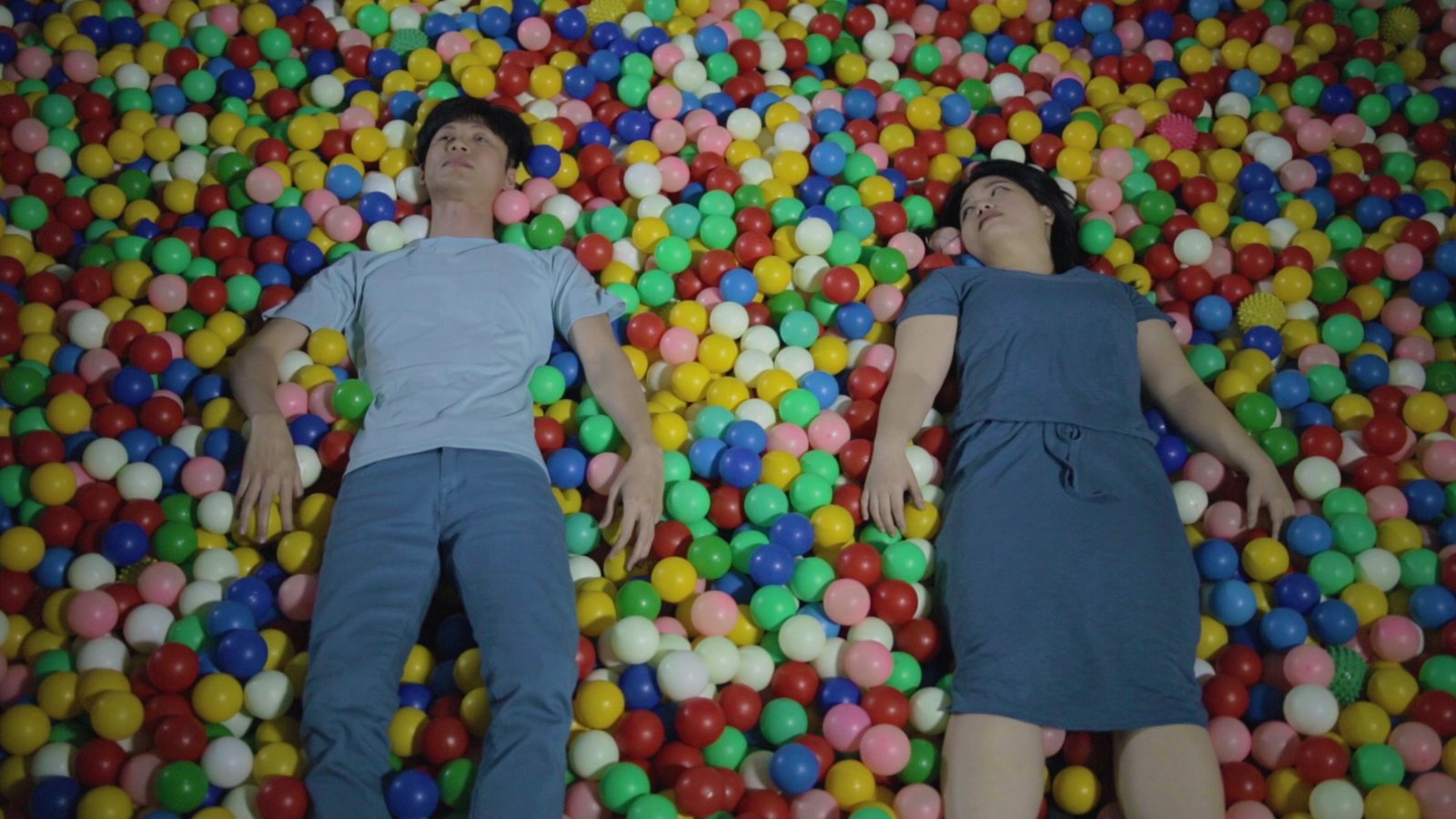
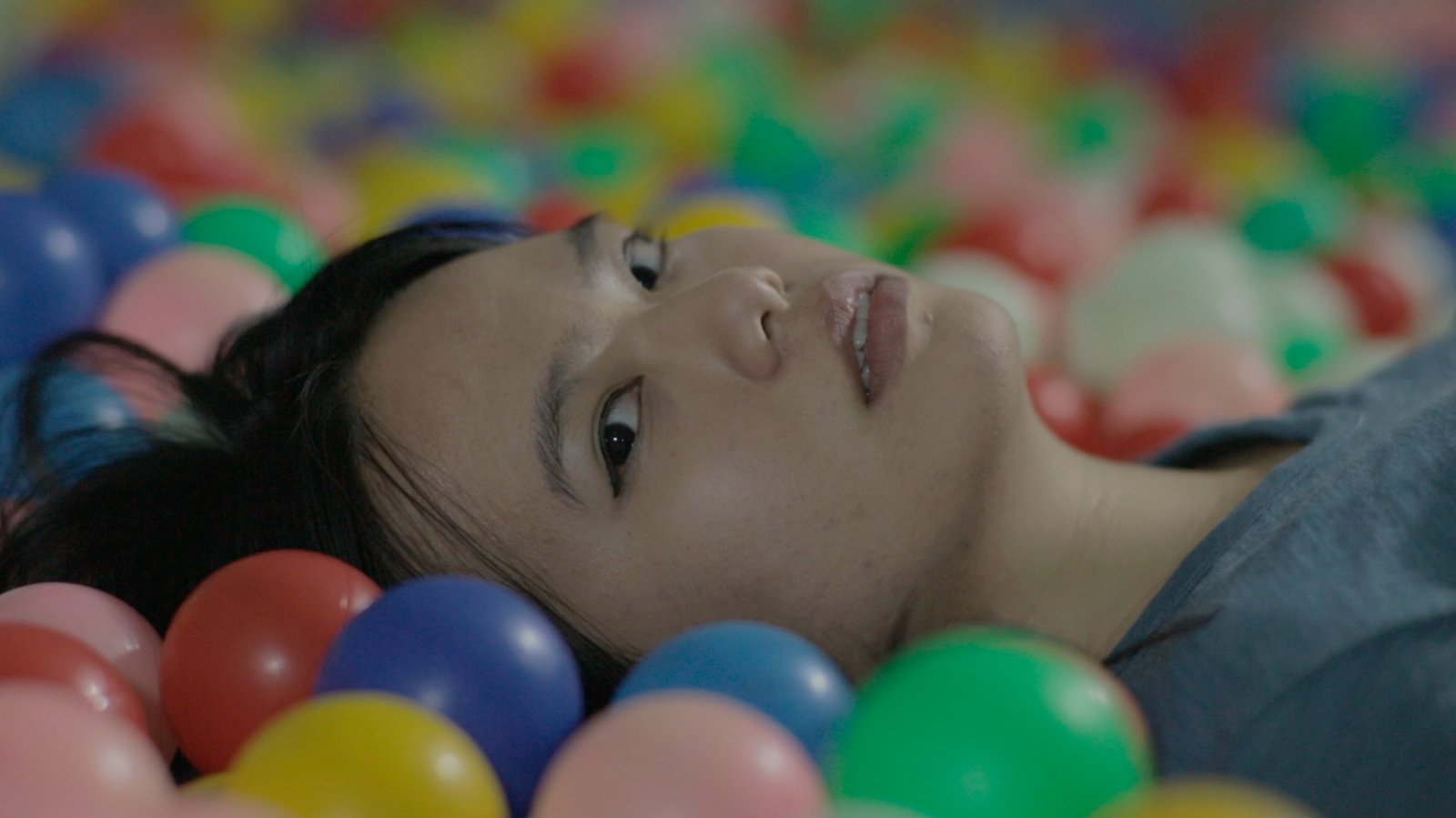
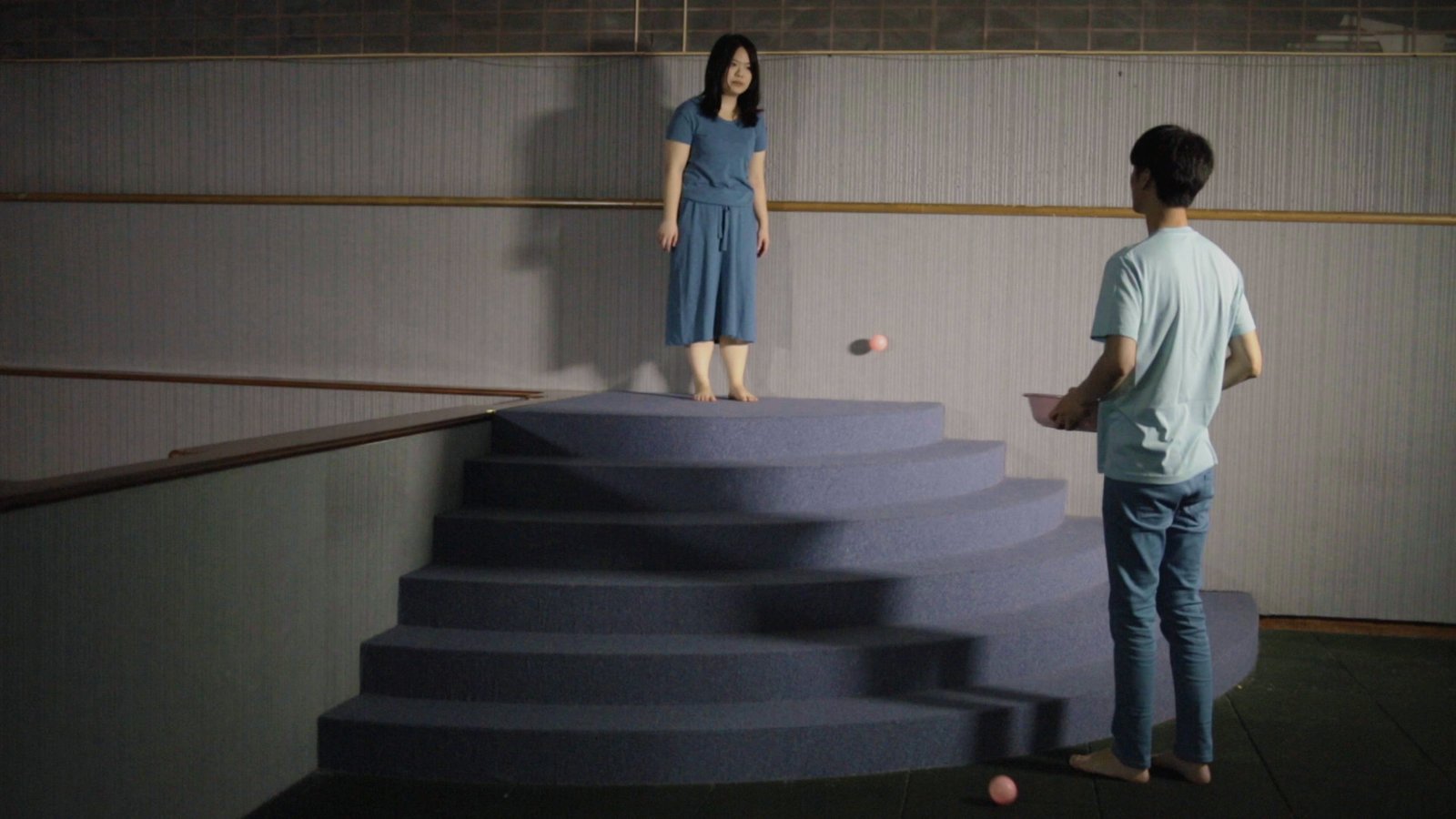
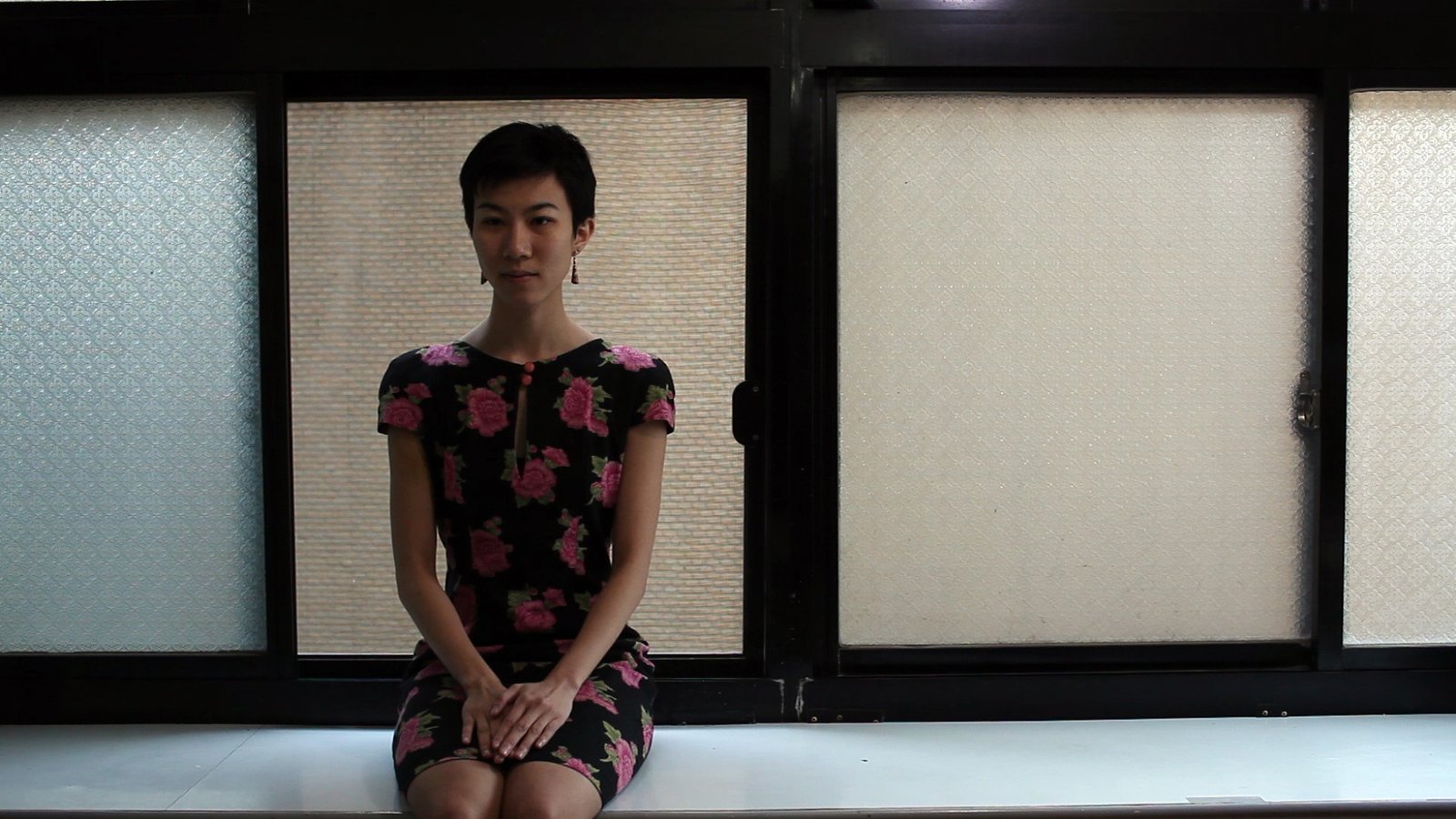
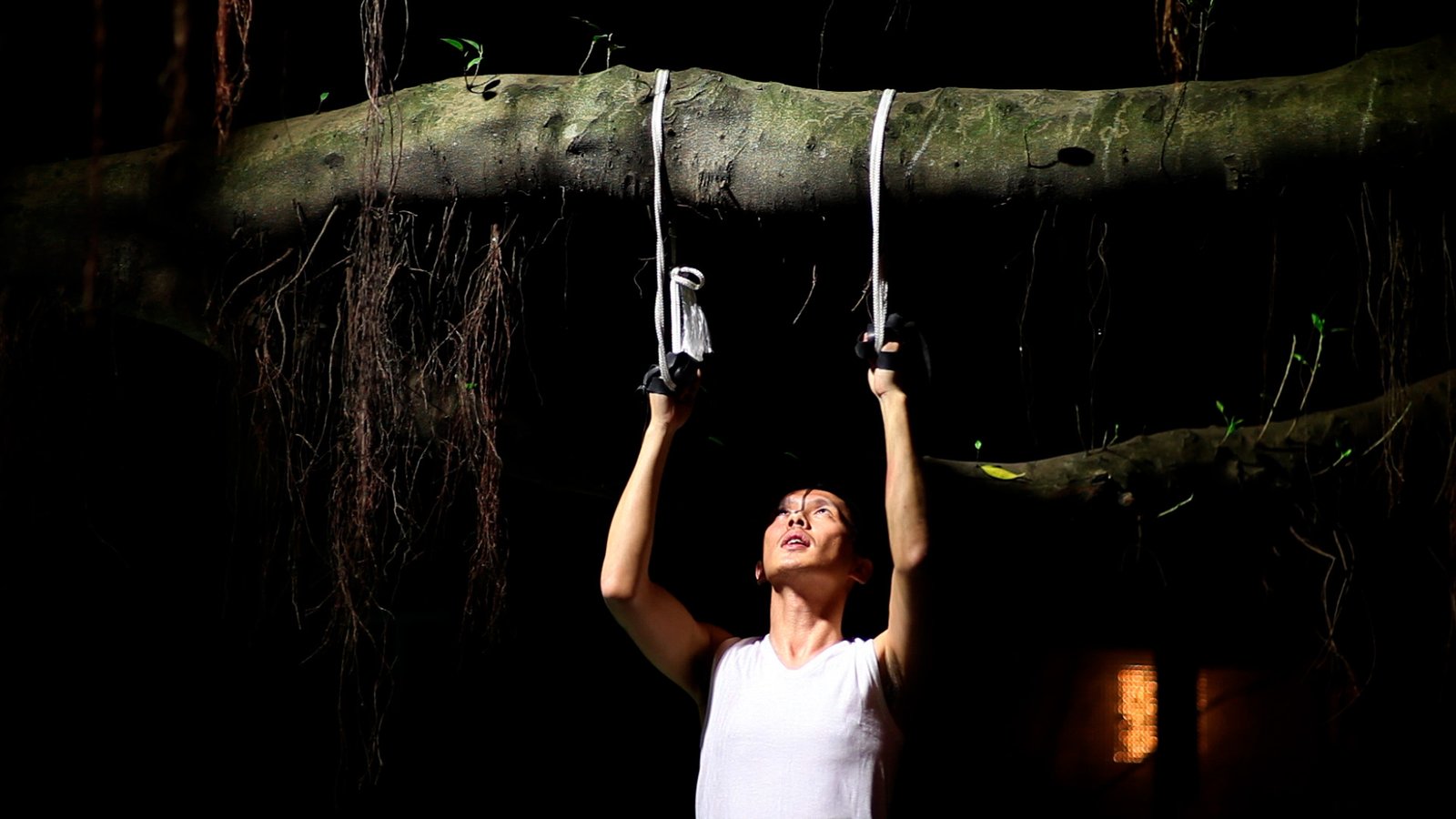
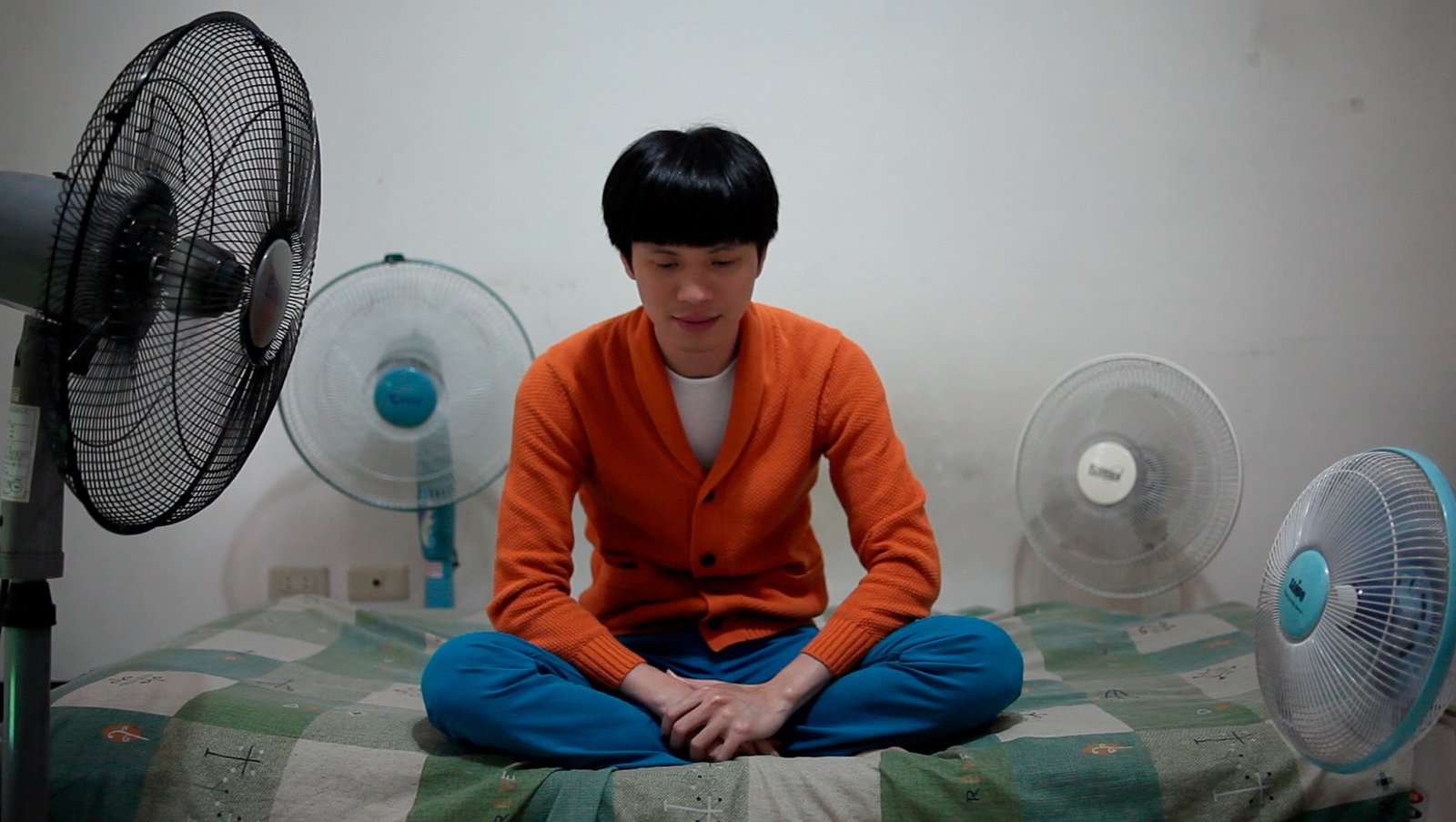
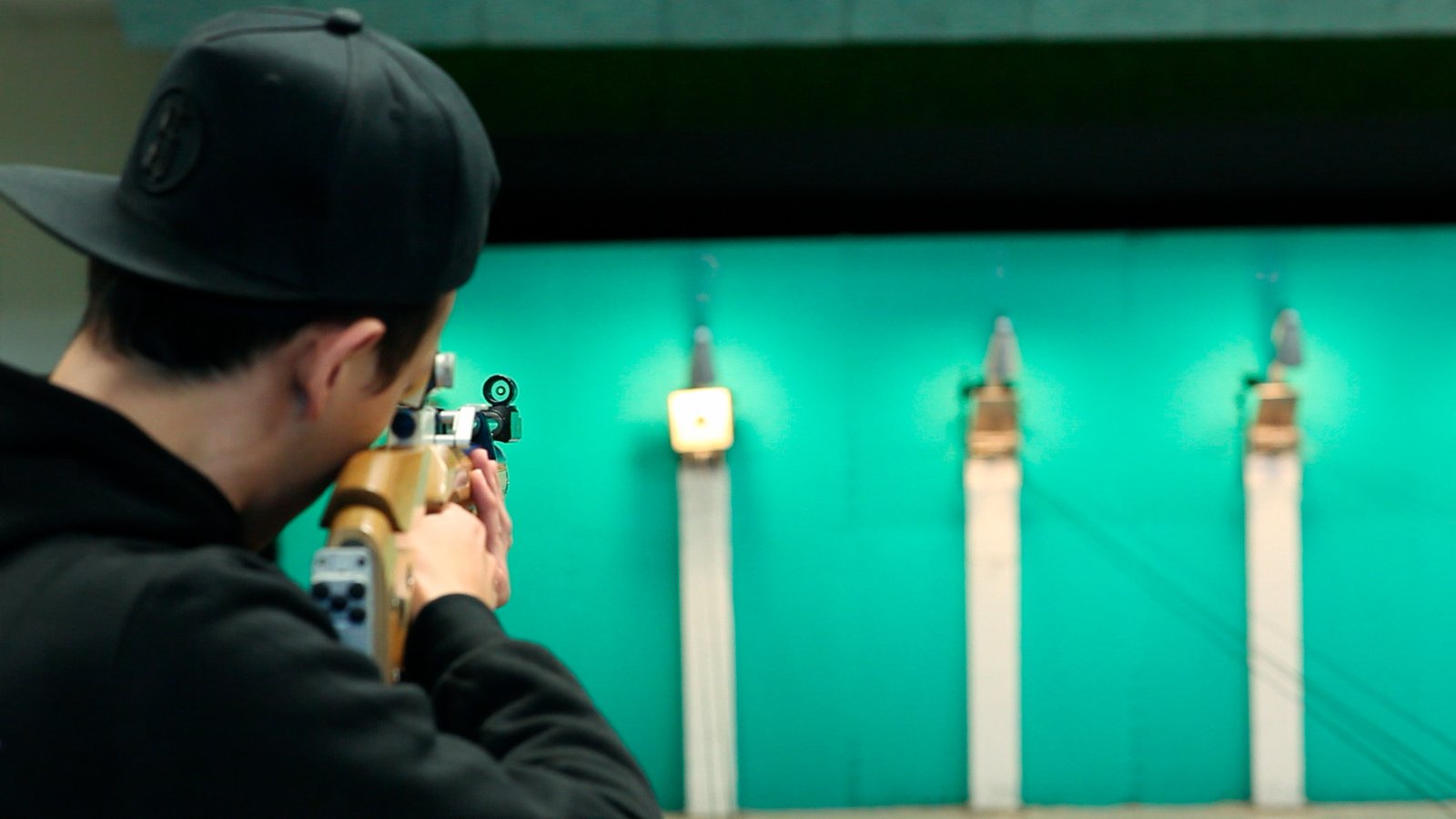
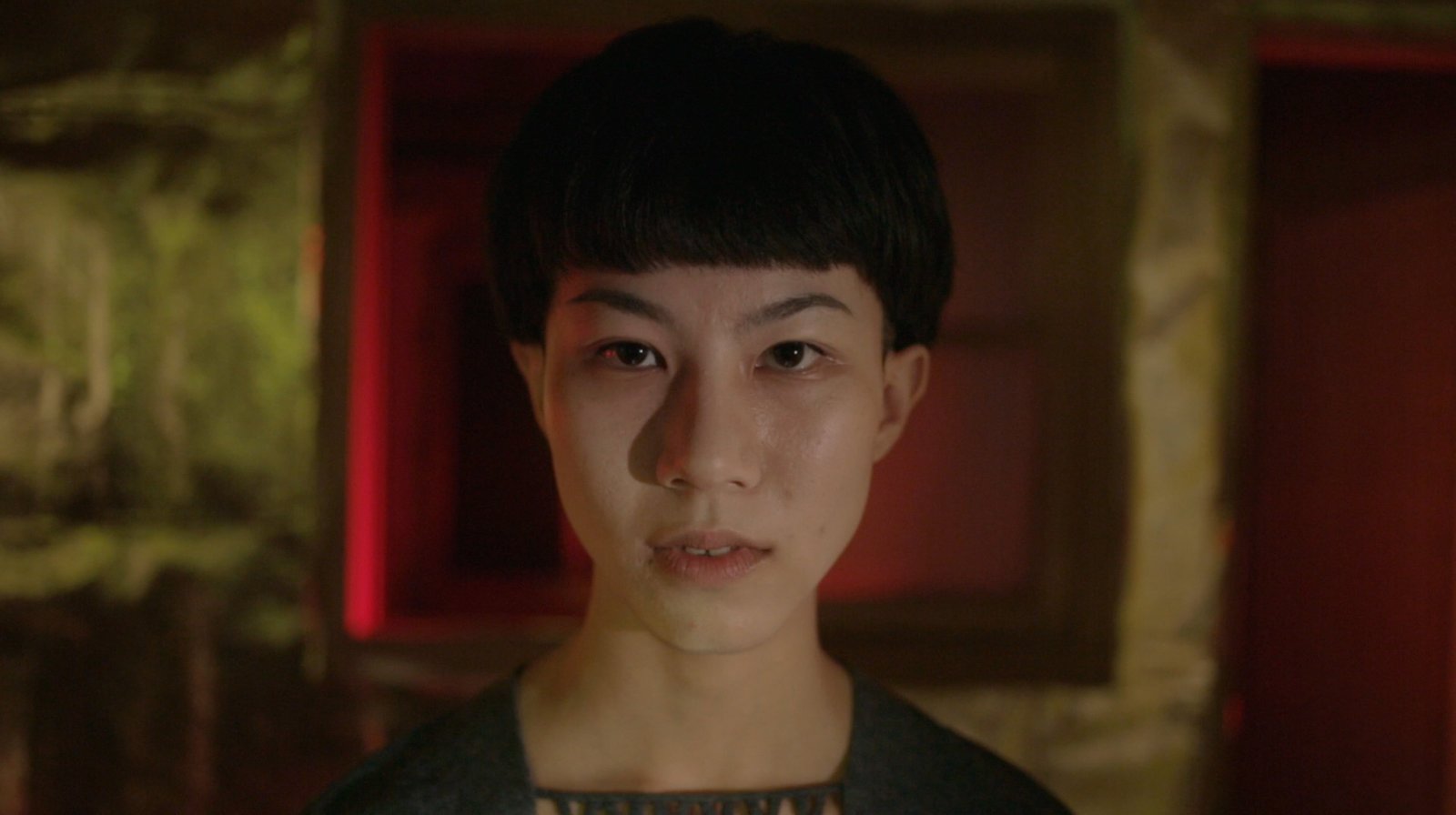
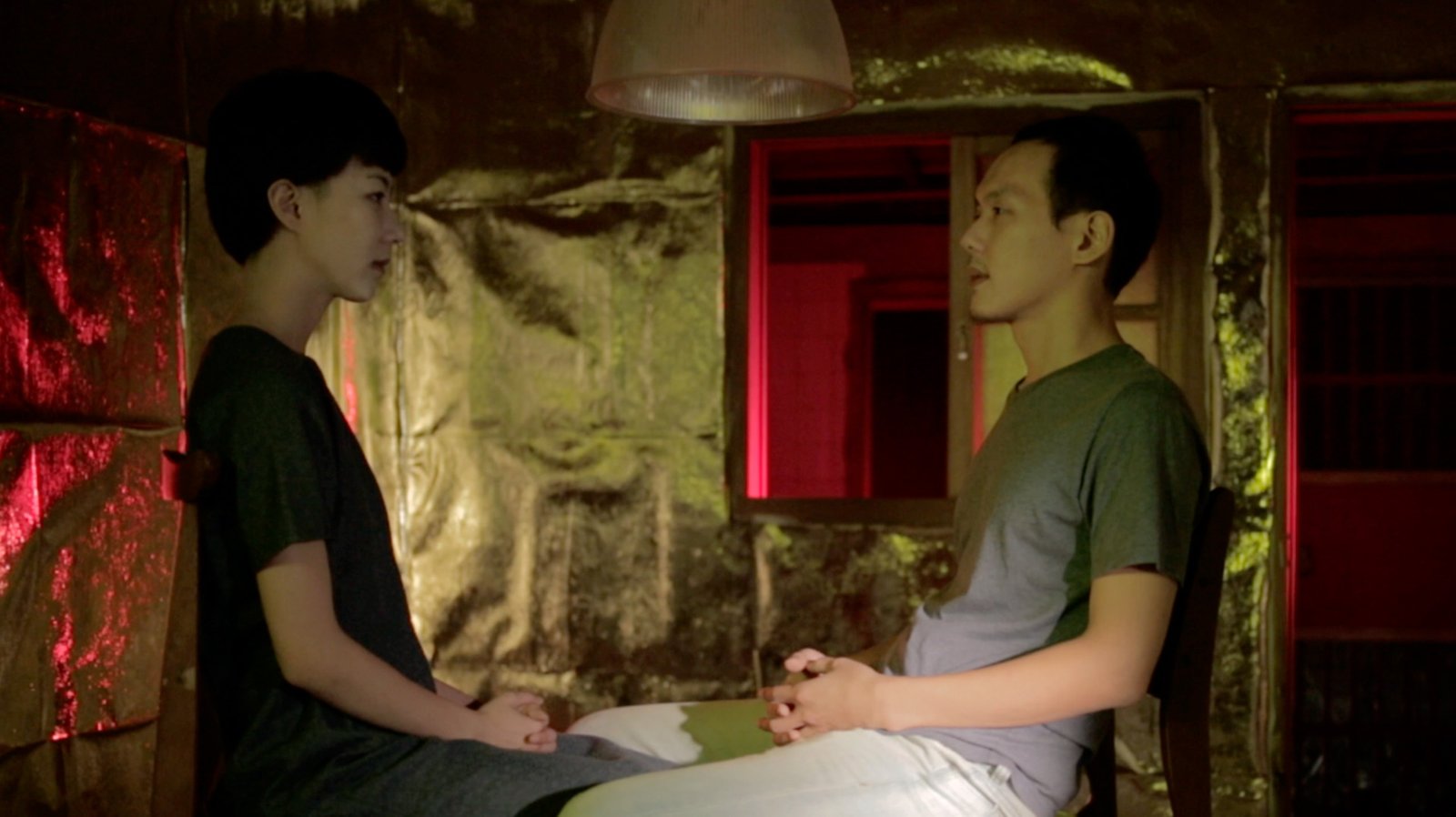
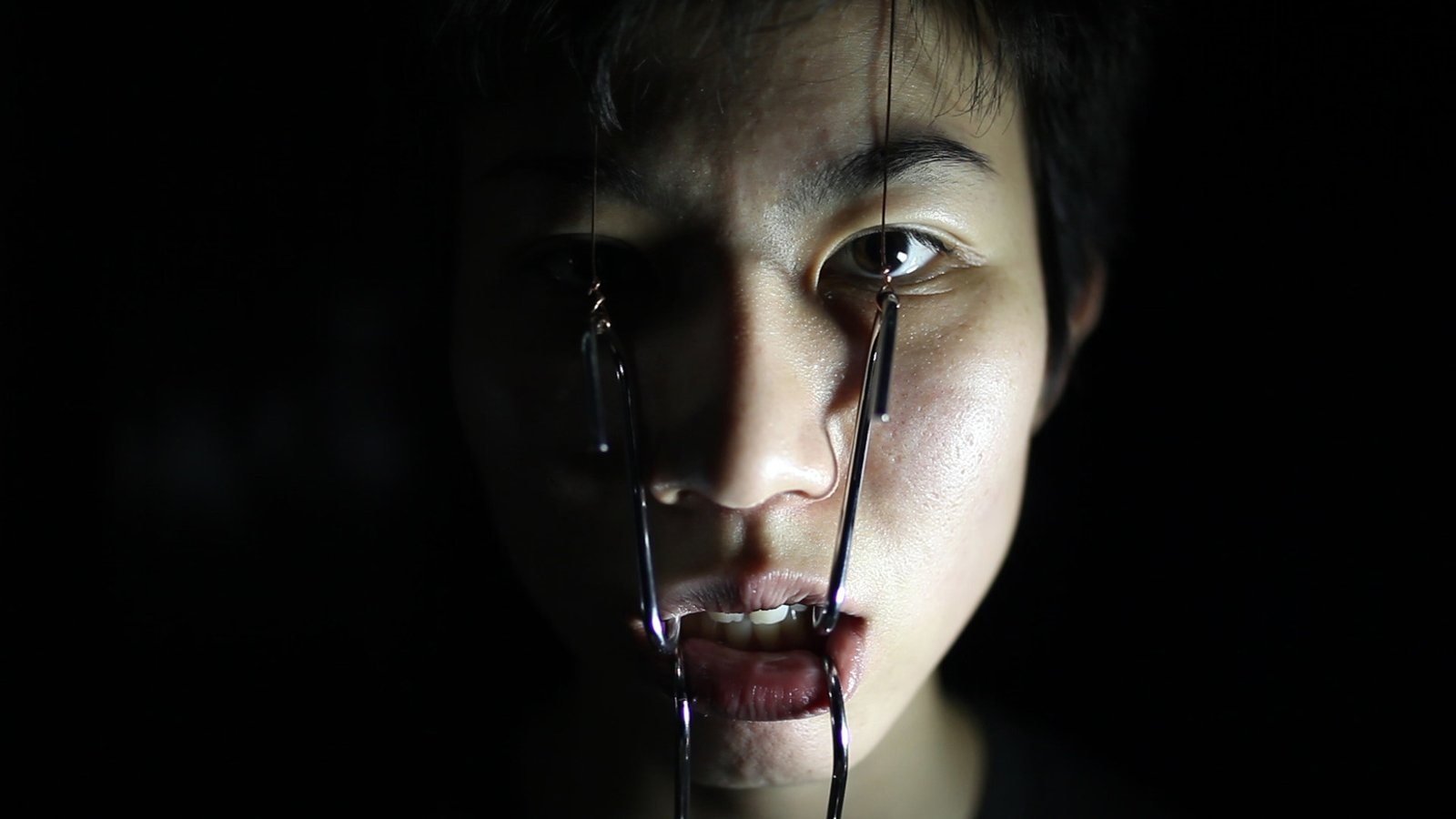
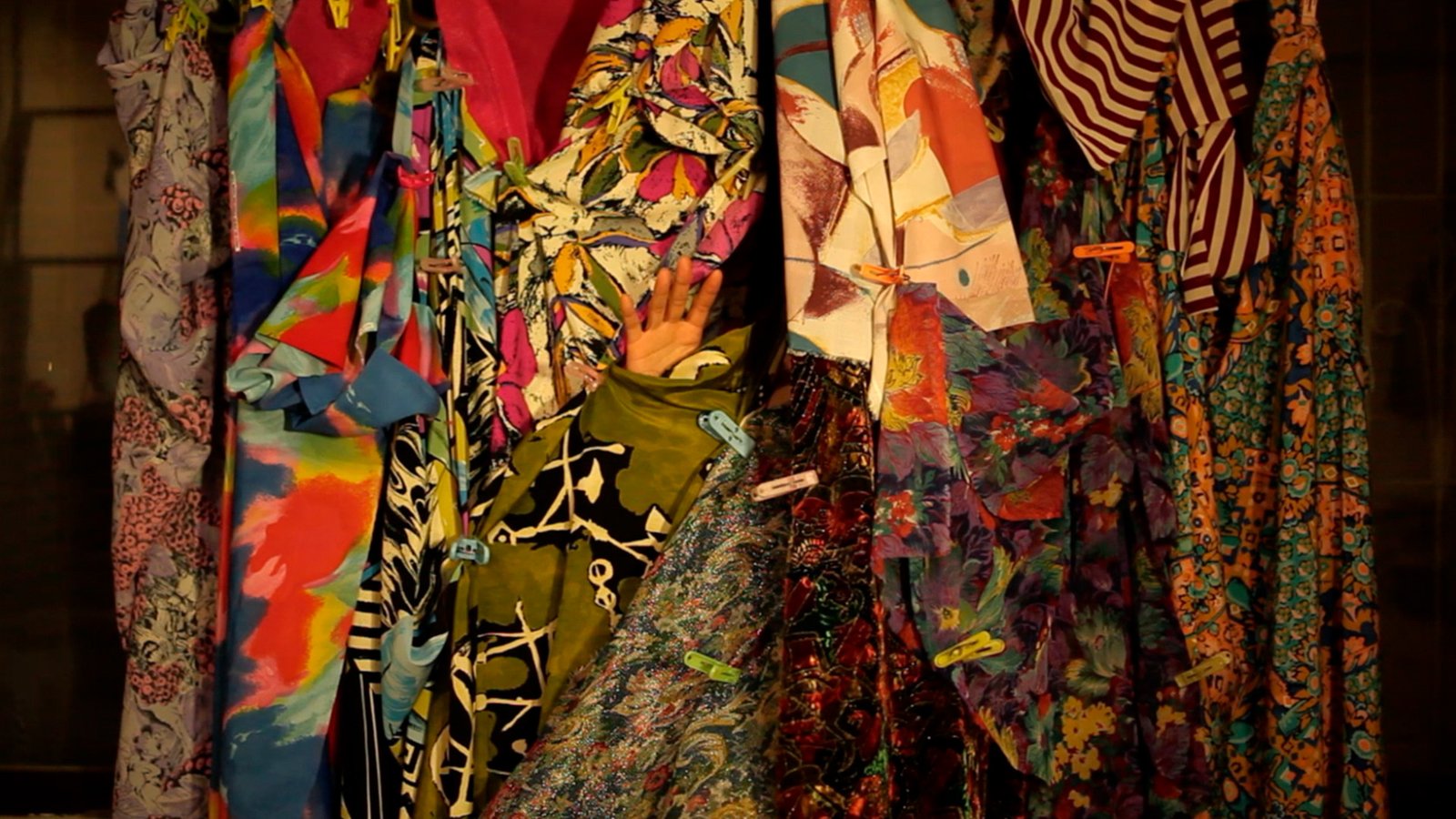
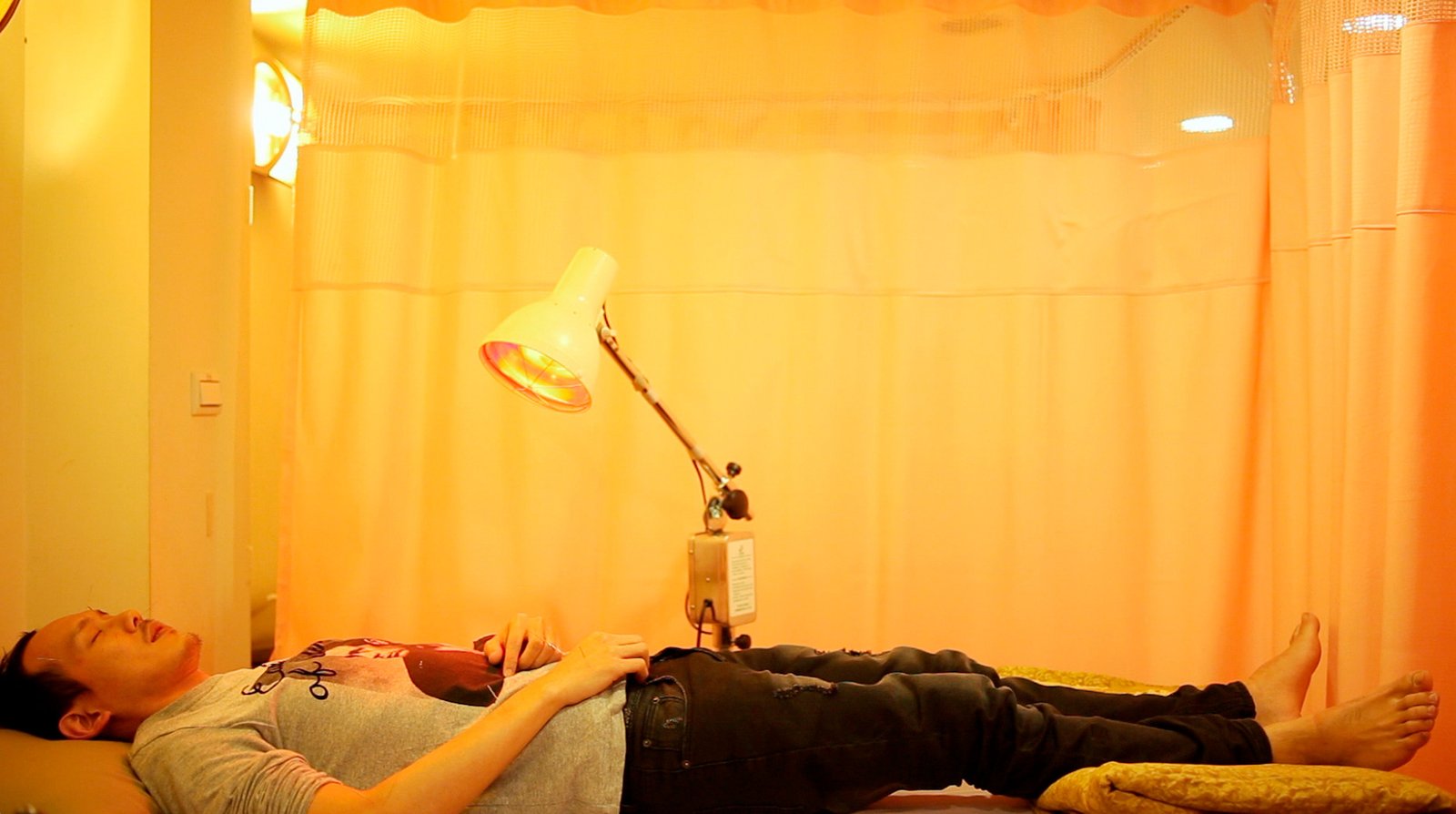
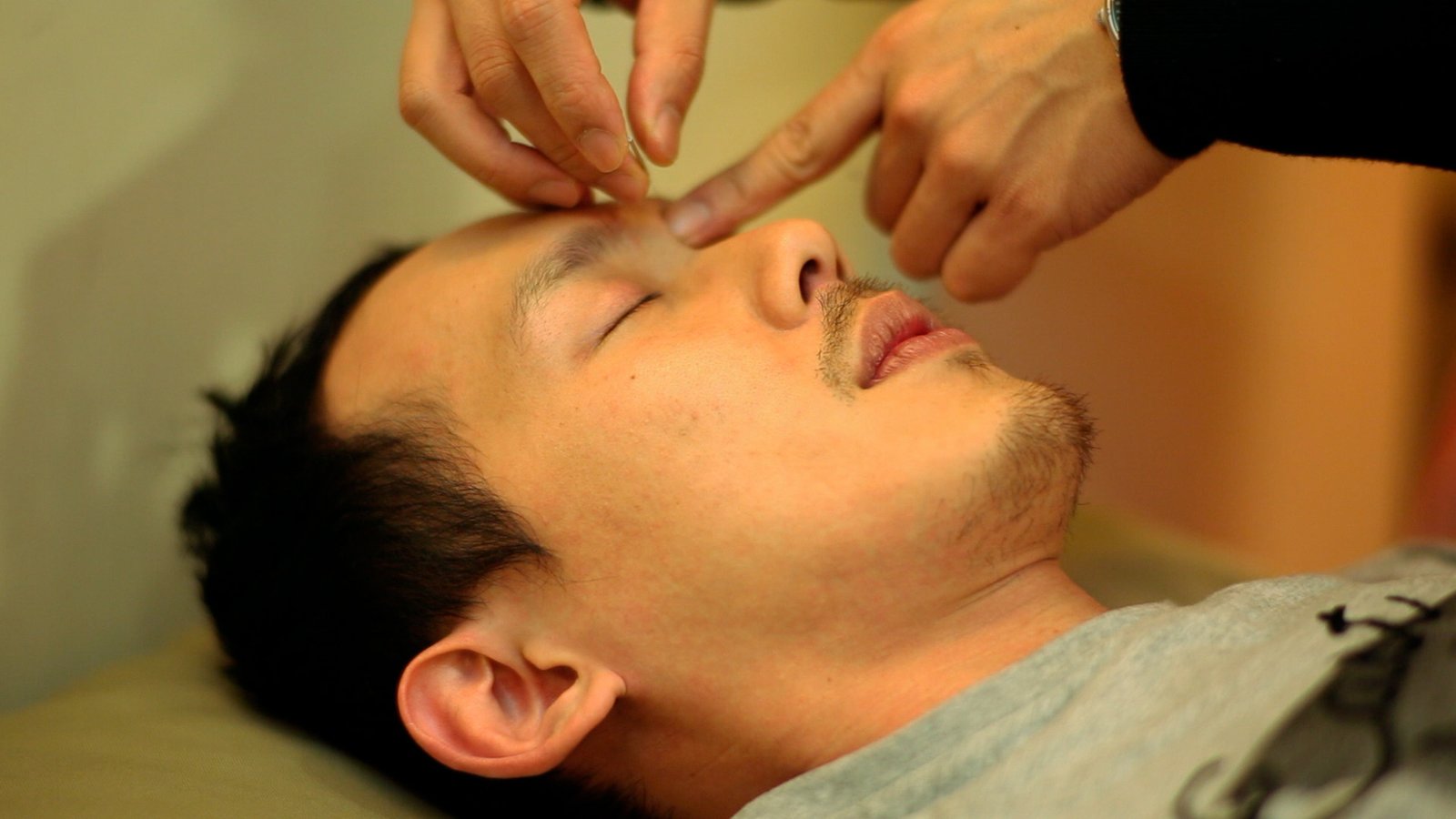
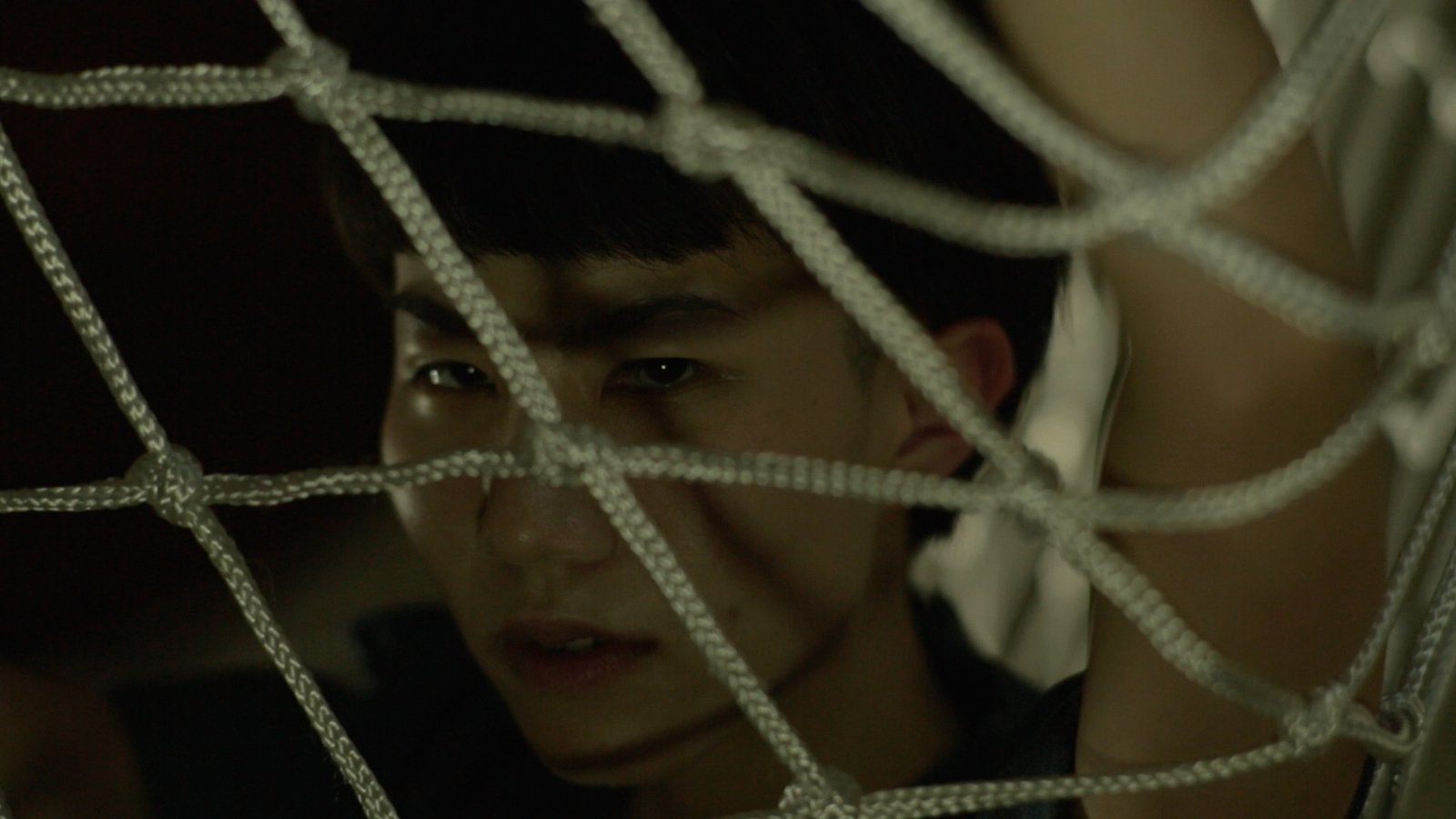
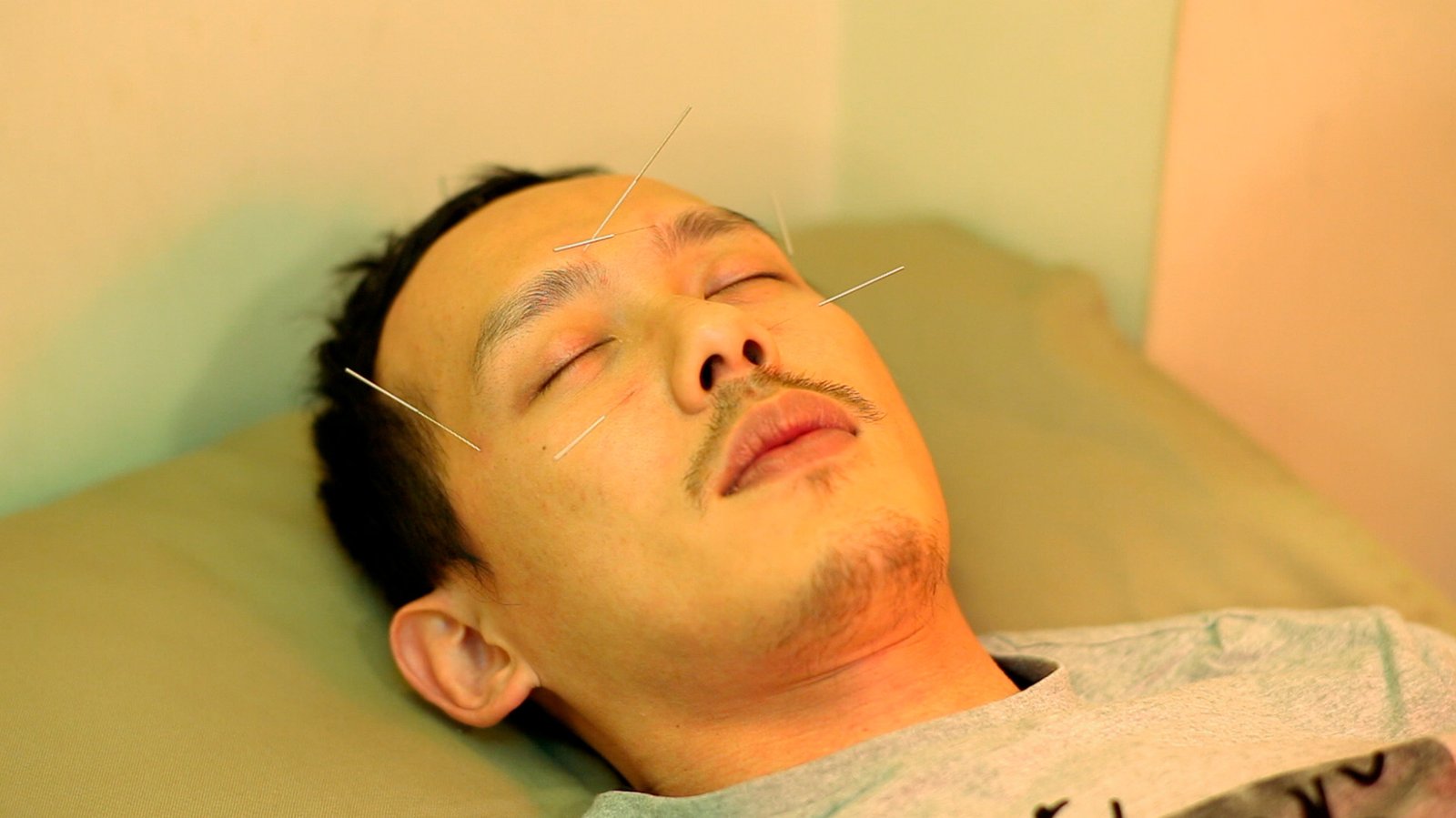
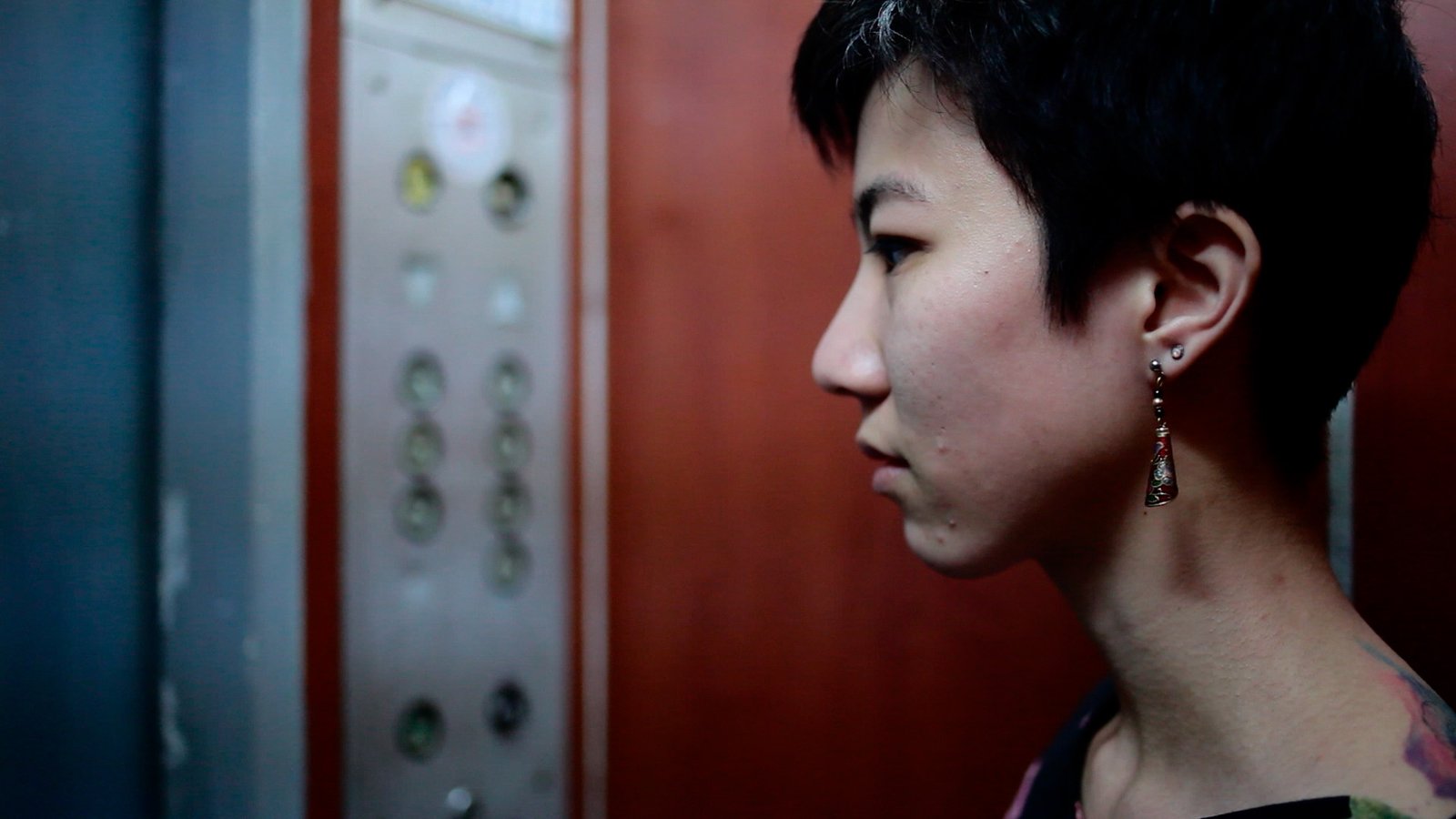
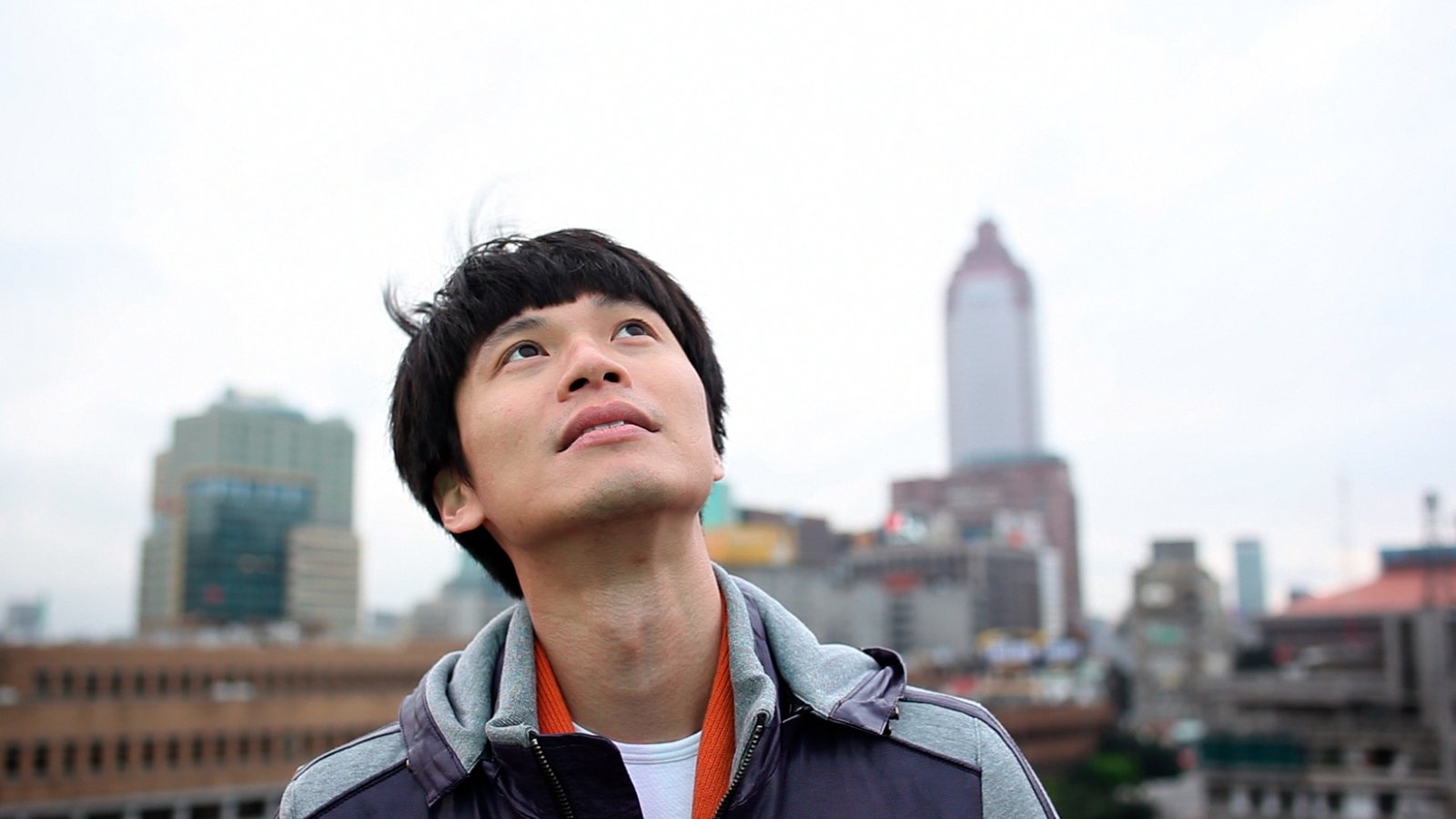
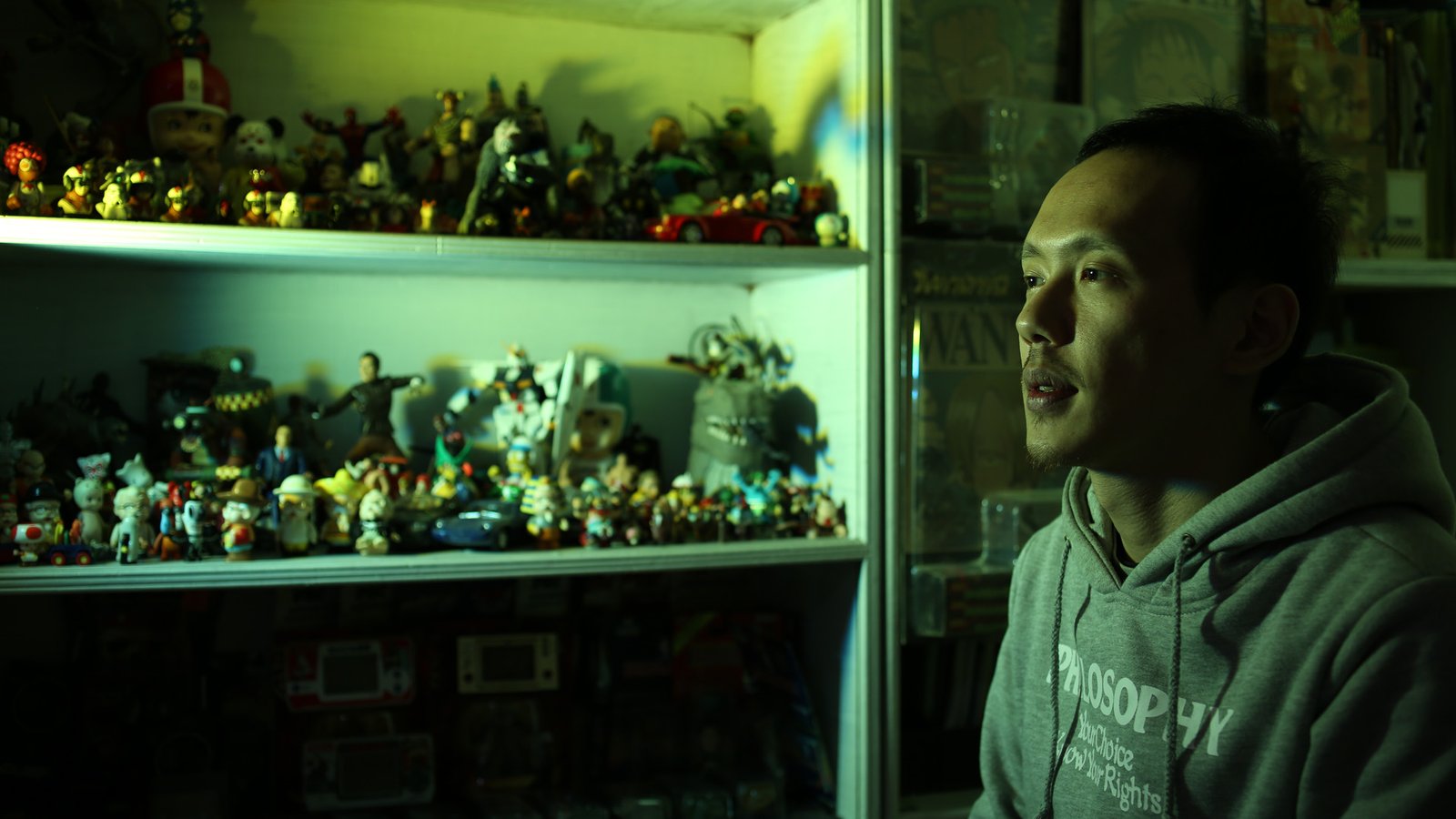
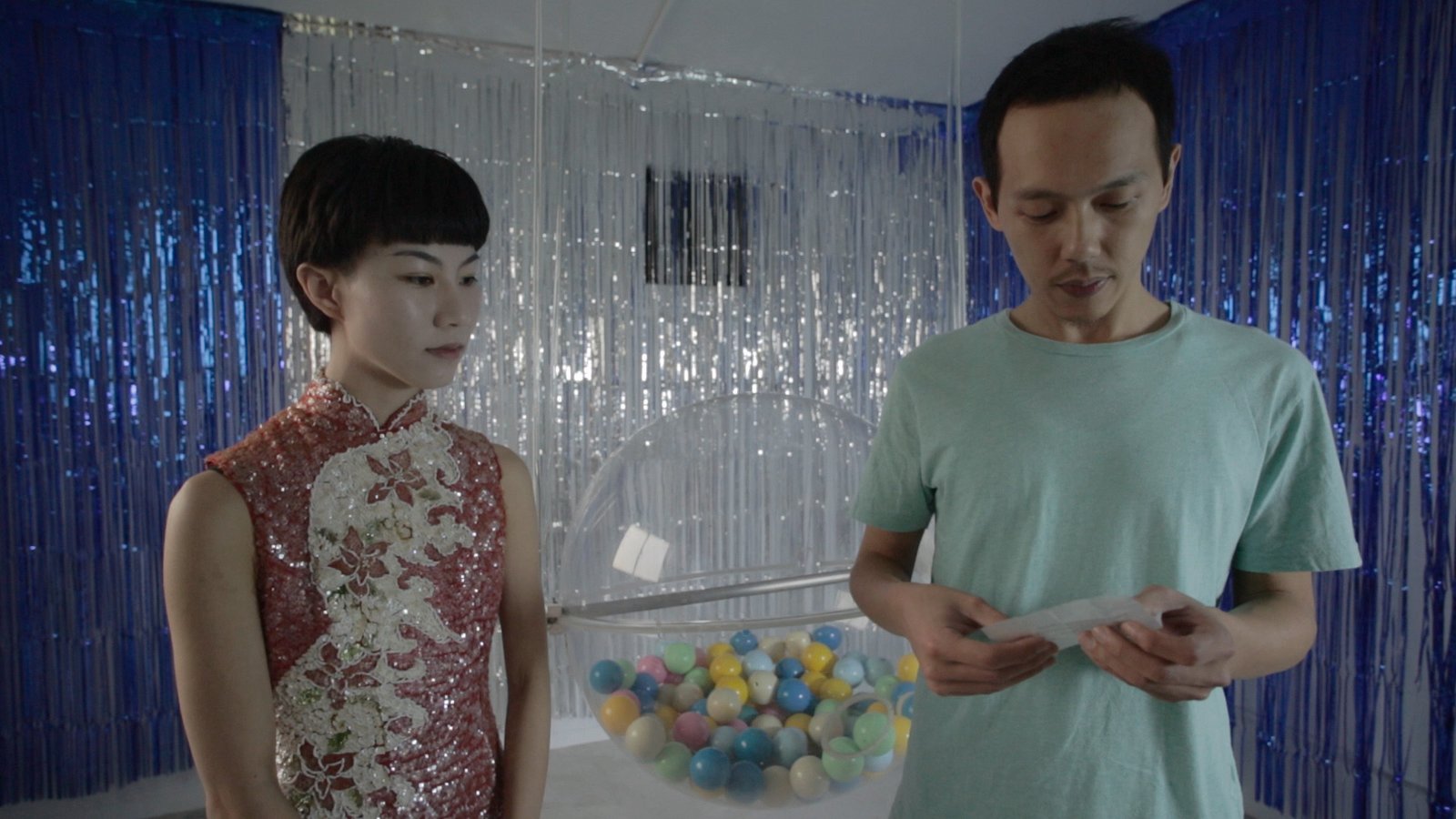
Everything Disappears was filmed in Taipei with four participants (Revanshu, William Hsu, Lucie Chen & Issac Tsai) who answered an open call to perform in a film exploring self-image, identity and relationships.
Block 336, London
Curated by Kathleen Soriano. 11-12.2017.
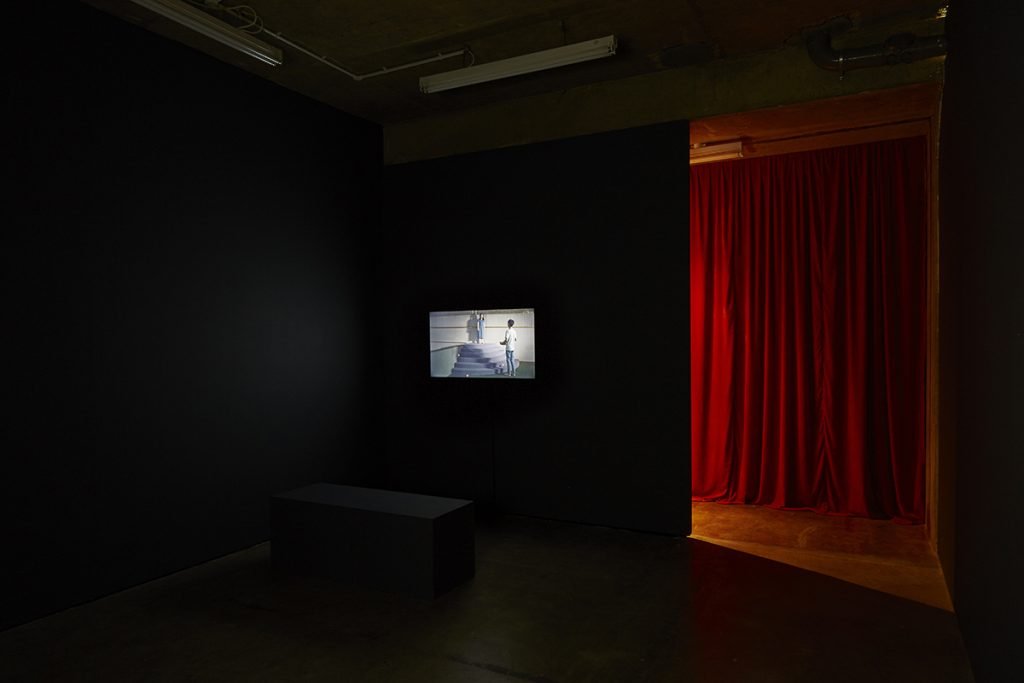
Film, 16mins
Everything Disappears (Mandarin with English subtitles) was filmed on residency in Taiwan. Gaffney worked closely with local participants: formulating scenes together in a collaborative process, beginning the process by filming a portrait of each participant in their home.
The film unfolds across Taiwanese cityscapes and intimate portraits in seven chapters: (i) Everything Disappears, (ii) I Grip Tightly to the Sand, (iii) An Exercise in Forgetting, (iv) The Elephant on the Roof, (v) They are Known by Many Names, (vi) The Ghost Ship, and (vii) The Closed Eyes of a Stranger.
The central chapter, The Elephant on the Roof, is spoken by a voice actor and tells of a young gay man’s stay in a psychiatric hospital in order to escape military conscription. As an unseen fifth participant, his biographical story interrupts the film’s fictions; we hear how the need to perform his mental illness in order for it to be observable by doctors and to be released from military conscription, with this performance leading to a deterioration of his grasp on reality.
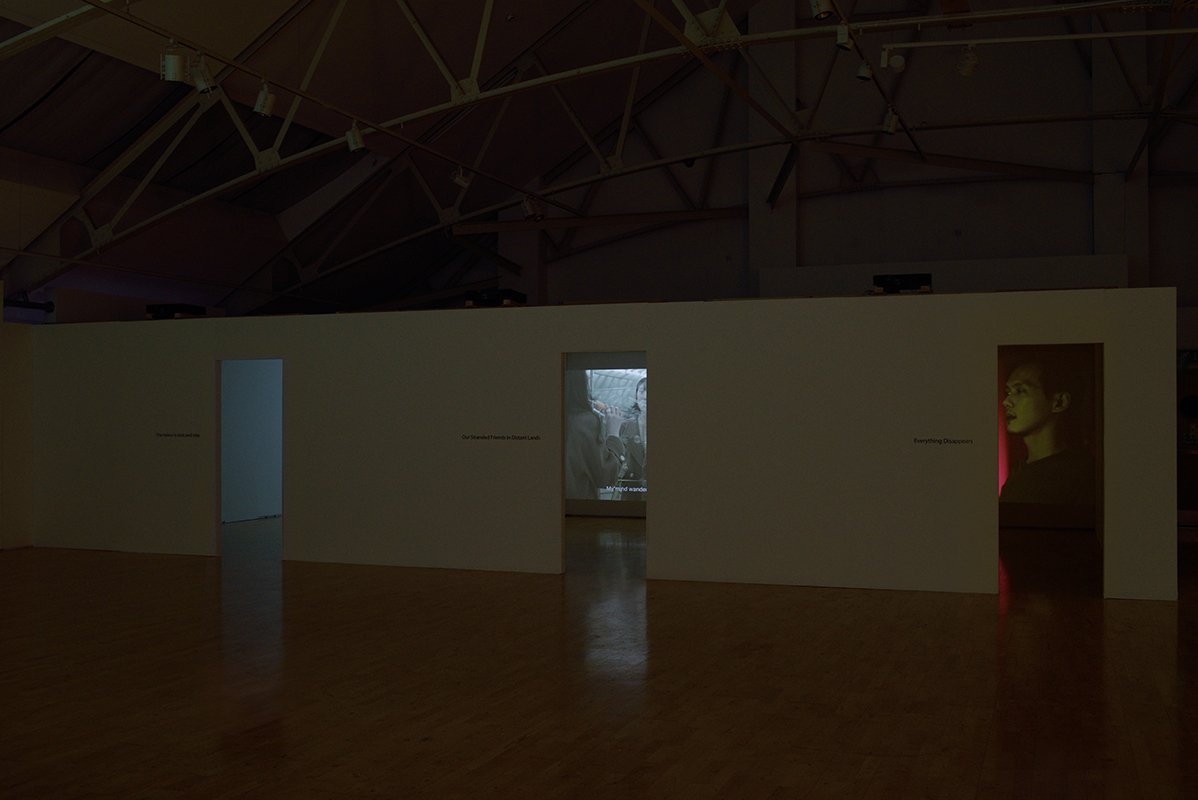
Millennium Court Arts Centre
12.2016-02.2017
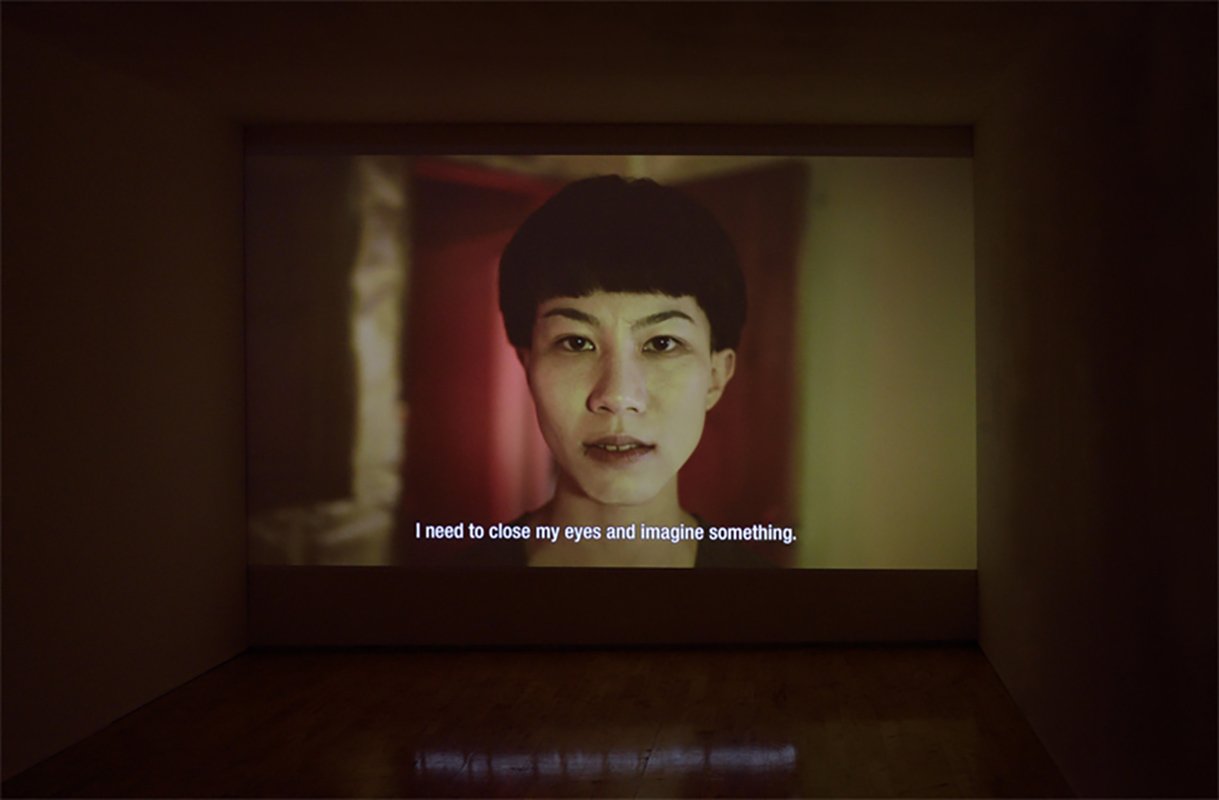
MMCA Changdong
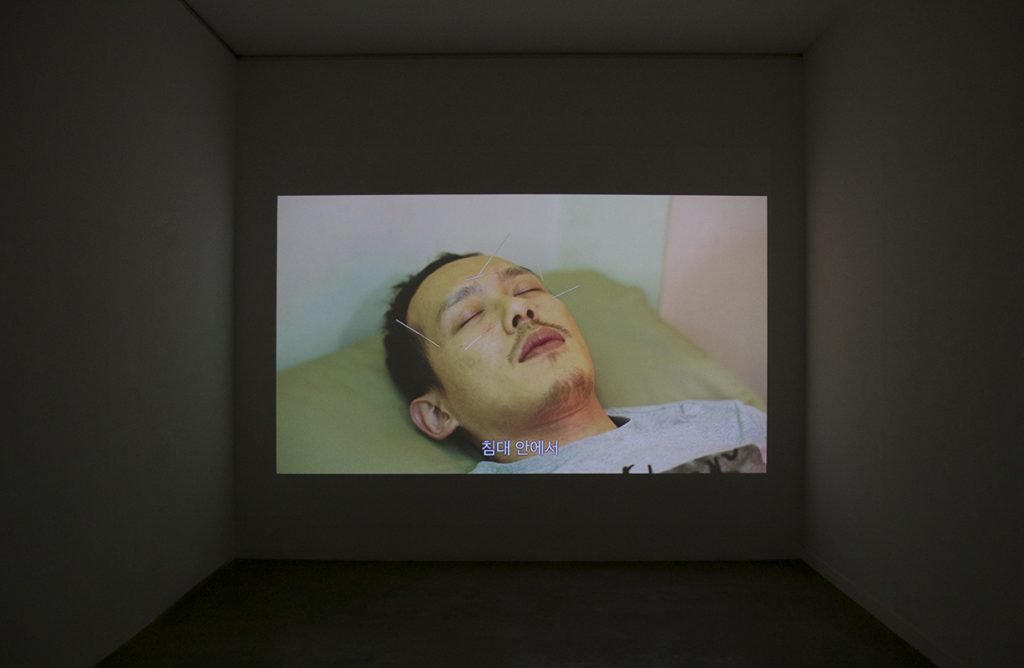
Korean translation of Everything Disappears, at Other Forms of Relations. 11-12.2014
Highlanes Gallery
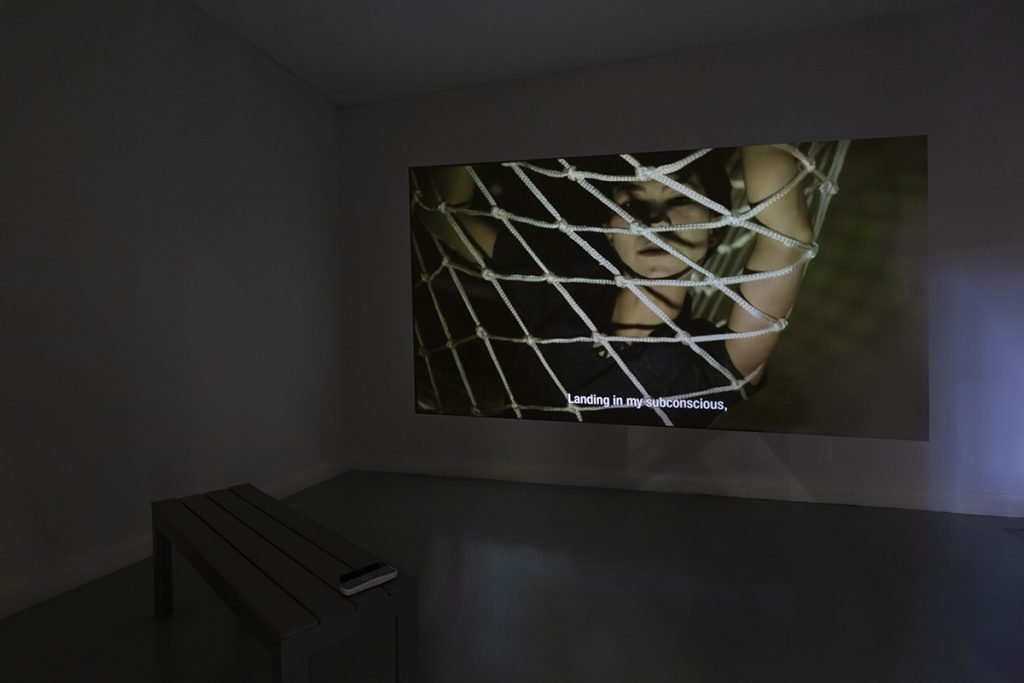
Disruptors. 15-06.2019
Ulster University Gallery
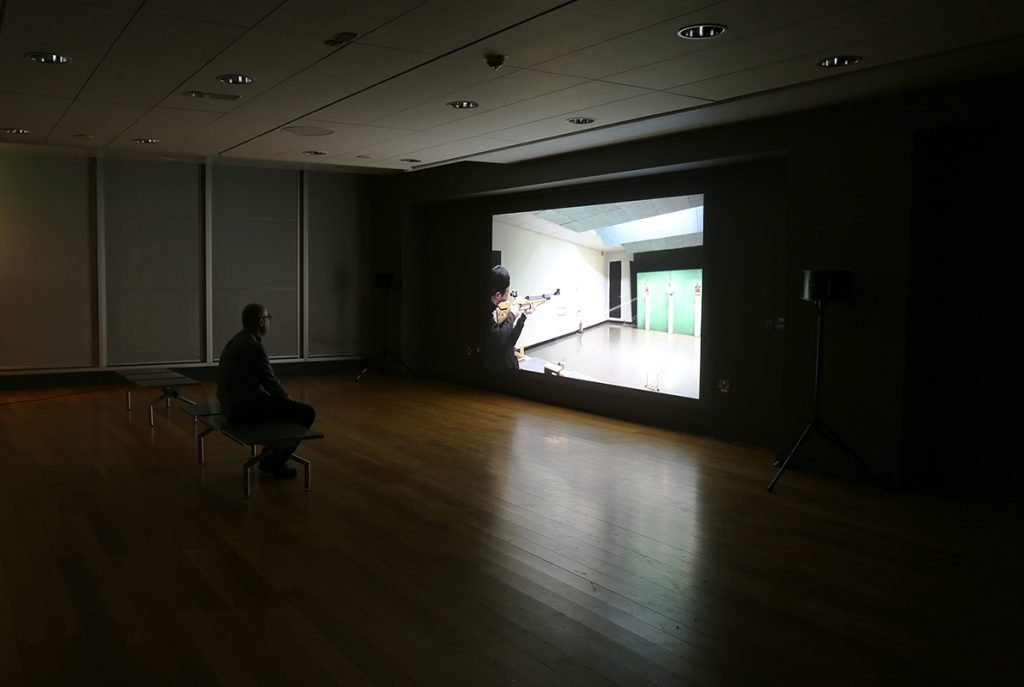
2015
“The earlier Everything Disappears, 2014, shot in Taipei and deliberately conceived as an exploration of fluid identities, revolves around four characters and the complex, sometimes quarrelsome relationships between them. It opens with the following lines: “Like a spider, I’m waiting. In a vacuum.” Later on, different characters or voices will variously wonder about the interior life of a rat, express a preference for being treated like an object, and speculate on the possibility of reversing the flow of time. Meanwhile, the stream of imagery features sundry exertions, abuses and constraints visited upon the human body, while the central section of this seven-chapter film focuses on a young gay man’s account of the psychological cost of avoiding compulsory service in the Taiwanese military by submitting to the state’s psychiatric services. (This real-life witness does not appear in the film and his testimony is voiced by an English-speaking actor.)”
I’ve been a keen admirer of Caoimhín Gaffney ever since I saw their work [Everything Disappears] in Imma’s Narrow Gate series, in 2021. It’s a standout in Irish contemporary art, and deserves to be recognised as such. Their moving-image artworks, in particular, are mesmerising, ruminative experiments that render the quiet intimacy and fluidity of thought into tangible units of word and image. Gaffney’s talent lies in their unique sensitivity to both the cinematic and poetic poles of moving-image artistry, exploring and refining each of these distinct features of the artwork with equally compelling results.”
Tom Lordan, The Irish Times, 2024.
The characters’ conversation is unnatural and highly staged, often using beguiling metaphors (“Nothing is worse than a wet heart”). And now with actors, or rather, a cast […] to lead, the artist could weave together absurdist scenes and personal accounts of queer experience in Taiwan, blending historical contexts and fictional elaboration.”
Chris Hayes, Circa art magazine, 2020.
The disciplinary transposition of Gaffney’s work, Everything Disappears, adapts anthropological documentary filmmaking to biographical poetry. Distributed online in the present context, the line: ‘Sometimes I feel like I’m from outer space. When I’m not with my family, I have no connection to them, I’m visiting my own life’, takes on a visceral poignancy. The lottery of self and the consequence of narrow social waters described in the film, not only speak to a feeling of individual boundlessness and worldly constraints, but also raises questions about where and how we nominate and define the artefacts that emerge from our exercises in remembering.”
David Haughey in Museum Ireland, Vol 27, published by Irish Museums Association, 2020.
In conversation with Sara Greavu, IMMA, 2020:
Created on residency at the Taipei Artist Village, Taiwan, and supported by the Arts Council of Ireland’s Film Project Award.